
Multi-family water damage at a glance
In a multi-family building, water damage usually crosses units. Vault’s crew contains the work area, documents each affected unit separately and coordinates with the owner, HOA and tenants’ insurers.
- Call any hour: (385) 250-2825 is answered live 24/7 by the Vault crew, not a call center. 45-minute arrival guarantee inside Provo city limits (Monday–Saturday, 8 AM–5 PM); typically under 60 minutes elsewhere in our Utah County service area.
- Who does the work: Vault’s own W-2 crew, IICRC certified in WRT, ASD, AMRT and OCT, working under Utah DOPL General Contractor License #11876543-5501. No subcontractors. Meet the team
- Insurance: we document damage daily, write the scope in Xactimate and bill State Farm, USAA, Allstate, Farmers or Bear River Mutual directly.
- Warranty: 24-month workmanship warranty on the rebuild, plus a 90-day mold warranty from post-remediation clearance where mold work was done. Warranty details
- Financing: through Wisetack, $500–$25,000 over 3–24 months, soft credit check. Financing
- Multi-family scope: cross-unit documentation, sealed containment to protect unaffected units, drying in occupied spaces where safe, and separate scopes for the HOA’s and each resident’s insurer.
- Family-owned and veteran-operated, based in Provo since 2020.
Water damage restoration · Mold remediation · Sewage cleanup · How we contain the work area
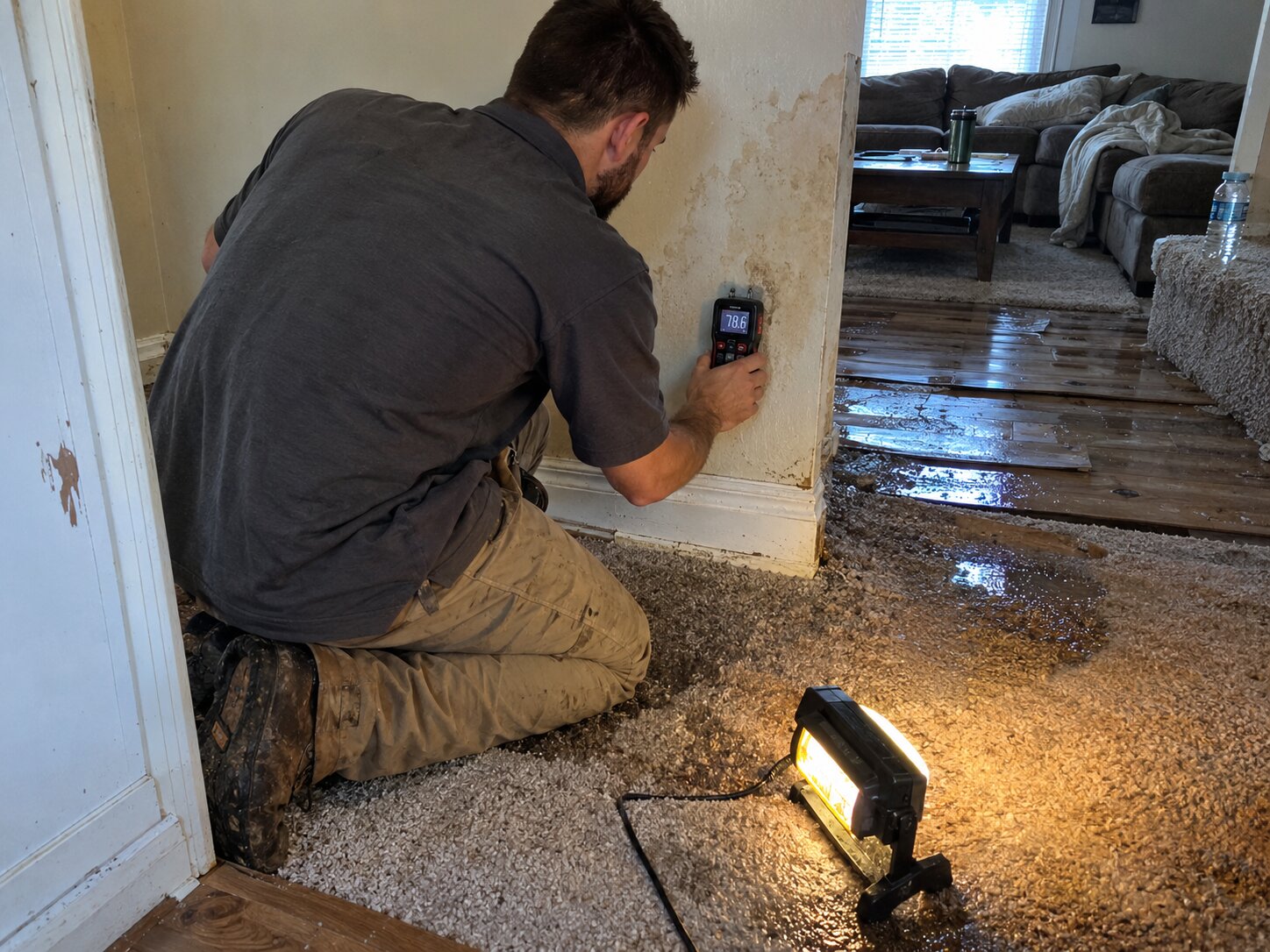
Multi-Family Water Damage Restoration — Utah County
Multi-family water damage is a specific category of restoration that sits between residential and commercial in most respects but has coordination challenges that don’t exist in either. When water damage happens at an apartment, condo, or townhome property, the affected parties often include: the individual unit tenant (who needs a habitable dwelling), the individual unit owner (in condo situations, distinct from the tenant), the property management company (responsible for common areas and often for damage coordination), the HOA or condo association (for shared building elements), and multiple insurance policies with different coverage responsibilities. Getting the response right requires understanding all of these relationships and Utah’s specific tenant protection framework under the Fit Premises Act. Vault Mold Removal handles multi-family water damage across Utah County for apartments, condos, townhomes, and mixed-use residential properties, coordinating the technical restoration with the multi-party framework these situations require.
The Multi-Party Coordination Framework
Individual Unit Tenants
Renters affected by water damage have specific rights and expectations:
- Habitability: Utah’s Fit Premises Act (Utah Code Title 57, Chapter 22) requires landlords to maintain rental units in habitable condition. Significant water damage that makes a unit uninhabitable triggers landlord obligations for repair and, in some cases, alternate housing or rent reduction during the restoration period.
- Renter’s insurance: Renters carry their own insurance for personal property; landlord insurance typically doesn’t cover tenant personal property. Water damage to tenant belongings is a renter’s insurance claim on the tenant’s own policy.
- Communication: Tenants need clear communication about restoration timeline, what work will happen when, and what accommodations are being made during the process.
- Access coordination: Tenants have privacy rights that affect access scheduling. Standard practice is 24-hour notice for non-emergency work, immediate access for emergency mitigation.
Individual Unit Owners (Condo Situations)
Condo owners have different considerations than renters:
- Individual homeowner (HO-6) insurance policies cover unit-specific damage
- The condo association’s master policy typically covers building envelope and shared structural elements
- The specific division between individual and association coverage varies by condominium declaration (“bare walls” vs. “all-in” coverage models)
- Deductibles for both individual and association policies apply if both are involved
- Special assessments to owners may apply when association deductibles or uncovered damage affect the association
Property Management Companies
Property management typically has primary coordination responsibility for water damage response:
- Emergency call routing and initial mitigation authorization
- Communication with all affected parties (tenants, owners, HOA board, insurance adjusters)
- Scope coordination and vendor management
- Documentation for the property owner or HOA board
- Tenant relocation coordination when required
HOAs and Condo Associations
HOAs and condo associations are involved when water damage affects shared building elements or when the association’s master policy is triggered:
- Board authorization for larger restoration scopes
- Master policy coordination for shared building damage
- Assessment decisions for damage exceeding association coverage
- Coordination with individual owners for damage bridging individual and shared responsibility
Common Multi-Family Water Damage Scenarios
Upstairs Unit Water Damage Affecting Downstairs
This is the most common multi-family water damage scenario. Water source at an upstairs unit (dishwasher failure, toilet overflow, bathtub overflow, water heater failure) affects the unit where it originated plus one or more units below through ceiling damage, wall damage, and sometimes contents damage. Coordination:
- Multiple affected units require simultaneous response and coordination
- Damage source unit has responsibility for damage causation but insurance policy responds if applicable
- Affected downstairs units have separate damage assessment and restoration scope
- Coordination between multiple tenant or owner claim processes
- Shared wall or ceiling assemblies affected by both units may require coordinated restoration
Common Area Plumbing Failures
Building plumbing failures in shared spaces (main water lines, common area plumbing, shared sewer lines) affect multiple units and involve the property owner or HOA directly:
- Building water shutoff coordination during response
- Multiple unit access for damage assessment and restoration
- Association master policy typically responds for building system failures
- Individual unit coverage for personal property and interior finishes
Roof Leaks in Multi-Story Buildings
Roof leaks in apartment or condo buildings can affect multiple top-floor units and sometimes propagate to lower floors through wall assemblies. Standard response involves emergency roof coverage, multi-unit damage assessment, coordination with roofing contractors, and coordination between association master policy (building envelope) and individual unit coverage (interior damage).
Sewage Backup Affecting Multiple Units
Sewer main backups in multi-family buildings can affect ground-floor units through drains, sinks, and toilets. Category 3 sewage response protocols apply, with additional coordination for multiple affected units and shared building elements.
Fire Suppression Sprinkler Activation
Sprinkler activation in one unit typically produces water damage in adjacent units through wall assemblies, upstairs units through ceilings, and common areas. Multiple-unit response is standard.
Winter-Related Failures
Utah County winters produce specific multi-family water damage patterns:
- Frozen pipes in units where tenants are traveling or where heat isn’t maintained
- Ice dams affecting top-floor units
- Sprinkler system freeze failures in unheated common areas or exterior areas
- HVAC-related water damage during winter operation
Utah’s Fit Premises Act Considerations
Utah Code Title 57, Chapter 22 (Utah Fit Premises Act) establishes landlord obligations for rental unit habitability. Provisions relevant to water damage response:
- Landlord duty to maintain habitability: Landlords must maintain rental units in habitable condition, including responding promptly to conditions that make units uninhabitable
- Tenant notice of conditions: Tenants must give written notice of habitability issues to trigger landlord repair obligations
- Landlord response timeframes: Standard response timeframes apply for different categories of issues, with emergency conditions requiring immediate response
- Tenant remedies: If landlords fail to respond appropriately, tenants have specific remedies including rent withholding (with proper procedures), termination of lease, and in some cases damages
- Retaliation protection: Tenants who exercise their rights under the Act are protected from retaliation
For property managers and landlords, prompt response to water damage isn’t just good practice — it’s a legal obligation with specific consequences for delay. Our approach for tenant-occupied units emphasizes rapid response, clear communication with tenants, and documentation supporting the landlord’s compliance with Fit Premises Act obligations.
Our Multi-Family Response Approach
Property Manager Coordination as Primary Contact
For tenant-occupied properties, our primary coordination is with the property management company or property owner, with the property manager handling tenant communication and coordination. This structure works well because:
- Property managers know their tenants and can coordinate access and communication appropriately
- Consistent primary contact reduces communication complexity
- Property manager retains control over tenant relationships and any accommodation decisions
- Documentation flows through property management for consistent record-keeping
Tenant Communication and Access
While the property manager is the primary contact, we work directly with tenants for scheduling and access coordination:
- 24-hour notice for scheduled non-emergency work per Utah landlord-tenant standard practice
- Direct communication about work timing, duration, and what to expect
- Respect for tenant privacy including notification when we’re on-site and coordination of tenant presence when preferred
- Attention to tenant belongings during work in occupied units
Multi-Unit Scope Development
Multi-family events often involve scope across multiple units and shared building elements. Standard scope development:
- Comprehensive damage assessment across all affected units
- Documentation identifying which damage is unit-specific vs. shared building elements
- Scope coordination between individual unit and association master policy coverage
- Sequencing plan for restoration work across multiple units
Temporary Relocation Support
When units are uninhabitable during restoration, temporary relocation is often required. Support includes:
- Habitability assessment supporting relocation decisions
- Timeline estimates for when units can be reoccupied
- Documentation for tenant relocation expense claims (Additional Living Expense coverage under tenant insurance, or landlord coverage in some situations)
- Coordination with property management for landlord-provided alternate housing when applicable
Insurance Coordination Across Multiple Policies
Multi-family events often involve multiple insurance policies:
- Property owner or HOA master policy for building damage
- Individual unit owner (HO-6) policies for condo interior damage
- Tenant renter’s policies for personal property damage
- Damage source party’s liability coverage if applicable
Our documentation supports claim development across all involved policies, with clear separation between what’s attributable to which coverage.
Frequently Asked Questions
- My upstairs neighbor’s water damage affected my unit. Who is responsible for my restoration?
- Depends on the specific situation. In most cases: your downstairs unit damage is your own insurance claim (on your renter’s or homeowner’s policy), with the upstairs unit responsible for any liability if the damage resulted from their negligence. If the damage source was a building system (main water line, common plumbing) rather than something specific to the upstairs unit, the building owner or HOA typically has responsibility. Sometimes the upstairs unit’s homeowner or renter’s insurance pays for damage to your unit through their liability coverage; other times each affected party’s coverage handles their own damage and the parties don’t directly interact on the claim. Property managers or HOAs typically coordinate the multi-party aspects and can help clarify who’s responsible for what in your specific situation. For questions about liability determination, an attorney can provide guidance specific to your situation and any applicable insurance policies.
- Do I have to let restoration workers into my unit if I’m a tenant?
- Yes, generally, with proper notice and reasonable coordination. Utah landlord-tenant law and standard lease provisions give landlords the right to enter units for necessary maintenance and repairs, subject to notice requirements (typically 24 hours for non-emergency work, immediate access for emergency situations). Water damage response is legitimate necessary work that landlords have both the right and obligation to complete. What you can expect: reasonable notice for scheduled work, respectful treatment of your belongings and privacy, clear communication about what work is happening and when, and coordination that accommodates your schedule where reasonably possible. What isn’t required: unlimited access at any time (except emergencies), inconvenience beyond what’s reasonably necessary, or refusal to accommodate reasonable requests about scheduling. If you have specific concerns about access coordination in your unit, discussing them with your property manager or landlord is the appropriate first step.
- My HOA is telling me my condo interior damage isn’t their responsibility. Is that right?
- Often correct, though depends on your specific condominium declaration and the source of the damage. Most condo association master policies cover building envelope (exterior walls, roof, foundation) and common areas but not individual unit interiors. Interior damage from water events affecting your unit is typically your responsibility, covered by your HO-6 homeowner’s policy. Exceptions: damage caused by association-responsibility failures (main water line failure that’s association responsibility, roof leak that association should have repaired) may create liability for the association even when the visible damage is inside your unit. The distinction between “bare walls” coverage (association covers only structural elements) and “all-in” coverage (association covers original interior fixtures) affects specific determinations. Review your condominium declaration (the legal document establishing the association’s coverage responsibilities) for specifics; if the situation is disputed, an attorney familiar with Utah condominium law can provide guidance on your specific rights.
- How long does multi-family restoration typically take?
- Depends on scope and coordination complexity. Single-unit damage in a multi-family building (contained to one unit with limited shared-element involvement) typically takes 3–6 weeks, similar to single-family residential timelines. Multi-unit events (2–4 units affected, moderate shared-element involvement) typically take 6–12 weeks due to coordination requirements. Building-wide events (multiple units, significant shared-element damage, complex insurance coordination) can take 4–9 months. The main time drivers are: multi-party insurance coordination, scheduling around occupied units, HOA or association approval processes for shared-element work, and coordination between different contractors handling different portions of the scope. Standard multi-family projects have detailed schedules communicated to all affected parties throughout the project.
- What if we’re a property management company and need standing arrangements for water damage response across multiple properties?
- We work with several Utah County property management companies on standing arrangements for water damage response. Standard arrangements typically include: priority response protocols for properties in the managed portfolio, standardized communication and documentation matched to the management company’s processes, coordination directly with maintenance staff or on-site management, direct billing arrangements with the management company or property owners per your standard practices, and periodic review meetings to discuss any pattern issues, response quality, or process improvements. For property management companies with specific requirements (specific documentation formats, coordination with corporate risk management, standardized tenant communication), we can adapt our processes to fit your operational structure. Contact us to discuss standing arrangement options for your managed portfolio.
Contact Vault Mold Removal — Provo, UT
For multi-family water damage response, property management coordination, or standing arrangements for property management portfolios, contact our office directly.
- Phone: (385) 250-2825
- Address: 1169 S 760 W, Provo, UT 84601
- Utah DOPL General Contractor License: #11876543-5501
- IICRC WRT / ASD / AMRT / OCT: #248317 / #248317-ASD / #319482 / #319482-OCT
Office Hours
- Monday – Saturday: 9:00 AM – 5:00 PM
- Sunday: Closed
Helpful guides: Condo water damage — who pays? · Leak from the unit above
Frequently asked questions
Who pays — HOA or owner?
It depends on the CC&Rs and the two policies. The HOA master policy usually covers common elements and often parts of the building structure. The owner’s HO-6 policy usually covers interior improvements, belongings, and loss of use.
Can you work in multiple units at once?
Yes. Coordinated drying across adjacent units is usually faster and more thorough, especially when water traveled between walls or floors.
How do you handle access?
We coordinate with the property manager or HOA, provide COIs on request, and keep common areas clean during the work.
Questions we didn’t cover? Call (385) 250-2825.