
What Vault does — at a glance
One crew, one license, one phone number. We handle water, mold, sewage, fire, smoke, storm, biohazard, and the reconstruction that follows — start to finish, no sub pass-through.
- Water damage: extraction, drying, dehumidification, moisture mapping. $3,500-$8,500 typical. See water damage.
- Mold remediation: containment, HEPA, removal, Sporecyte lab clearance. See mold.
- Sewage & biohazard: Category 3 water, sewage backups, trauma scenes. See sewage and biohazard.
- Fire, smoke & storm: structural cleaning, soot removal, board-up, roof tarping. See fire & smoke.
- Reconstruction: drywall, flooring, paint, trim — $4,500-$9,500 typical. Same crew that did the mitigation. See reconstruction.
- 24/7: (385) 250-2825. 45-min guarantee Provo (Mon-Sat 8-5), under 60 min elsewhere.
Utah DOPL #11876543-5501, IICRC-certified, $2M liability + $1M pollution, 24-month warranty, Wisetack financing. See credentials or reviews.
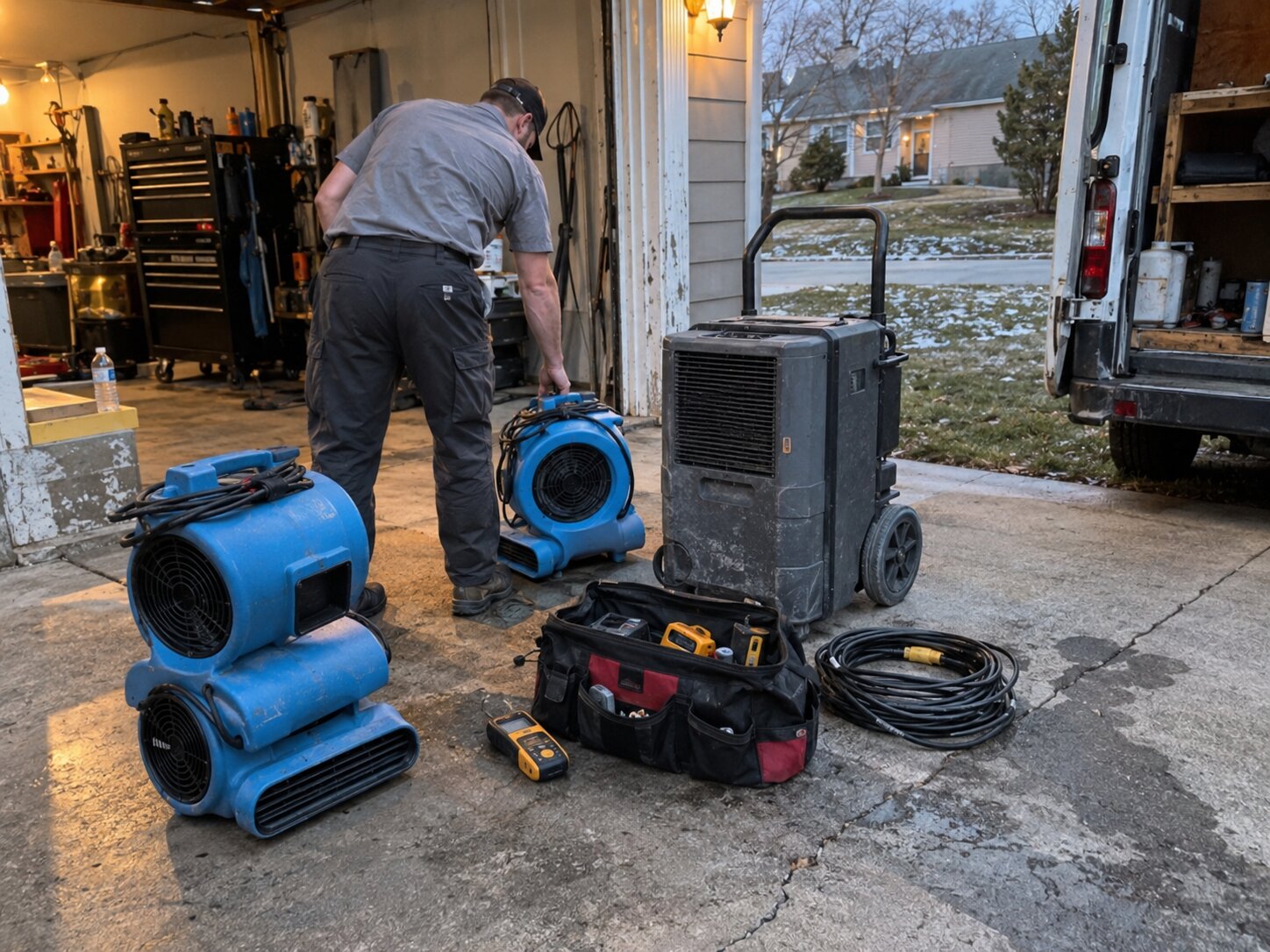
Vault Mold Removal — Full Service Catalog for Utah County
Vault Mold Removal provides eleven core restoration and remediation services across Utah County, each performed under IICRC industry standards (S500 for water damage, S520 for mold remediation, S700 for fire and smoke restoration) with Utah DOPL general building contractor licensing for reconstruction work. This page is the top-level directory of what we do — each service links to a dedicated service page with detailed methodology, equipment, and case examples. Services are grouped into five families: water damage restoration, mold remediation, sewage cleanup, fire and smoke restoration, and reconstruction & specialty services.
Water Damage Restoration
Our largest service family, covering emergency response, moisture management, and structural drying under IICRC S500. Ten specific services under this umbrella:
- Water Damage Restoration (overview) — the pillar page for all water damage services, including our overall methodology for Category 1, 2, and 3 losses and Class 1 through 4 intrusion classifications.
- Emergency Water Damage Response — rapid dispatch for active water events, with average business-hours response times ranging from 34 minutes in Provo to 52 minutes in Mapleton.
- Water Extraction — truck-mounted, portable weighted, and submersible extraction sized to the specific loss (up to 200 gpm truck-mount capacity).
- Structural Drying — IICRC S500-compliant drying to documented dry standard equilibrium moisture content, verified by grid meter readings.
- Dehumidification — LGR (low-grain refrigerant) and desiccant dehumidifiers deployed based on ambient temperature, load, and material type.
- Moisture Detection — Delmhorst pin meters, Protimeter dual-mode, Tramex non-invasive scanning, FLIR thermal imaging for hidden moisture identification.
- Basement Flooding — Utah County-specific basement loss response, covering sump pump failures during spring runoff, footer drain issues, and hydrostatic pressure through wall cracks.
- Commercial Water Damage — light commercial restoration for retail, medical, dental, office, and warehouse properties across Utah County.
- Water Damage Restoration Process — technical breakdown of the IICRC S500 workflow from extraction through dry standard verification.
- Insurance Claims Coordination — Xactimate scope development and adjuster coordination for State Farm, USAA, Allstate, Farmers, Bear River Mutual, and other Utah-market carriers.
Mold Remediation
Mold remediation is a distinct discipline from water damage restoration, with different equipment, PPE, containment requirements, and clearance protocols under IICRC S520. Five services in this family:
- Mold Remediation (overview) — the pillar page for mold work, covering our IICRC S520 methodology, containment approach, and third-party post-remediation verification (PRV) practice.
- Mold Removal — physical removal of mold-colonized materials, HEPA vacuuming and antimicrobial application on remaining surfaces, with containment maintained throughout.
- Mold Prevention — moisture source resolution, ventilation correction, and material selection to prevent recurrence after remediation or as a preventive measure in high-risk properties.
- Black Mold (Stachybotrys chartarum) — the specific remediation approach for Stachybotrys colonization, common in Utah County crawlspaces, chronic-moisture wall cavities, and attic assemblies with ice dam issues.
- Mold Inspection and Testing — visual inspection, moisture mapping, air sampling with cassette-style spore traps sent to accredited regional labs, and surface swabs for species identification when needed.
Sewage Cleanup
Sewage backups and Category 3 water losses require full PPE, black-water-rated equipment, EPA-registered antimicrobial application, and removal of all porous materials that contacted the water per IICRC S500 Chapter 12. Three services in this family:
- Sewage Cleanup (overview) — the pillar page for Category 3 water cleanup, covering main line backups, toilet overflows, sump pump failures, and external floodwater intrusion.
- Toilet Overflow Cleanup — response to Category 2 or 3 toilet overflow events, with categorization dependent on the specific source and time-since-event.
- Sewage Backup Cleanup — main line backups from municipal sewer failures or on-property lateral issues, with full Category 3 protocol.
Fire and Smoke Restoration
Fire and smoke damage requires specialized cleaning techniques distinct from water damage restoration. Soot particles are electrostatic and adherent, smoke odor penetrates building materials at the molecular level, and structural damage may require licensed reconstruction. Seven services in this family:
- Fire Damage Restoration — the primary service page for post-fire restoration, covering assessment, structural cleaning, contents cleaning, and reconstruction.
- Smoke Damage Cleanup — targeted smoke residue removal from surfaces, contents, HVAC systems, and building assemblies.
- Air Scrubbing and HEPA Filtration — particulate removal from indoor air using Novatek NA-1500 and equivalent HEPA scrubbers with second-stage carbon filtration.
- Odor Removal Services — thermal fogging, ozone treatment, hydroxyl generation, and chemical neutralization for smoke, mold, pet, and biological odors.
- Biohazard Cleanup — specialized cleanup for scenes involving blood, bodily fluids, or other biohazardous materials under OSHA bloodborne pathogen standards.
- Soot Removal — dry sponge cleaning, chemical sponge techniques, and HEPA vacuuming for the specific requirements of soot residue removal.
- Fire Damage Board-Up — emergency structural stabilization and board-up of fire-damaged openings for security and weather protection pending reconstruction.
Reconstruction and Specialty Services
Post-restoration reconstruction rebuilds the property to pre-loss or improved condition, performed under our Utah DOPL general building contractor license. Four services in this family:
- Drywall Repair for Water Damage — replacement of removed drywall assemblies, with attention to code-required insulation, vapor barriers, and finish work.
- Flooring Removal and Replacement — carpet, LVP, tile, hardwood, and specialty flooring removal and reinstallation with attention to matching the original assembly.
- Contents Cleaning and Pack-Out — inventoried contents cleaning, textile restoration, electronics evaluation, and off-site storage during structural work.
- Reconstruction and Repairs — comprehensive reconstruction from framing through finish, including permit coordination with Provo, Orem, Springville, Vineyard, Lindon, and Mapleton municipal building departments.
Commercial and Property-Type Specialty Services
Certain loss types require property-specific approaches beyond standard residential restoration. Four specialty services:
- Commercial Flood Cleanup — commercial water damage response with attention to business continuity, tenant coordination, and commercial insurance carrier requirements.
- Industrial Water Damage — heavy commercial and light industrial water damage restoration, including warehouse, manufacturing, and specialized facility spaces.
- Multi-Family Water Damage Restoration — apartment, condominium, and townhome water damage with attention to unit-to-unit migration, HOA coordination, and tenant displacement management.
- Storm Damage Restoration — wind damage, hail damage, roof leaks, and external flooding response, with coordination for roofing subcontractors and structural repairs.
Types of Damage — Understanding What You’re Dealing With
Before scheduling any specific service, it’s worth understanding what type of water damage you’re actually experiencing. Water damage isn’t a single category — it’s a family of loss types with distinct sources, contamination levels, and required responses:
- Types of Damage (overview) — the pillar page for water damage classification, covering IICRC S500 categories, classes, and common Utah County loss scenarios.
- Clean Water Damage (Category 1) — supply line breaks, ice maker failures, water heater tank ruptures.
- Gray Water Damage (Category 2) — dishwasher overflow, washing machine hose failure, aquarium leaks, HVAC condensate backups.
- Black Water Damage (Category 3) — sewage backups, main line failures, external floodwater intrusion.
- Hidden Leaks — slow leaks behind fixtures, in wall cavities, or beneath finished surfaces that require moisture mapping to identify.
- Crawlspace Water Damage — chronic moisture in dirt-floor and vented crawlspaces, common in older Utah County homes.
- Attic Leaks — ice dam moisture accumulation, flashing failures, and ventilation-related moisture issues in attic assemblies.
Cost and Emergency Guidance
Two additional resources for property owners evaluating a restoration situation:
- Water Damage Restoration Cost — representative Utah County pricing ranges by category and class, drawn from our documented job archive.
- Water Damage Emergency Guide for Provo — step-by-step guidance for handling the first hours after discovering water damage, including safety, source shutoff, and documentation practices.
Service Area
All services are available across our six primary Utah County cities — Provo, Orem, Springville, Mapleton, Vineyard, and Lindon — with response times ranging from 34 minutes in Provo to 52 minutes in Mapleton during business hours. Extended service is available in Pleasant Grove, American Fork, Spanish Fork, Payson, Salem, Cedar Hills, Alpine, Highland, and Saratoga Springs with somewhat longer response times. See our locations page for full service area details.
Frequently Asked Questions
- Do all of Vault Mold Removal’s services fall under IICRC industry standards?
- Yes. Water damage restoration services follow IICRC S500 (the ANSI-recognized standard for professional water damage restoration). Mold remediation services follow IICRC S520 (the standard for professional mold remediation). Fire and smoke restoration follows IICRC S700 (the standard for professional fire and smoke damage restoration). Every scope of work we produce references the applicable IICRC standard. Restoration contractors operating without IICRC certification and without S500/S520/S700 conformance are producing work that insurance carriers, real estate attorneys, and municipal building departments may not accept as competent.
- Which service should I book first for my specific situation?
- For active water events, start with emergency water damage response — call (385) 250-2825 immediately regardless of what specific service you think you need. Timothy Ellis or Marcus Wheeler will assess the situation on arrival and identify the appropriate services. For non-emergency situations, the answer depends on the symptom: musty odor with no visible water suggests moisture detection or mold inspection, visible mold suggests mold remediation, a prior water event with subsequent concerns suggests moisture detection followed by potentially mold inspection or remediation, and real estate transaction concerns suggest a comprehensive inspection.
- Do all of Vault Mold Removal’s services work with insurance claims?
- Most water damage, sewage cleanup, fire and smoke, and storm damage services are covered under standard homeowner insurance policies from State Farm, USAA, Allstate, Farmers, Bear River Mutual, and other Utah-market carriers, subject to policy-specific coverage terms and exclusions. Mold remediation coverage varies significantly by carrier and policy — some policies exclude mold entirely, others limit coverage to specific dollar amounts, and others cover mold only when caused by a covered water event. Cosmetic services, preventive services (mold prevention without documented current colonization), and out-of-scope work generally aren’t covered by insurance. Every Xactimate scope we produce identifies which line items are insurance-eligible under standard coverage.
- Can I bundle multiple services together on one job?
- Yes, and most jobs actually involve multiple services. A typical Category 2 basement flood job might include emergency response, water extraction, structural drying, moisture detection, targeted drywall repair, and carpet replacement — six services in one integrated scope. A mold remediation job might include mold inspection, remediation, air scrubbing, and moisture source resolution. We prefer integrated scopes over piecemeal service bookings because the integration produces better outcomes and lower total cost than separate engagements for each element. Our written scope of work identifies every service included and prices them as a coordinated package.
- Are all your services available across the entire Utah County service area?
- Yes for our six primary cities: Provo, Orem, Springville, Mapleton, Vineyard, and Lindon. Yes for extended service cities (Pleasant Grove, American Fork, Spanish Fork, Payson, Salem, Cedar Hills, Alpine, Highland, Saratoga Springs), though response times are longer and after-hours emergency response may be coordinated through partner IICRC-certified contractors in the Wasatch Front mutual-aid network. Very large commercial or multi-family losses across Utah County are always available through the mutual-aid network to ensure field capacity meets the scale of the loss.
Contact Vault Mold Removal — Provo, UT
To initiate any of the services described on this page, or to discuss which service package fits your specific situation, contact our office directly.
- Phone: (385) 250-2825
- Address: 1169 S 760 W, Provo, UT 84601
- Utah DOPL General Contractor License: #11876543-5501
- IICRC WRT / ASD / AMRT / OCT: #248317 / #248317-ASD / #319482 / #319482-OCT
Office Hours
- Monday – Saturday: 9:00 AM – 5:00 PM
- Sunday: Closed