
About these photos
Every image below is from an actual Vault job in Utah County. No stock photography, no supplier marketing shots — these are our crew, our containment, our drying setups, our reconstruction.
- Provo-specific jobs: see Downtown, East Bay, Edgemont, Foothills, and Franklin case studies for full before-during-after photo sets.
- Who did the work: Vault’s W-2 crew, IICRC WRT/ASD/AMRT/OCT, Utah DOPL #11876543-5501.
- 24/7: (385) 250-2825 answered live. 45-min guarantee Provo (Mon-Sat 8-5), under 60 min elsewhere in Utah County.
- Insurance: Xactimate scopes, direct billing to State Farm, USAA, Allstate, Farmers, Bear River Mutual.
- Warranty: 24 months on mitigation and reconstruction. Wisetack financing available.
See full case studies, verified reviews, or our process.
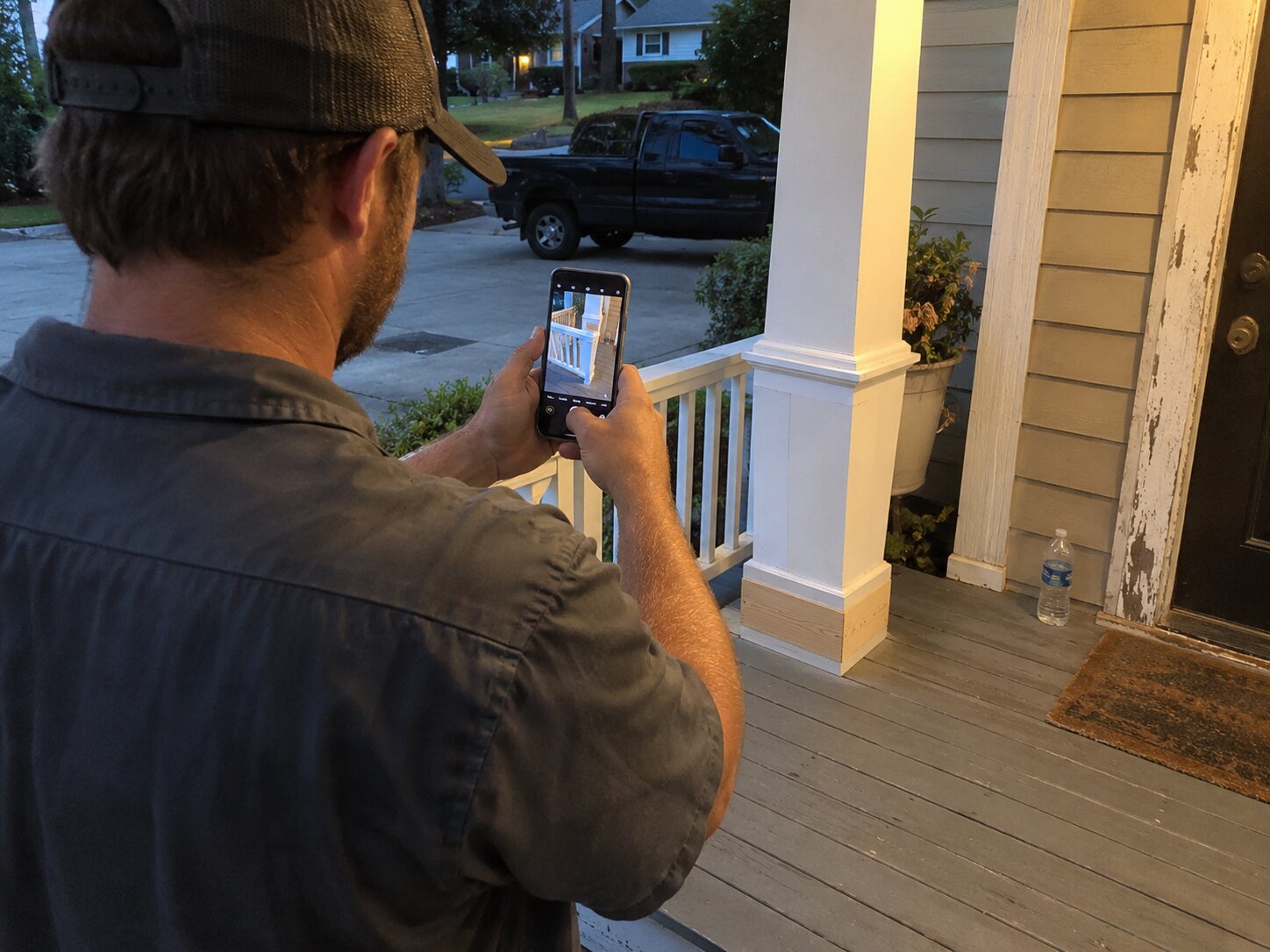
Vault Mold Removal — Job Site Photo Gallery
Every water damage restoration job we run generates a documentation package built to insurance-adjuster standards: initial loss photos, moisture maps with grid-referenced meter readings, daily drying progress captures, equipment placement diagrams, psychrometric charts, and post-remediation clearance images. This gallery pulls from that archive — anonymized job sites across Provo, Orem, Springville, Mapleton, Vineyard, and Lindon that illustrate what actual restoration looks like when it’s done to IICRC S500 and S520 standards. Nothing here is stock. Every image is from a real Utah County job, with customer identifying details removed and property addresses reduced to intersection references.
Why Photo Documentation Matters More Than Verbal Assurance
A moisture reading is a number. A number without a timestamp, a location reference, and a calibrated instrument logo in the frame is easy to dispute. When your insurance adjuster asks why the drying phase took five days instead of three, or why 62 linear feet of drywall came out instead of 22, the answer isn’t “trust me.” The answer is a photo of the Delmhorst BD-2100 showing 32% moisture content at Grid Point J-7, taken at 08:14 on the second morning of the drying phase, alongside a field-log entry. That’s what closes claims without disputes.
Category 1 Water Losses — Clean Supply-Line Failures
Category 1 water originates from a sanitary source and poses no substantial harm — a supply line burst, an ice maker line failure, a water heater tank rupture. In Utah County, roughly 68% of winter losses we respond to fall into this category, driven by freeze-thaw events on residential copper and PEX supply lines. Gallery entries in this category include:
- Rock Canyon supply line burst (January 2023). Type M copper ¾” riser split behind master bathroom vanity. 34-hour unattended runtime. Grid moisture map showing containment of the wet zone to a 14-foot span rather than the entire basement. Three LGR dehumidifiers and eight axial fans, 71-hour drying cycle. Final clearance photo showing wood framing at 11.4% MC.
- Oak Hills water heater rupture (November 2024). 50-gallon gas water heater bottom seam failure. Documented photos of extraction from carpet pad, tack strip removal, and dry-in-place drywall verification for the finished basement rec room.
- Vineyard ice maker line failure (August 2024). ¼” plastic push-fit fitting on refrigerator supply line disconnected. Kitchen tile floor extraction, cabinet toe-kick removal, and moisture verification of the plywood subfloor beneath the LVP transition to the dining room.
Category 2 Water Losses — Gray Water Contamination
Category 2 water contains significant contamination and can cause discomfort or illness through exposure — dishwasher overflow with detergent residue, washing machine hose failure with soap and body soil, aquarium leaks, HVAC condensate line backups. Materials that touched Category 2 water are typically dried in place if reachable within 48 hours, or removed if saturation and time-on-site indicate microbial risk. Gallery entries:
- Franklin dishwasher supply hose failure (March 2024). Kitchen and adjacent dining room affected. Cabinet toe-kick photos showing water migration under the base cabinets, meter readings on the exposed subfloor, and drying-in-place setup with cavity ventilation.
- Orem laundry room hose burst (October 2023). Washing machine hot water hose failure while family was at work. Roughly 400 gallons on the utility room floor and finished basement stairwell. Extraction photos, tack strip disposal, and thermal imaging documenting the water migration path down the stair stringers.
- Lindon HVAC condensate overflow (July 2024). Clogged condensate drain during peak summer AC operation. Ceiling stain photos, attic access documentation, and structural drying of the second-floor ceiling assembly with negative pressure below.
Category 3 Water Losses — Black Water and Sewage
Category 3 water is grossly contaminated: sewage, main line backups, rising floodwaters from external sources, or Category 2 water that has been present long enough for microbial amplification. All porous materials that contacted Category 3 water get removed. Full PPE (Tyvek suits, respirators with P100 cartridges, chemical-resistant gloves and boots), black-water-rated extraction equipment, and EPA-registered antimicrobial application are non-negotiable. Gallery entries:
- Downtown Provo main line backup (April 2024). Older housing near 500 N with a cast iron drain lateral, roots infiltration at 22 feet from cleanout, sewage backup through basement floor drain. Photos of removed carpet, pad, and lower 24″ of drywall, followed by structural cleaning and antimicrobial application.
- Springville toilet supply line failure (February 2024). Category 2 originally, escalated to Category 3 after 60+ hours undiscovered while family was traveling. Full second-story bathroom and first-floor kitchen ceiling below, with documented biofilm growth in the ceiling cavity requiring S520-tier containment before drying.
Mold Remediation — IICRC S520 Containment Builds
Mold remediation photos differ from water damage extraction photos. What matters here is the containment build — plastic barriers, negative air machines, HEPA filtration, air lock entries — and the visible-condition-before to visible-condition-after progression. Post-remediation verification (PRV) is documented with both visual clearance and third-party air sampling results. Gallery entries:
- Joaquin crawlspace remediation (September 2024). Pre-1960 home with dirt-floor crawlspace, chronic moisture from a hillside seep. Photos of encapsulation barrier install, dehumidifier placement, and Stachybotrys colonization removal from joist undersides.
- Vineyard tract home wall cavity remediation (May 2024). Hidden slab-penetration leak in a 2019 build feeding a Chaetomium colony behind an interior wall in an infant’s bedroom. Full containment build with critical barrier construction, HEPA scrubbing, and third-party clearance by an independent industrial hygienist.
- Foothills attic mold (December 2023). Ice dam-driven moisture accumulation on rafter undersides in a poorly ventilated attic. Photos of the attic before treatment, containment installation at the pull-down ladder access, sanding and HEPA vacuuming of affected wood surfaces, and antimicrobial application.
Instruments and Equipment — What’s in the Trucks
Some gallery images focus on the tools rather than the damage. Customers who understand what we’re using tend to trust the process more, and adjusters who see calibrated professional instruments in the loss photos rarely dispute the readings. Documented equipment:
- Moisture meters: Delmhorst BD-2100 pin meters for wood, Delmhorst BD-10 for drywall, Protimeter Surveymaster for dual-mode readings, Tramex Moisture Encounter Plus for non-invasive scanning.
- Thermal imaging: FLIR E60 and E75 cameras with MSX overlay for tracing water migration behind finished surfaces.
- Environmental instruments: Kestrel psychrometers for temperature/RH/GPP calculation, Extech hygrothermometers for ambient monitoring, TSI VelociCalc for airflow measurement.
- Dehumidification: Phoenix R150 and Dri-Eaz LGR 6000Li units for standard conditions, Phoenix 200 MAX and Dri-Eaz DriTec 5000i desiccants for low-temperature or high-load environments.
- Air movement: Phoenix Focus and B-Air Vent axial and centrifugal air movers, sized to the affected area’s cubic footage per IICRC S500 calculation.
- Air scrubbing: Novatek NA-1500 HEPA air scrubbers with second-stage carbon for mold and odor work, negative pressure at containment boundaries verified with a Dwyer Series 475 Mark III manometer.
How to Request Documentation from Your Own Job
Every Vault Mold Removal customer receives the full documentation package for their specific job: loss photos, moisture map, daily drying log with grid readings, psychrometric data, equipment placement diagrams, and final clearance photos. The package is delivered to the adjuster within 24 hours of job initiation, with copies to the homeowner or property manager. If you’re a former customer and need a replacement copy for a real estate transaction disclosure, warranty claim, or subrogation matter, contact our office and provide the approximate date of service. Records are retained for a minimum of seven years per Utah statute of limitations for construction defect claims.
Frequently Asked Questions
- Why does Vault Mold Removal photograph every stage of a job?
- Because insurance adjusters and legal proceedings both require dated, contextualized visual evidence of loss conditions and restoration steps. A written scope of work priced in Xactimate is only as defensible as the visual documentation supporting it. Every grid moisture reading, every containment barrier, every piece of removed material, and every daily drying progress point is photographed with the instrument reading visible in-frame. When an adjuster from State Farm, USAA, Allstate, Farmers, or Bear River Mutual reviews the claim, the photo record answers questions before they’re asked.
- Can I use these gallery photos to compare with my own damage?
- The gallery is illustrative, not diagnostic. Utah County water losses vary widely based on the water source category, the affected building materials, the duration of exposure, and the ambient conditions at the time of loss. A photo of a Rock Canyon basement supply line burst does not tell you what your Springville laundry room hose failure will require. What the gallery does show is the general shape of what proper documentation looks like — grid moisture readings, containment builds, calibrated instruments, and daily progress captures.
- How are customer identifying details protected in these photos?
- All gallery images have addresses reduced to intersection references (e.g., “N University Ave and 800 N” rather than a specific street number), family names removed from any visible mail or documents, and any identifying furniture or artwork either cropped out or blurred. Property owners consent to gallery inclusion at the time of job closeout, and any customer can request removal at any time through our office.
- Do you photograph mold before remediation?
- Yes. Pre-remediation photos are essential for scope documentation and for post-remediation verification — you can’t demonstrate that a Stachybotrys chartarum colony has been removed without a photo of what was there before. IICRC S520 recommends visual documentation at every phase: initial assessment, containment installation, physical removal, HEPA cleaning, antimicrobial application, and final clearance. Photos are taken with the same instruments and standards used in the water damage side of the practice.
- What if I need the original files, not just web-sized images?
- Original full-resolution files are available to the property owner, insurance adjuster, real estate disclosure attorney, or subrogation counsel on written request. Utah statute of limitations for construction defect claims is generally six years from substantial completion, with additional discovery rules that can extend that window. We retain full-resolution documentation for a minimum of seven years and can provide files in JPEG, HEIC, or PDF-compiled reports.
Contact Vault Mold Removal — Provo, UT
Our office at 1169 S 760 W in south-central Provo is three blocks from I-15, positioned for rapid dispatch across Utah County — Provo, Orem, Springville, Mapleton, Vineyard, Lindon, and surrounding communities. Whether you need a moisture-mapped, IICRC S500-compliant response to a fresh loss, a documented S520 remediation of a mold discovery, or a records request for a prior job, our team is available during posted hours.
- Phone: (385) 250-2825
- Address: 1169 S 760 W, Provo, UT 84601
- Utah DOPL General Contractor License: #11876543-5501
- IICRC WRT / ASD / AMRT / OCT: #248317 / #248317-ASD / #319482 / #319482-OCT
Office Hours
- Monday – Saturday: 9:00 AM – 5:00 PM
- Sunday: Closed