
What to Expect During Water Removal for a Provo Basement Flood
Finding a flooded basement is a homeowner’s nightmare, especially in Provo where seasonal challenges can quickly turn a small leak into a big problem. Whether a burst pipe during a frigid winter snap, relentless spring snowmelt overwhelming your foundation, or an unexpected summer monsoon deluge causes it, quick water removal is the important first step in lessening damage and preventing long-term issues like structural damage and mold growth. At Vault Mold Removal, located at 1169 S 760 W Provo, UT 84601, we’ve seen the devastation water can cause on local properties and understand the urgency needed for effective provo basement flood cleanup. Our certified technicians are on standby 24/7 to handle these emergencies, making sure your home gets the specialized attention it needs without delay.
The Immediate Aftermath: Why Quick Response Matters in Provo
Provo’s unique climate and varied housing stock create ideal conditions for basement water problems. Our semi-arid conditions are deceptive; cold winters bring freeze-thaw cycles that can rupture aging galvanized supply lines common in older homes, especially in areas like the Tree Streets or Joaquin neighborhood. Spring snowmelt can saturate the soil, leading to hydrostatic pressure against foundations, a frequent cause of basement seepage, particularly in properties along the Provo River corridor or those in lower-lying western neighborhoods near Utah Lake. Even summer monsoon storms, while less common, can overwhelm drainage systems and raise indoor humidity, speeding up mold growth in any damp areas.
Delaying a response to a basement flood allows water to saturate porous materials like drywall, insulation, and wood, increasing both repair costs and the potential for serious health hazards. Within just 24 to 48 hours, standing water and high humidity create an ideal breeding ground for mold. This mold can embed deeply into building materials common in Provo’s historic homes, some dating back to the 1880s. The quicker water is removed, the greater the chance of saving belongings and preventing extensive structural damage or the need for complex mold remediation later. Our 60-minute emergency response pledge ensures that when disaster strikes, Vault Mold Removal is on-site quickly, ready to reduce the impact.
The Vault Mold Removal Water Extraction Process: A Step-by-Step Guide
With experience since 2020 in Utah County, Vault Mold Removal uses Certified Restoration Technicians who follow strict IICRC water damage and mold standards. This commitment to industry best practices, combined with advanced equipment and EPA-approved treatments, is the foundation of our complete water extraction process.
Emergency Contact and Assessment
Your first call to Vault Mold Removal starts our emergency water removal Provo plan. We gather important details about the flood, allowing our team to get to your Provo, UT, address quickly. Upon arrival, our priority is safety. We do an immediate visual inspection to identify potential electrical hazards or damaged structural elements before finding the water’s source. This initial assessment, informed by our understanding of common Provo-specific issues like basement flooding in the Joaquin neighborhood or East Bench due to [specific geological features, e.g., high water table, soil types], helps us respond effectively.
Water Source Identification and Containment
A key part of effective water damage restoration is finding and stopping the water source. Whether it’s a damaged water heater, a failed sump pump, or a sub-slab leak, our technicians carefully trace where the water is coming from. In many older Provo homes, issues can stem from aging infrastructure, such as galvanized supply lines likely to have pinhole leaks or clay sewer pipes vulnerable to root intrusion, causing unexpected backups. Once the source is found, our team works to stop the flow and set up barriers. This may involve using specialized equipment to prevent water from spreading to unaffected areas of your home, which is important for reducing the overall impact.
Professional Water Extraction
This is where rapid water extraction truly begins. Our equipment includes high-powered, commercial-grade extraction units, such as truck-mounted systems and submersible pumps, chosen for their efficiency in removing large amounts of standing water. The type of water, categorized as Category 1 (clean water, e.g., burst pipe), Category 2 (grey water, e.g., washing machine overflow), or Category 3 (black water, e.g., sewage backup), determines the specific extraction and disposal methods we use, always putting safety and environmental compliance first. Our goal is to mechanically remove as much moisture as possible, preparing your basement for the detailed drying phase.
Moisture Mapping and Detection
What the eye can’t see, our technology can. After visible water is removed, our Certified Restoration Technicians use advanced moisture detection equipment, including thermal imaging cameras, hygrometers, and penetrating and non-penetrating moisture meters. This process, known as moisture mapping, is key for finding hidden pockets of saturation within wall cavities, under flooring, and behind baseboards, areas less experienced teams often miss. This is especially important in the city’s older homes, where moisture can build up over generations within dense adobe, brick, or plaster construction. Accurately finding these areas ensures no moisture is left behind, preventing future problems.
Drying and Dehumidification
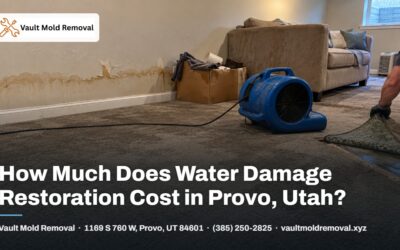
Once hidden moisture is located, we put a strategic drying and dehumidification plan into action. Our team strategically places high-velocity air movers to speed up evaporation and commercial-grade low-grain refrigerant (LGR) dehumidifiers to remove moisture from the air. This controlled environment reduces ambient humidity to ideal levels, preventing secondary damage and stopping mold growth. We continuously monitor temperature and relative humidity, adjusting equipment placement and settings as needed to ensure efficient drying in accordance with IICRC S500 standards. This careful attention to atmospheric conditions is important for truly drying out a structure, not just its surface.
Cleaning, Sanitizing, and Deodorizing
Water damage often leaves behind contaminants and unpleasant odors. Our process includes thorough cleaning and sanitization of affected surfaces using professional-grade, EPA-approved antimicrobial treatments. This step eliminates bacteria, viruses, and potential mold spores, restoring a healthy indoor environment. For persistent odors, we use specialized deodorization tools, ensuring your Provo basement not only looks clean but smells fresh and free of any lingering mustiness.
Monitoring and Verification
The drying process isn’t a “set it and forget it” task. Our technicians return regularly to monitor drying progress, taking new moisture readings and making any necessary adjustments to equipment. We continue this careful monitoring until all affected materials are confirmed dry to industry standards. A final inspection and moisture verification using our advanced detection tools ensures your basement is completely dry, protecting against any recurring issues, especially quick mold growth.
Beyond Extraction: Preparing for Structural Repairs and Mold Prevention
Water removal is the urgent first response, but it’s often the start of complete restoration. Once your Provo basement is thoroughly dry, the next phase might involve structural drying, where specialized techniques dry structural components, followed by necessary repairs. This could range from replacing saturated drywall and flooring to more complex structural rebuilds, all while following Provo City’s adopted 2021 International Building Code and International Residential Code.
Preventing future water intrusion is extremely important. For homes in Provo’s East Bench, proper grading and drainage solutions are key to managing spring runoff from the Wasatch Mountains. For older homes in the Joaquin neighborhood with known crawl space issues, encapsulation or improved ventilation can reduce moisture. Similarly, addressing insulation and ventilation in attics can prevent condensation issues that might lead to future water damage. Our team can provide advice and suggestions on preventative measures specific to your property’s weaknesses.
Partnering with Vault Mold Removal for Your Provo Basement Flood Cleanup
When a basement flood turns your world upside down, you need a partner who understands the details of restoration, especially within the Provo market. Vault Mold Removal, a locally owned and veteran-owned company, is ready with a decade of skill. Our focus goes beyond immediate cleanup; we offer insurance-backed work and estimates, and we work directly with your insurer to make the claims process easier. This means one less burden for you during an already stressful time. Customers consistently praise our quick, honest, and professional response, often highlighting our ability to find the exact source of water intrusion, a common challenge in older, more complex structures.
From the initial provo basement flood cleanup call to the final structural repair, our careful approach ensures your property is not just cleaned, but truly restored.
Secure Your Provo Home: Expert Water Removal Is a Call Away
Experiencing a basement flood in Provo can be overwhelming, but with Vault Mold Removal, you don’t have to face it alone. Our rapid response, certified skill, and deep understanding of local conditions, from the unique challenges of Provo’s historic homes to seasonal weather patterns, ensure your property is in capable hands. Don’t let standing water damage your home’s structure or lead to long-term mold problems. Act quickly. Contact Vault Mold Removal for immediate, professional water removal and complete restoration services. Water Damage Restoration
Frequently Asked Questions about Provo Basement Flood Cleanup
How quickly must water be removed to prevent mold in a Provo basement?
To significantly reduce the risk of mold growth, water removal should start within 24 to 48 hours of the flood. Provo’s climate, with its varying humidity levels, can speed up mold development, especially in older homes with moisture-retentive building materials like adobe and plaster, making swift action important.
Does Vault Mold Removal assist with insurance claims for basement floods in Utah County?
Yes, Vault Mold Removal provides full assistance with insurance claims for basement floods and other water damage incidents throughout Utah County. Our team can work directly with your insurer, providing detailed documentation and estimates to simplify the claims process and help reduce financial stress during restoration.
What makes Provo basements particularly vulnerable to flooding compared to other areas?
Provo basements face unique weaknesses due to a combination of factors, including their position along the Provo River corridor, low-lying western neighborhoods near Utah Lake affected by groundwater, and older housing stock with dated plumbing systems like galvanized supply lines. Additionally, seasonal heavy snowmelt and freeze-thaw cycles common in the area can make these issues worse.
Dealing with water damage right now?
Call (385) 250-2825. The Vault crew answers live, 24/7 — no call center. Inside Provo city limits, Monday–Saturday, 8 AM–5 PM, we guarantee arrival in 45 minutes; in Orem, Springville, Vineyard, Lindon and Mapleton it’s typically under 60.
Water damage restoration · Emergency water damage in Provo · Mold remediation · Financing
Related guides: How to dry out a wet basement · Sump pump failure
Related guides
Inside Provo city limits we guarantee a crew within 45 minutes, Mon–Sat 8 AM–5 PM. See Provo emergency water damage.
0 Comments