
Provo, Utah sewage backups handled safely and fully
Sewage in your Provo basement right now? Raw sewage is contaminated, it soaks into carpet, drywall and insulation, and the damage spreads the longer it sits. Our licensed, IICRC-certified firm works under sealed containment with PPE and gives you a free written estimate.
What sewage cleanup involves
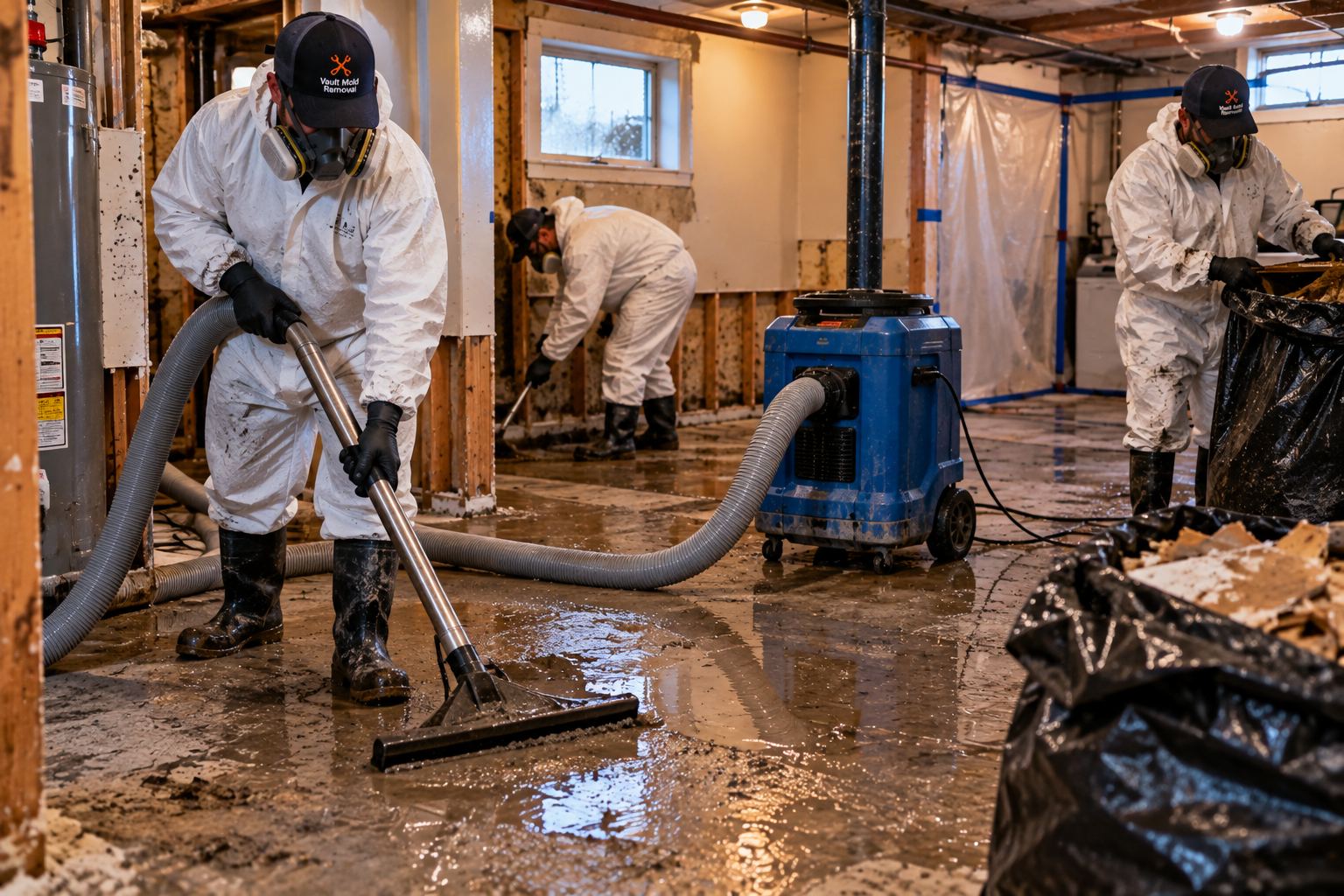
Sewage cleanup occupies its own category in water damage response for good reason: Category 3 black water contains pathogens, contaminants, and biological materials that produce serious health risks and require specific handling protocols beyond what standard water damage response covers. Toilet overflow with fecal content, sewer line backup, and other sewage events aren’t just extractable water — they’re contaminated material that requires containment, controlled removal, and comprehensive disinfection following IICRC S500 Category 3 protocols and applicable regulatory requirements. Provo sewage cleanup response requires proper equipment, appropriate PPE, and technicians trained specifically for Category 3 work. This page covers sewage cleanup specifically as we deliver it to Provo properties.
What Constitutes a Sewage Event
Category 3 Water Sources
These situations are Category 3 sewage water and call for a professional sewage cleanup company:
- Toilet overflow with fecal content: Overflow events that include human waste (Category 2 water — toilet supply line failures or clean-flush overflow without fecal content — is different and can be handled with grey water protocols)
- Sewer main line backup: Sewage backing up through drains, floor drains, or fixtures from the main sewer line
- Sewer service line failures: Property-side sewer line breaks or backups producing sewage discharge
- Septic system failures: Septic system backups affecting properties with septic (uncommon inside city limits, which are primarily on municipal sewer)
- Long-standing Category 2 water: Grey water that has sat for extended time and progressed to Category 3 due to microbial amplification
- Floodwater with sewage content: Storm-related flooding that has incorporated sewage from overflow of sewage infrastructure
Local sewage scenarios
Common sewage events we see:
- Aging sewer service lines in older neighborhoods: Joaquin, Franklin, Franklin South and other older neighborhoods have sewer service lines that predate modern materials and construction standards; root intrusion, joint failures, and pipe deterioration produce backup events
- Aging cast iron in mid-century homes: Grandview, Sherwood Hills, Edgemont, and other mid-century neighborhoods have aging cast iron drainage that can produce backup events
- City sewer capacity issues: During major precipitation or infrastructure events, the city’s sewer system can experience localized backup issues affecting connected properties
- Multi-family shared line events: BYU-area apartments and condominium complexes have shared sewer lines that produce building-wide events when they back up
- Commercial grease and specific waste events: Downtown restaurants and specific commercial properties produce commercial sewage events with different characteristics than residential events
Sewage Cleanup Response
Immediate Response
Emergency sewage cleanup services for active backups:
- Source containment: Address ongoing sewage flow (fixture shutoff, drain plugging, service line valve, or coordination with plumbers for repair)
- Occupant safety: Restrict access to affected areas until proper containment is established; particularly important for children, elderly, and immunocompromised individuals
- Immediate containment: Prevent contamination spread to unaffected areas of the property
- Category assessment: Confirm Category 3 classification and specific contamination characteristics
- Regulatory coordination: Notification to the city for main line issues; specific reporting for regulatory-triggered events
Containment Setup
Category 3 containment requirements:
- Plastic sheeting barriers separating affected areas from unaffected areas
- Negative air pressure with HEPA filtration for contamination control
- Decontamination zones for worker entry and exit
- Restricted access to containment areas during work
- Signage identifying contamination zones
PPE for Sewage Work
Comprehensive PPE for sewage cleanup:
- Respiratory protection: P100 or better respirators for airborne contamination protection
- Full-body protection: Tyvek or equivalent disposable protective suits
- Hand protection: Chemical-resistant nitrile gloves, sometimes with outer layer of heavy-duty gloves
- Foot protection: Chemical-resistant boots or disposable boot covers
- Eye protection: Full-face respirators or safety glasses with side shields
- Head protection: Disposable head covers preventing hair contamination
- Removal and disposal: Contaminated PPE handled and disposed of according to biohazard protocols
Contaminated Material Removal
Category 3 events typically require removal rather than restoration of most affected materials:
- Porous materials: Carpet, pad, drywall, insulation, and other porous materials require removal in Category 3 situations due to difficulty of adequate disinfection
- Semi-porous materials: Some wood, particle board, and other semi-porous materials require removal or specific restoration protocols
- Non-porous materials: Metal, glass, sealed surfaces, and hard plastics can often be restored through cleaning and disinfection
- Structural elements: Framing and structural components require assessment for restoration vs. replacement based on contamination extent
Disinfection Protocols
Disinfection and odor removal for Category 3 events:
- EPA-registered disinfectants: Antimicrobial products with EPA registration specifically for Category 3 water damage application
- Multiple applications: Category 3 typically requires multiple antimicrobial applications with proper contact time between applications
- Comprehensive coverage: All surfaces within the contaminated area treated, not just visibly affected surfaces
- Concealed area treatment: Antimicrobial application in cavities and concealed areas that may have been contaminated
- Post-cleanup verification: Documentation of complete disinfection protocol application
Extraction and Drying
Extraction, drying and damage restoration for Category 3 events:
- Dedicated Category 3 extraction equipment separated from other project use
- Discharge coordination with wastewater authority (the city for main sewer discharge or specific arrangements for contaminated water)
- Drying of surfaces that remain after material removal, following same principles as other water damage drying
- Extended drying timelines to ensure complete drying supporting disinfection effectiveness
Waste Disposal
Category 3 waste requires proper disposal:
- Contaminated materials handled as biohazard waste
- Disposal coordination with appropriate facilities for the specific contamination type
- Documentation of waste disposal supporting completion verification
- Compliance with city and Utah state requirements for contaminated waste disposal
Insurance Coverage for Sewage Events
Coverage Considerations
Insurance for sewage damage cleanup has specific patterns:
- Standard homeowner exclusion: Standard homeowner policies typically exclude sewer backup damage unless specific endorsement was purchased
- Sewer backup endorsement: Available endorsement (typically $50–$200 additional annual premium) that provides coverage for sewer-related damage
- Coverage limits: Endorsement coverage typically has specific limits ($5,000–$25,000 common ranges) below general property coverage
- Water backup coverage: Some carriers offer combined water/sewer backup coverage as an endorsement
- City liability: When sewer backup is caused by city infrastructure failure, city coverage may apply to specific damages; process typically involves claim submission to the city
Documentation for Sewage Claims
Documentation supporting sewage insurance claims:
- Photos and video documentation of the sewage event and affected areas
- Xactimate scope with line-item pricing for Category 3 remediation
- Category 3 protocol documentation showing appropriate response
- Material identification for removal and replacement
- Disposal documentation for contaminated materials
- Post-cleanup verification documentation
Health Considerations
Occupant Health Protection
Property occupants should be protected during sewage events:
- Restrict access to affected areas until cleanup is complete
- Particular caution for children, elderly, pregnant women, and immunocompromised individuals
- Medical attention for anyone with direct sewage contact experiencing symptoms
- Temporary relocation for extensive events affecting multiple areas of the property
Health Symptoms Warranting Medical Attention
Sewage exposure symptoms warranting medical evaluation:
- Gastrointestinal symptoms following exposure
- Skin infections or persistent rashes at contact areas
- Respiratory symptoms during or after exposure
- Fever, chills, or other systemic symptoms following exposure
Medical evaluation for exposure-related symptoms follows standard medical protocols and isn’t part of our restoration scope; we address the property while medical professionals address any health concerns.
City sewer vs. your sewer line
Provo City Sewer System
Provo City sewer system context:
- Municipal sewer service throughout the developed portions of the city
- Aging infrastructure in some older neighborhoods with periodic upgrades
- Standard urban sewer challenges (root intrusion, capacity during major events, aging pipes)
- Property owner responsibility ends at the property line for most residential situations
Property Owner vs. City Responsibility
Responsibility for sewer-related events:
- Property side: Property owner responsibility for sewer service line from house to property line (in most jurisdictions), including maintenance and repair
- City side: Provo City responsibility for main sewer line and infrastructure from property line to treatment facilities
- Backup at main line: City responsibility if backup originates in main line infrastructure
- Backup at service line: Property owner responsibility if backup originates in property-side infrastructure
- Determination: Sometimes requires plumbing inspection to determine specific source and responsibility
Frequently Asked Questions
- My toilet overflowed but the water was mostly clean because I flushed clean water. Is that still Category 3?
- Depends on the specific circumstances. Category classification for toilet overflow: clean-flush overflow without fecal content (someone flushed clean water and the tank overflowed, or supply line to toilet failed) is typically Category 2 or even Category 1 depending on cleanliness of the fixtures and elapsed time; overflow with fecal content is Category 3 regardless of specific volume or duration. For your specific situation: if the overflow occurred while the toilet was being used and included fecal content, treat it as Category 3; if the overflow was from clean water only (supply failure, tank overflow with only clean water), it can be handled as Category 2. Practical caution: when in doubt, treat as more contaminated rather than less contaminated; the health and property implications of undertreating Category 3 as Category 2 are significant. During our assessment we can identify the specific category based on the actual circumstances. For toilet overflow events where you’re uncertain: keep occupants (particularly children) out of the affected area until professional assessment, don’t attempt DIY cleanup beyond containment of standing water with cleaning supplies used only for that purpose, and let professionals assess the specific situation for appropriate response.
- How do I know if my sewer backup is a city issue or my responsibility?
- Typically requires plumbing inspection to determine specific source. Standard responsibility structure: property side (from property line to house) is homeowner responsibility including the sewer service line and any lateral connections; city side (main sewer line from property line onward through the system) is Provo City responsibility. Backup source determination: if the backup originates in the service line on the property side, it’s property owner responsibility; if the backup originates in the main line, it’s typically city responsibility. Practical determination: plumbers can typically identify whether a backup originated in property-side infrastructure through inspection, snake, or camera work; Provo City can investigate main line conditions and confirm whether their infrastructure was involved. For claim process: if property-side responsibility, homeowner’s sewer backup coverage (if you have this endorsement) may apply, or property owner pays directly; if city-side responsibility, claim to Provo City may recover specific damages, though city liability has specific limitations and processes. For your specific situation: our response addresses the physical damage regardless of responsibility determination; the responsibility discussion for who pays typically happens separately from the restoration work itself.
- Can I just clean up the sewage myself with bleach to save money?
- Strongly not recommended for health and property reasons. Reasons professional response is warranted for sewage cleanup: health risks from pathogen exposure without proper PPE and protocols are significant; inadequate disinfection produces continued contamination that develops odor, mold, and health issues over time; porous materials (drywall, carpet, insulation) contaminated with sewage typically require removal rather than surface disinfection; regulatory requirements for Category 3 water disposal aren’t typically met by DIY cleanup; and insurance coverage often requires professional response documentation for claim payment. Specific bleach limitations: bleach is a surface disinfectant that works on relatively clean surfaces, not on organic-material-contaminated surfaces where pathogens can survive bleach exposure; bleach effectiveness diminishes rapidly on organic materials; bleach doesn’t address concealed contamination in cavities or porous materials; and bleach fumes plus sewage decomposition can produce respiratory hazards during DIY cleanup. Cost consideration: DIY cleanup that appears successful can produce ongoing issues (odor, mold, health effects) that eventually require professional response anyway; the cost savings from DIY typically don’t materialize when comprehensive resolution is considered. For small localized events (small clean-flush overflow with minimal spread), DIY may be manageable with proper precautions; for any significant sewage event, professional response protects both health and property.
- How long does sewage cleanup typically take?
- Depends on scope, but typical timelines: small residential events (localized area, minimal material replacement) — 3–7 days for mitigation, 1–3 weeks for reconstruction; standard residential events (bathroom, hallway, or basement affected) — 5–10 days for mitigation, 2–4 weeks for reconstruction; larger residential events (multiple areas affected, extensive material removal) — 10–20 days for mitigation, 4–8 weeks for reconstruction; very large or extensive events — 3–6 weeks for mitigation, 2–6 months for reconstruction. Timeline drivers: extent of contaminated material requiring removal, containment complexity, multiple applications of antimicrobials with contact time between, drying phase timing, and reconstruction after mitigation completion. Sewage events typically extend longer than comparable Category 1 water events due to material removal requirements, comprehensive disinfection protocols, and additional verification steps. For your specific Provo project, we develop specific timeline expectations during initial scope development.
- What if the sewage backup keeps happening? Can that be prevented?
- Yes, several approaches can prevent recurring sewage backup events. For recurring backup situations, identifying the specific cause is essential: root intrusion in sewer service lines (common cause in older Provo neighborhoods; requires periodic professional cleaning or line replacement); pipe damage or partial collapse in aging service lines (typically requires line repair or replacement); undersized service lines that back up during specific usage patterns; and grease or debris buildup in specific sections. Preventive approaches: annual professional sewer line inspection and cleaning to identify issues before they cause backups; sewer line replacement for chronic issues in aging lines (significant cost but eliminates recurring issues); installation of backwater valves that prevent city sewer backup from entering the property; and general maintenance including grease/debris minimization at kitchen and utility drains. For Provo homes with recurring backup issues, comprehensive plumbing evaluation identifies the specific cause and appropriate preventive approach. Cost/benefit: recurring backup response costs typically exceed preventive investment over time; addressing the underlying cause is worthwhile for chronic situations. Insurance considerations: some carriers may adjust premiums or coverage after multiple sewer backup claims, making preventive work valuable for both cost avoidance and coverage maintenance.
Contact Vault Mold Removal
For sewage cleanup response or coordination for specific projects, contact our office directly.
- Phone: (385) 250-2825
- Address: 1169 S 760 W, Provo, UT 84601
- Utah DOPL General Contractor License: #11876543-5501
- IICRC WRT / ASD / AMRT / OCT: #248317 / #248317-ASD / #319482 / #319482-OCT
Office Hours
- Monday – Saturday: 8:00 AM – 5:00 PM
- Sunday: Closed
Written warranty
24-month workmanship warranty on drying, structural repairs, drywall, flooring, cabinetry and paint done by Vault. 90-day mold warranty from post-remediation clearance for recurrence from the same moisture source. Both are transferable once to a new homeowner, in writing on the work order. Full terms at /warranty/.
We bill your carrier directly
Direct-billing with State Farm, USAA, Allstate, Farmers and Bear River Mutual. Every scope is written in Xactimate; you pay only your deductible plus anything the policy doesn’t cover. Not on this list? We still handle the claim.
Who shows up on your job
You get Vault’s W-2 crew — Marcus, Ryan, Elena, Daniel and Joseph — not a lead-gen handoff and not a franchise sub. Reconstruction (drywall, flooring, cabinetry, paint) is done by the same crew under Utah DOPL License #11876543-5501.
45-Minute Arrival Guarantee (Provo city limits)
Live-answered 24/7 at (385) 250-2825, dispatched by the on-call Vault technician.
- Zone covered
- Provo city limits (ZIPs 84601, 84604, 84606).
- Hours covered
- Daytime, Monday–Saturday 8 AM–5 PM. The phone is still answered live 24/7; after hours we dispatch as fast as we can, without the 45-minute guarantee.
- Clock starts
- When the call is answered.
- Remedy if late
- Free emergency inspection on arrival.
Full terms at /response-time-guarantee/.
Helpful guides: Sewage backup health risks · Sewer gas smell · Cast iron drain failure
What our customers say
“A sewer line backed up into our downstairs bathroom, and we knew it wasn’t something we should try cleaning ourselves. The crew explained the safety precautions, removed the contaminated materials, and cleaned the affected area. They were professional about a pretty unpleasant situation and kept us informed.”
— Kevin L., Provo, Utah
All our services
Find us, sewer line repair and quick answers
Sewage is Category 3 water and has to be cleaned up under sealed containment with negative air and full PPE. Vault Mold Removal handles sewage backup cleanup in Provo and can also clear and repair the sewer line itself, so one crew takes care of both the mess and the cause.
Find us
1169 S 760 W, Provo, UT 84601
Phone: (385) 250-2825 (answered live 24/7)
Email: info@vaultmoldremoval.xyz
Office: Monday–Saturday, 8 AM–5 PM
Vault is based in Provo and also serves the surrounding areas: Orem, Springville, Vineyard, Lindon and Mapleton. Outside Provo, arrival is typically under 60 minutes.
How much does sewage cleanup cost?
Every sewage job gets a free written estimate before work starts, because the price depends on how far the water spread and which materials have to come out. On insured losses Vault bills the carrier directly, and Wisetack financing ($500–$25,000 over 3–24 months, soft credit check) is available for deductibles or uninsured work.
Is a sewage backup covered by insurance?
Many standard homeowners policies exclude sewer backup unless you added a sewer backup endorsement, so check your policy. Either way, Vault documents the loss with photos, moisture readings and an Xactimate scope so you have what the adjuster needs.
Can Vault also fix the sewer line that caused the backup?
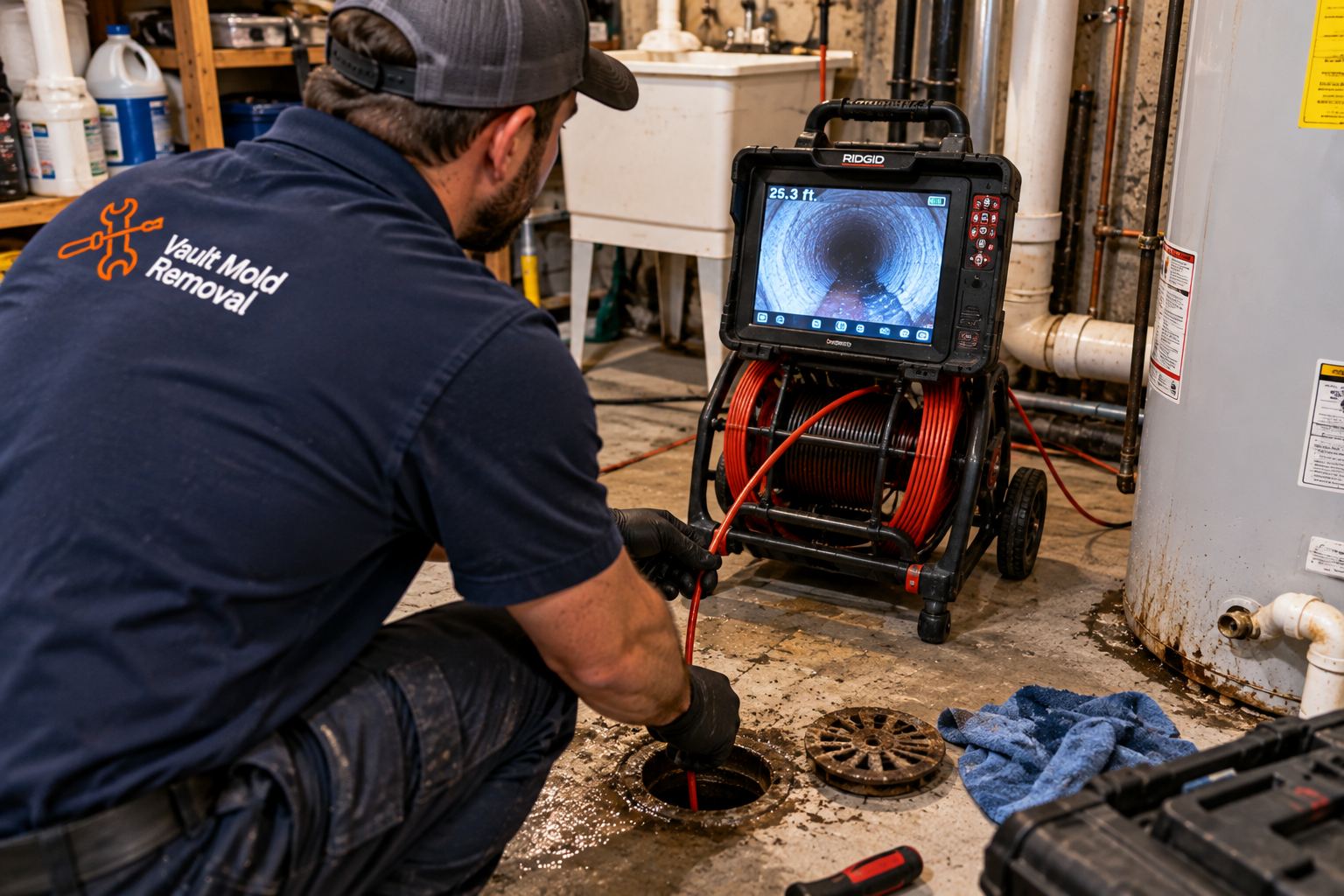
Yes. Vault does sewer line work in-house under the same Utah license (#11876543-5501): snaking, hydro-jetting, camera inspection, and repair or replacement of damaged sections. Sewer line work gets a free written estimate too.
Check us yourself: our Utah general contractor license #11876543-5501 is listed in the Utah DOPL license lookup, and our crew follows the IICRC standards for water damage and mold work.
Find Vault online: Facebook · Instagram · LinkedIn · YouTube
Helpful sources: Provo City utilities · EPA flood cleanup guidance. Related: sewage backup cleanup · toilet overflow · sewer line services
If sewage is coming up through a floor drain, toilet or tub in Provo, keep children and pets away from it and call (385) 250-2825. Vault’s sewage cleanup crew answers live 24/7 and brings the containment and PPE to do it safely.
Our office and shop
Vault Mold Removal LLC — water damage restoration, mold remediation and sewage cleanup from 1169 S 760 W, Provo, UT 84601. Phone answered live 24/7: (385) 250-2825.
Three more questions
What gets removed after a backup?
Porous materials the wastewater touched — typically carpet pad, the bottom of the drywall and insulation — are removed. Hard surfaces are cleaned and disinfected.
What causes sewer backups?
Common causes are clogs, tree roots and broken or sagging lines. A camera inspection shows which one it is, and the repair is done in-house.
Does your crew wear protective gear?
Yes — full PPE, with sealed containment and negative air where appropriate.
Sewage backup in Provo? Call now for cleanup
Cleanup starts with one call to (385) 250-2825. Our crew handles the cleanup, the sewer line work and the paperwork for your insurer.