
Commercial flood cleanup at a glance
For a business, water damage means downtime as well as repairs. Vault’s crew works to remove water fast, dry the building properly and keep as much of the space usable as possible while work is done.
- Call any hour: (385) 250-2825 is answered live 24/7 by the Vault crew, not a call center. 45-minute arrival guarantee inside Provo city limits (Monday–Saturday, 8 AM–5 PM); typically under 60 minutes elsewhere in our Utah County service area.
- Who does the work: Vault’s own W-2 crew, IICRC certified in WRT, ASD, AMRT and OCT, working under Utah DOPL General Contractor License #11876543-5501. No subcontractors. Meet the team
- Insurance: we document damage daily, write the scope in Xactimate and bill State Farm, USAA, Allstate, Farmers or Bear River Mutual directly.
- Warranty: 24-month workmanship warranty on the rebuild, plus a 90-day mold warranty from post-remediation clearance where mold work was done. Warranty details
- Financing: through Wisetack, $500–$25,000 over 3–24 months, soft credit check. Financing
- Commercial scope: emergency extraction, carpet tile removal in sections, commercial dehumidification sized for open floor plans, drop-ceiling tile replacement, and documentation your insurer and landlord need.
- Real Vault commercial jobs: East Bay office supply-line burst, Downtown retail copper burst.
- Family-owned and veteran-operated, based in Provo since 2020.
Water damage restoration · Mold remediation · Sewage cleanup · How we contain the work area
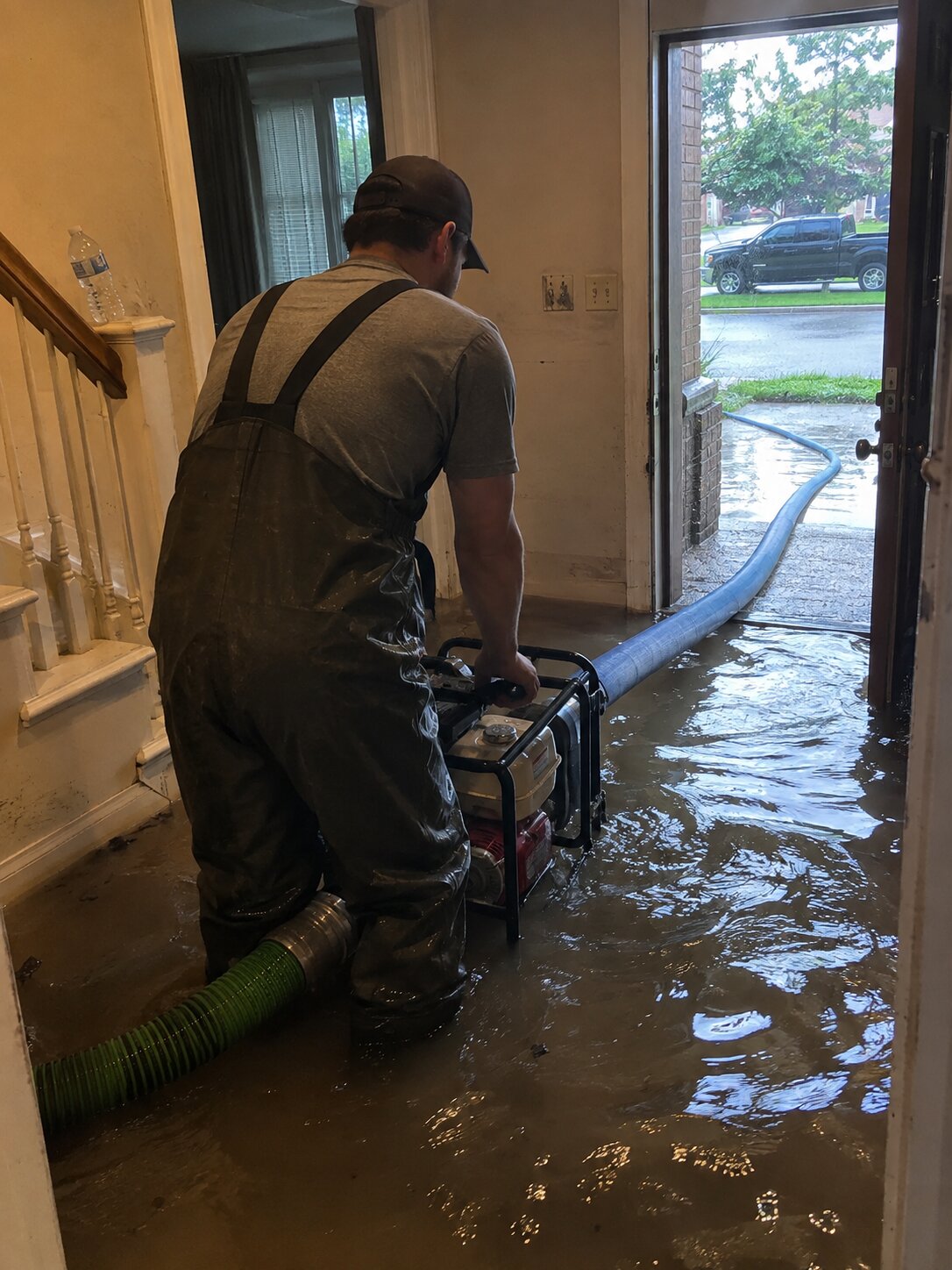
Commercial Flood Cleanup — Utah County Business Response
Commercial flood and water damage cleanup is a distinct discipline from residential work. Commercial properties have different operational requirements (business continuity, tenant coordination, revenue-loss implications), different physical characteristics (larger volumes, specialized building systems, commercial-grade materials), different regulatory frameworks (health department involvement for food service, HIPAA for medical, accessibility considerations for public buildings), and different insurance structures (commercial policies with business interruption coverage). Vault Mold Removal handles commercial water damage response across Utah County for retail, office, warehouse, medical, restaurant, and multi-family properties, coordinating the technical restoration work with the operational needs that make commercial situations different from residential response. This page describes the specific considerations for commercial flood cleanup and how our approach adapts to the business context.
Commercial Property Types and Specific Considerations
Retail Properties
Retail properties (single-store operations, strip mall units, mall retail spaces, storefront operations) have specific water damage considerations:
- Merchandise protection and pack-out during affected-area work
- Customer flow accommodation during business-hours restoration
- Business hours coordination for extraction, drying, and reconstruction to minimize operational disruption
- Insurance coordination for both property damage and business interruption claims
- Coordination with landlord and other tenants for shared building situations
Office Properties
Office buildings (single-tenant office buildings, multi-tenant office towers, professional office suites) present different requirements:
- Documentation, computer equipment, and confidential file protection during restoration
- Coordination with IT infrastructure (server rooms, networking equipment) that may be affected by water events
- Tenant coordination for multi-tenant buildings where water damage affects some but not all tenants
- Common area versus tenant space responsibility clarification
- After-hours and weekend work options to accommodate business operations
Warehouse and Industrial Properties
Warehouse, distribution, and light industrial properties often have specific water damage patterns:
- Larger open volumes requiring different drying equipment configurations
- Inventory protection and coordination with warehouse operations
- Specialized equipment or machinery that may be affected
- Concrete slab drying that’s typical of warehouse construction
- Loading dock and truck access implications during restoration work
Medical Facilities
Medical facilities (clinics, dental offices, medical offices, urgent care, veterinary clinics) have the most complex commercial water damage considerations:
- HIPAA compliance for patient information protection during restoration work
- Infection control considerations that go beyond standard commercial disinfection
- Medical equipment protection and specialized restoration when equipment is affected
- Continuous operation requirements for facilities that can’t close during restoration
- Documentation for medical licensing and inspection requirements
- Coordination with facility management for specialized building systems (medical gas, laboratory equipment, imaging equipment)
Restaurant and Food Service
Restaurant water damage combines standard commercial response with food service specific requirements:
- Utah County Health Department coordination when the water event affects food storage or preparation areas
- Food inventory disposal for anything with water contact
- Kitchen equipment cleaning and decontamination (walk-in coolers, prep tables, cooking equipment)
- Grease trap and drain system considerations for restaurant-specific water events
- Health department reinspection before reopening after significant events
- Coordination with health department if the water damage triggered temporary closure
Multi-Family Residential (Apartments, Condos)
Multi-family properties combine residential and commercial characteristics:
- Tenant coordination and communication for occupied units
- Common area versus unit-specific damage assessment
- HOA or property management coordination for scope development
- Multiple insurance policies (property owner, HOA, individual unit tenants) with coordination requirements
- Utah tenant protection considerations under the Fit Premises Act
- Temporary relocation coordination for tenants when units are uninhabitable
Common Commercial Water Damage Scenarios
Plumbing Failures
Plumbing failures produce the majority of commercial water damage. Common causes:
- Supply line failures at fixtures
- Water heater tank failures (large commercial water heaters produce more water than residential failures)
- Sprinkler system activation (accidental or fire-related)
- Drain line backups affecting multiple fixtures
- Rooftop HVAC condensate line failures affecting spaces below
Weather-Related Events
Weather-related commercial water damage is less common in Utah County than in flood-prone regions but does occur:
- Roof leaks during heavy precipitation events
- Ice dam events on flat commercial roofs
- Frozen pipe events during severe cold weather
- Storm surge and overland flooding in flood-prone commercial areas near Utah Lake or Provo River
Sprinkler System Activation
Fire suppression sprinkler activation produces significant water damage regardless of the activation cause. A single sprinkler head releases 15–25 gallons per minute of water; larger fires that trigger multiple heads can release thousands of gallons before the system is manually shut down. Accidental activation from freezing, equipment failure, or vandalism produces the same water damage without the underlying fire event.
Category 3 Sewage Events
Commercial sewage backups follow the same IICRC S500 Category 3 protocols as residential, with additional considerations for commercial operations. Restaurant grease trap failures, multi-user restroom sewage backups, and drain line failures under commercial buildings all trigger significant response requirements.
Our Commercial Response Process
Rapid Response and Business Coordination
Commercial response prioritizes business continuity from the initial call. Standard approach:
- Same-day or next-day on-site response for active water events (call routing depends on time of day)
- Coordination with business operations manager or owner for continuity planning
- Assessment of operational impact and options for maintaining business function during restoration
- Insurance carrier notification and coordination throughout the process
Business-Hours Coordination
Commercial restoration often requires coordination with business operations rather than displacing them:
- After-hours and weekend work scheduling for retail and office spaces
- Segmented work approach where portions of the property can remain operational during restoration of other portions
- Containment and dust control to allow adjacent operations during restoration
- Overnight setup and takedown of equipment for operations that need daytime use of affected areas
Documentation for Business Interruption Claims
Business interruption (BI) coverage under commercial insurance policies pays for lost revenue during periods when the business can’t operate normally due to a covered event. BI claim documentation requires:
- Pre-loss revenue documentation (typically 12 months of financials)
- Post-loss operational status documentation (what the business could and couldn’t do during restoration)
- Restoration timeline documentation showing what work was performed when
- Extra expense documentation for costs incurred to maintain operations during restoration
Our documentation supports BI claims by providing detailed timeline and scope information that BI adjusters need for claim development. BI claims are often the largest financial recovery for commercial water damage events, sometimes exceeding the property damage claim.
Coordinated Trades for Complex Projects
Commercial water damage often involves multiple building systems that require coordinated response. Standard trade coordination:
- Electrical contractors for building electrical systems, particularly when panels, transformers, or major equipment are affected
- Plumbing contractors for underlying cause resolution and any commercial plumbing modifications
- HVAC contractors for commercial HVAC equipment affected by water events
- Specialized cleaning contractors for medical facilities, food service, and other regulated environments
- Fire suppression contractors for sprinkler system restoration after activation
Building System Restoration
Commercial buildings have systems that residential properties typically don’t have. Water damage to these systems requires specialized response:
- Elevator equipment when water reaches elevator machine rooms or shafts
- Data center and server room recovery for offices where computing infrastructure is affected
- Commercial kitchen equipment restoration for restaurants and food service
- Medical gas systems for healthcare facilities
- Laboratory and specialty equipment for facilities with technical equipment
- Building automation systems (thermostats, security, lighting controls)
Commercial Insurance Considerations
Commercial insurance coverage differs from residential in several important ways:
- Deductibles are typically higher (often $5,000–$25,000 or higher for larger properties) than residential deductibles
- Business interruption coverage is available but typically requires specific policy provisions and documentation
- Extra expense coverage pays for costs incurred to maintain operations during restoration
- Coinsurance provisions may reduce claim payment if property is underinsured relative to replacement value
- Named perils vs. all-risk policies affect coverage for specific water damage scenarios
- Ordinance and Law coverage for code upgrades required by current building codes
Standard commercial market carriers we regularly coordinate with in Utah County: The Hartford, Travelers, Zurich, CNA, Chubb, Bear River Mutual Commercial, State Farm Business Insurance, Liberty Mutual, and Nationwide Commercial.
Frequently Asked Questions
- Can we stay operational during restoration?
- Depends on the scope and property configuration. Small localized water damage in a portion of the property can often be worked around, with containment isolating the affected area from operational spaces and work scheduled to minimize disruption. Larger events affecting primary operational areas typically require reduced operations or temporary closure. Options we typically discuss with commercial clients: after-hours and weekend work scheduling that keeps daytime operations open, segmented restoration approaches where portions of the property remain operational, temporary operational modifications (moving key equipment to unaffected areas, reduced service scope, alternate work locations for staff), and business interruption insurance claims for periods when full operations aren’t possible. The specific approach depends on your business type, property configuration, and the extent of the water damage.
- How do you handle sensitive information (medical records, financial documents, customer data) during restoration?
- With specific protocols matched to the sensitivity level and regulatory requirements. For medical facilities (HIPAA), documents and equipment containing patient information are protected through: containment that limits access to authorized personnel, physical security during pack-out and off-site processing, restoration facility security matched to HIPAA requirements, and background-checked personnel for all handling. For financial and legal offices, similar protocols apply for financial records, client files, and confidential business information. For any commercial client with sensitive data concerns, we can discuss specific protocols during initial assessment and adapt our approach to your security requirements. Our team members sign confidentiality agreements as standard practice, and we can provide additional documentation of security procedures on request.
- What documentation do we need for business interruption claims?
- Comprehensive financial documentation combined with detailed operational impact records. Standard BI claim documentation includes: 12 months of pre-loss financial statements showing normal revenue patterns, detailed records of what the business could and couldn’t do during the restoration period, extra expense documentation for costs incurred to maintain partial operations (temporary space rental, equipment rental, overtime for staff, expedited services), documentation of specific customer impacts (canceled reservations, lost sales, service commitments that couldn’t be met), and detailed restoration timeline documentation showing when specific areas returned to operational status. We provide the restoration timeline documentation as standard project deliverables; the financial documentation comes from your accounting records. Public adjusters and BI claim specialists sometimes support commercial BI claim development for larger losses; we can provide referrals when the complexity warrants that expertise.
- How long does commercial water damage restoration typically take?
- Highly variable based on scope, property size, and operational requirements. Small commercial water events (localized damage, moderate scope): 2–4 weeks total. Medium commercial events (multi-room damage, standard building systems): 4–8 weeks. Larger commercial events (whole-property damage, complex building systems, coordination-intensive scope): 8–20 weeks. Very large events (major structural damage, extensive equipment replacement, specialized facility requirements): can extend to 6+ months. Commercial timelines are often driven by coordination requirements as much as physical work — scheduling around business operations, permitting for commercial modifications, specialty equipment lead times, and multi-trade coordination all affect timelines. Standard commercial projects have detailed schedules developed during initial scope development and updated as the project progresses.
- Do you provide after-hours emergency response for commercial water events?
- Yes, through on-call rotation for after-hours calls. Business-hours calls are answered live for immediate response coordination; after-hours calls route to on-call rotation with typical response times of 4–8 hours for standard commercial events and faster for active water events that require immediate mitigation. For commercial clients with specific after-hours response requirements (property management companies with multiple properties, businesses in specific industries), we can discuss standing arrangements that include priority response protocols during initial engagement. For any commercial water event, the immediate response priority is stopping the water source and beginning extraction; extended restoration work typically resumes during business hours after the initial emergency response.
Contact Vault Mold Removal — Provo, UT
For commercial water damage response, coordination with property management or business operations, or standing arrangements for property management portfolios, contact our office directly. Business-hours calls answered live; after-hours calls route to on-call rotation for time-sensitive events.
- Phone: (385) 250-2825
- Address: 1169 S 760 W, Provo, UT 84601
- Utah DOPL General Contractor License: #11876543-5501
- IICRC WRT / ASD / AMRT / OCT: #248317 / #248317-ASD / #319482 / #319482-OCT
Office Hours
- Monday – Saturday: 9:00 AM – 5:00 PM
- Sunday: Closed
Helpful guides: Keeping your business open · Restaurant water damage · Fire sprinkler discharge