
Fire damage board-up & emergency tarping
After a fire, windows, doors and roof openings need to be secured against weather and intrusion before cleanup starts. Vault handles the emergency board-up and tarping.
- Call any hour: (385) 250-2825 is answered live 24/7 by the Vault crew. 45-minute arrival inside Provo city limits (Monday–Saturday, 8 AM–5 PM); typically under 60 minutes elsewhere in our Utah County service area.
- In-house: plywood board-up for broken windows and doors, emergency roof tarping, debris containment, and photos your insurer will need.
- Who does the work: Vault’s own W-2 crew, IICRC certified in WRT, ASD, AMRT and OCT, under Utah DOPL General Contractor License #11876543-5501. No subcontractors. Meet the team
- Insurance: Xactimate scopes, direct billing to State Farm, USAA, Allstate, Farmers and Bear River Mutual.
- Warranty: 24-month workmanship warranty on the rebuild. Warranty details · Financing
- Family-owned and veteran-operated, based in Provo since 2020.
Water damage restoration · Mold remediation · Sewage cleanup · Reconstruction & repairs
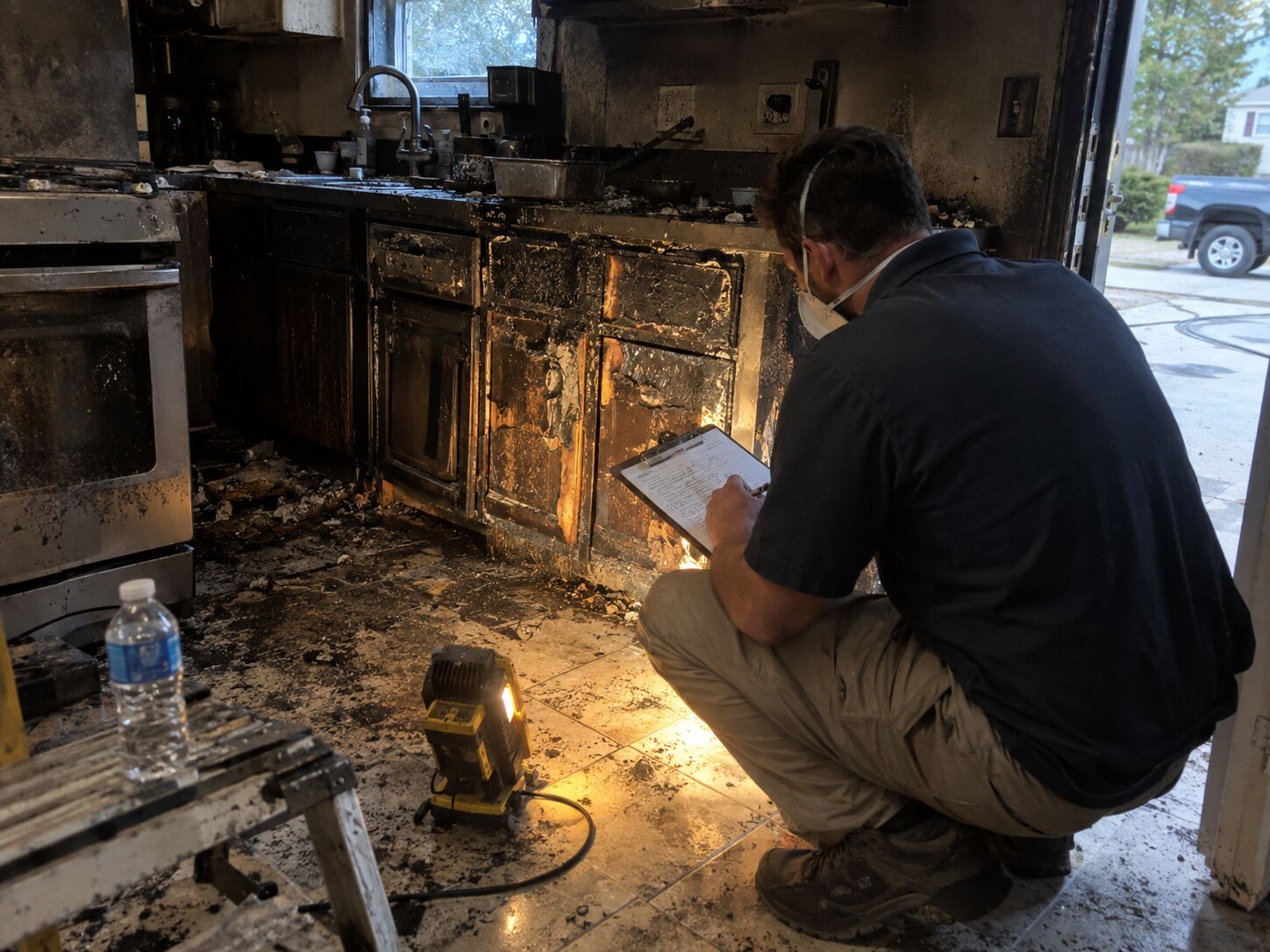
Fire Damage Board-Up Services — Utah County Emergency Response
Emergency board-up is the first restoration work performed at most fire damage sites, and it’s arguably the most time-sensitive part of the entire restoration process. Between the moment the fire department releases the property and the moment permanent restoration begins, the property is exposed to weather, unauthorized entry, and additional damage from any of dozens of secondary risks. Board-up work stabilizes that exposure window — typically within 24 hours of fire department clearance. Vault Mold Removal provides emergency board-up services across Utah County, working with fire departments, insurance carriers, and property owners to secure damaged properties quickly. This page describes what board-up work actually involves, the coordination with other parties, and why timing matters more than most property owners realize.
Why Board-Up Matters
The immediate post-fire condition of a property typically includes multiple compromised structural elements: broken windows from heat expansion or firefighter access, damaged or destroyed doors from forced entry or fire damage, roof holes from ventilation cuts or structural collapse, and various openings from fire department suppression work. Every one of these openings creates ongoing risk:
- Weather intrusion: Precipitation entering the property produces water damage on top of fire damage. Utah County properties are particularly at risk during shoulder seasons (October–November, March–April) when precipitation is more frequent and temperature swings can produce freeze-thaw water damage as well.
- Wildlife entry: Openings attract birds, rodents, and larger wildlife (particularly in foothills properties). Wildlife inside a fire-damaged property produces droppings, nesting damage, and potential biohazard situations to address on top of the fire restoration.
- Unauthorized entry: Empty, damaged properties attract theft (contractors’ tools, salvageable metals, remaining personal property) and vandalism. Some Utah County neighborhoods have had specific incidents of post-fire property theft.
- Additional structural damage: Wind through openings can extend structural damage, spread ash and soot, and damage remaining interior finishes.
- Legal liability: Property owners have some legal responsibility for injuries to anyone (including trespassers) at the damaged property. Adequate board-up reduces liability exposure.
- Insurance coverage requirements: Most homeowner policies include a “duty to mitigate” obligation requiring property owners to take reasonable steps to prevent additional damage after a covered event. Failure to board-up promptly can result in coverage disputes for damage that occurs during the delay.
Standard Board-Up Scope
Window and Door Board-Up
Damaged windows and doors are the most common board-up work. Standard approach:
- 3/4″ plywood cut to fit each opening precisely
- Attachment with structural screws to the building frame rather than the window frame or door frame (which may be damaged)
- Corner blocking on larger openings for wind resistance
- Weatherproofing around the perimeter with appropriate sealants where practical
- Door openings sometimes have a smaller access hatch integrated so restoration workers can enter without removing the full board-up
Roof Tarping
Roof damage requires tarping to prevent water intrusion during any precipitation while permanent repairs are pending. Standard approach:
- Heavy-duty tarp (typically 12–20 mil) sized appropriately for the damaged area with generous overlap onto sound roofing
- Attachment with wood strapping along tarp edges, screwed through the tarp into roof decking
- Sealant application at the strapping edges to prevent wind uplift and water penetration under the strapping
- Tarping extends beyond the visible damaged area to ensure water sheds onto sound roofing rather than into the damaged area
Fence and Perimeter Security
Larger fire damage sites or properties in higher-risk areas may warrant additional perimeter security beyond just building openings:
- Temporary chain-link fencing around the damaged structure
- Gate installation at reasonable access points
- Warning signage per liability protection standards
- Coordination with local jurisdictions when public sidewalks or streets are affected
Utility Coordination
Fire damage typically affects utility connections. Standard coordination:
- Electrical shutoff verification (may be initiated by fire department during suppression)
- Gas shutoff at the meter (typically by fire department or gas utility company)
- Water shutoff if pipes may be compromised or if the property is at risk of freezing
- Documentation of utility conditions for insurance claim development
Documentation
Every board-up job includes photo documentation of the property condition at arrival, work performed, and property condition at completion. Documentation is delivered to the property owner and the insurance carrier as the initial documentation package for the fire claim.
Timing and Coordination
Fire Department Release
Board-up work can’t begin until the fire department has released the property. Release timing depends on:
- Complete extinguishment of the fire including hidden hot spots
- Investigation completion (fire origin and cause determination)
- Structural safety assessment
- Any coordination with law enforcement for cases where investigation may be extended
Standard release timing is typically same-day for straightforward fires, though larger fires or those requiring extended investigation can take 24–72 hours before release. Insurance carriers typically won’t authorize board-up before fire department release, and entering a released-but-not-cleared property creates liability issues.
Property Owner Notification
Property owners typically discover their property has been affected by fire either during the event or from fire department notification afterward. First calls should be: fire department for status, insurance carrier for claim initiation, and restoration contractor for board-up coordination. In cases where the property owner isn’t reachable (traveling, hospitalized, in shock), fire department and insurance carrier may authorize emergency board-up without direct property owner authorization — documentation supports subsequent billing.
Insurance Carrier Coordination
Most fire damage claims include board-up under “loss mitigation” or “protective measures” coverage that’s typically separate from the main claim scope. This coverage is available even before the main claim scope is agreed, allowing board-up to proceed immediately after fire department release. Documentation of board-up work is submitted to the carrier as the first claim documentation.
Response Time
Our standard board-up response is same-day for calls received during business hours, with weekend and after-hours response typically within 4–8 hours of the call. For Utah County properties experiencing fires during business hours, board-up work is typically completed the same day. For fires occurring overnight or during weekends, board-up work is typically completed the following morning.
Board-Up Durability
Board-up is temporary but should hold up for the full restoration timeline, which can extend from weeks to months. Standard board-up work is engineered for:
- Full seasonal weather exposure including Utah County winter conditions (heavy snow loads on tarped roofs, wind exposure, freeze-thaw cycles)
- Standard security requirements for the property location and value
- Duration typically up to 6 months without maintenance; longer projects sometimes require re-tarping or board maintenance
Property owners should periodically inspect board-up condition during extended restoration timelines and report any wind damage, tarp failure, or other issues promptly. We provide maintenance visits for board-up systems on request.
Removal at Restoration Completion
Board-up removal is part of the standard restoration completion process, typically coordinated with the reconstruction phase when permanent replacements for the boarded openings are being installed. Board removal, plywood disposal, and any repair to attachment points is included in the restoration scope.
Frequently Asked Questions
- Who pays for the board-up work?
- Typically the property owner’s insurance carrier as part of the fire damage claim. Standard homeowner policies include coverage for “loss mitigation” or “protective measures” that pay for reasonable steps to prevent additional damage after a covered event. This coverage is typically triggered immediately after the fire event, before the main claim scope is developed, so board-up doesn’t wait for adjuster review. Board-up costs are billed directly to the insurance carrier with property owner authorization; the property owner isn’t typically responsible for out-of-pocket payment. Standard board-up for a residential property typically costs $1,500–$5,000 depending on the extent of damage, size of the property, and specific work required.
- Can I do the board-up myself to save money?
- Technically yes, though we don’t generally recommend it. Emergency board-up is covered by insurance, so there’s no cost savings for the property owner — DIY board-up doesn’t reduce your out-of-pocket expense. What DIY board-up can produce: safety issues from working on damaged structures immediately after a fire, inadequate weather protection that fails during the restoration timeline, insurance claim complications if documentation doesn’t meet claim requirements, and additional damage during the restoration timeline if the board-up isn’t properly engineered. Professional board-up costs are covered by insurance and provide documented, engineered work that reliably protects the property through the entire restoration timeline. For very minor damage (single broken window, limited roof damage) some property owners handle it themselves; for significant fire damage, professional response is worth the coordination even when insurance covers it.
- How long does board-up take on-site?
- Depends on the extent of damage. Small fires with limited board-up scope (a few windows, one door) typically take 2–4 hours on-site. Standard residential fire board-up with multiple openings and some roof work typically takes 4–8 hours. Larger residential fires or commercial situations can take a full day or extend to a second day for the initial board-up. Response time from initial call to arrival is typically 4–8 hours; on-site work time is separate.
- Will the board-up look ugly? My neighborhood has HOA rules about property appearance.
- It won’t look great — plywood board-up is clearly emergency work, not decorative — but it’s typically acceptable under HOA rules that recognize post-disaster situations. Most HOAs specifically exempt emergency post-fire board-up from standard property appearance requirements for a reasonable period during restoration. For properties where appearance concerns are significant, we can typically paint plywood boards to approximate the color of surrounding trim, though this adds cost and time and isn’t standard. In some cases, temporary window film installation on cleaned but broken windows is possible instead of full plywood board-up, though this depends on the specific damage. If your HOA raises appearance concerns during your restoration, we can provide documentation supporting the necessity of the board-up and typical restoration timelines that support extended appearance exemption.
- What if additional damage happens after your board-up?
- Depends on the cause. Damage from wind, weather, or wildlife despite properly-installed board-up: typically covered under the ongoing fire damage claim if the board-up was engineered to reasonable standards for the specific exposure. Damage from board-up failure due to installation issues: our responsibility to correct through additional board-up work and any related damage repair. Damage from vandalism or theft despite board-up: typically covered under standard homeowner insurance (vandalism/theft is usually a separate covered peril from fire). If additional damage occurs, contact us immediately for assessment and additional response as needed. Extended restoration timelines occasionally require board-up maintenance visits to address any wear or weather damage; these are typically included in the initial scope for reasonable durations.
Contact Vault Mold Removal — Provo, UT
For emergency fire damage board-up, coordination with fire departments or insurance carriers, or questions about specific fire response scenarios, contact our office directly. Business-hours calls answered live; after-hours calls route to on-call rotation for time-sensitive situations.
- Phone: (385) 250-2825
- Address: 1169 S 760 W, Provo, UT 84601
- Utah DOPL General Contractor License: #11876543-5501
- IICRC WRT / ASD / AMRT / OCT: #248317 / #248317-ASD / #319482 / #319482-OCT
Office Hours
- Monday – Saturday: 9:00 AM – 5:00 PM
- Sunday: Closed
Helpful guides: Kitchen fire smoke damage · Furnace puff back