
Contents cleaning & pack-out
When the house needs work, Vault packs out your contents, cleans salvageable items and stores them until the structure is ready.
- Call any hour: (385) 250-2825 is answered live 24/7 by the Vault crew. 45-minute arrival inside Provo city limits (Monday–Saturday, 8 AM–5 PM); typically under 60 minutes elsewhere in our Utah County service area.
- In-house: pack-out inventory, cleaning of salvageable contents, climate-controlled storage, and pack-back once the rebuild is done.
- Who does the work: Vault’s own W-2 crew, IICRC certified in WRT, ASD, AMRT and OCT, under Utah DOPL General Contractor License #11876543-5501. No subcontractors. Meet the team
- Insurance: Xactimate scopes, direct billing to State Farm, USAA, Allstate, Farmers and Bear River Mutual.
- Warranty: 24-month workmanship warranty on the rebuild. Warranty details · Financing
- Family-owned and veteran-operated, based in Provo since 2020.
Water damage restoration · Mold remediation · Sewage cleanup · Reconstruction & repairs
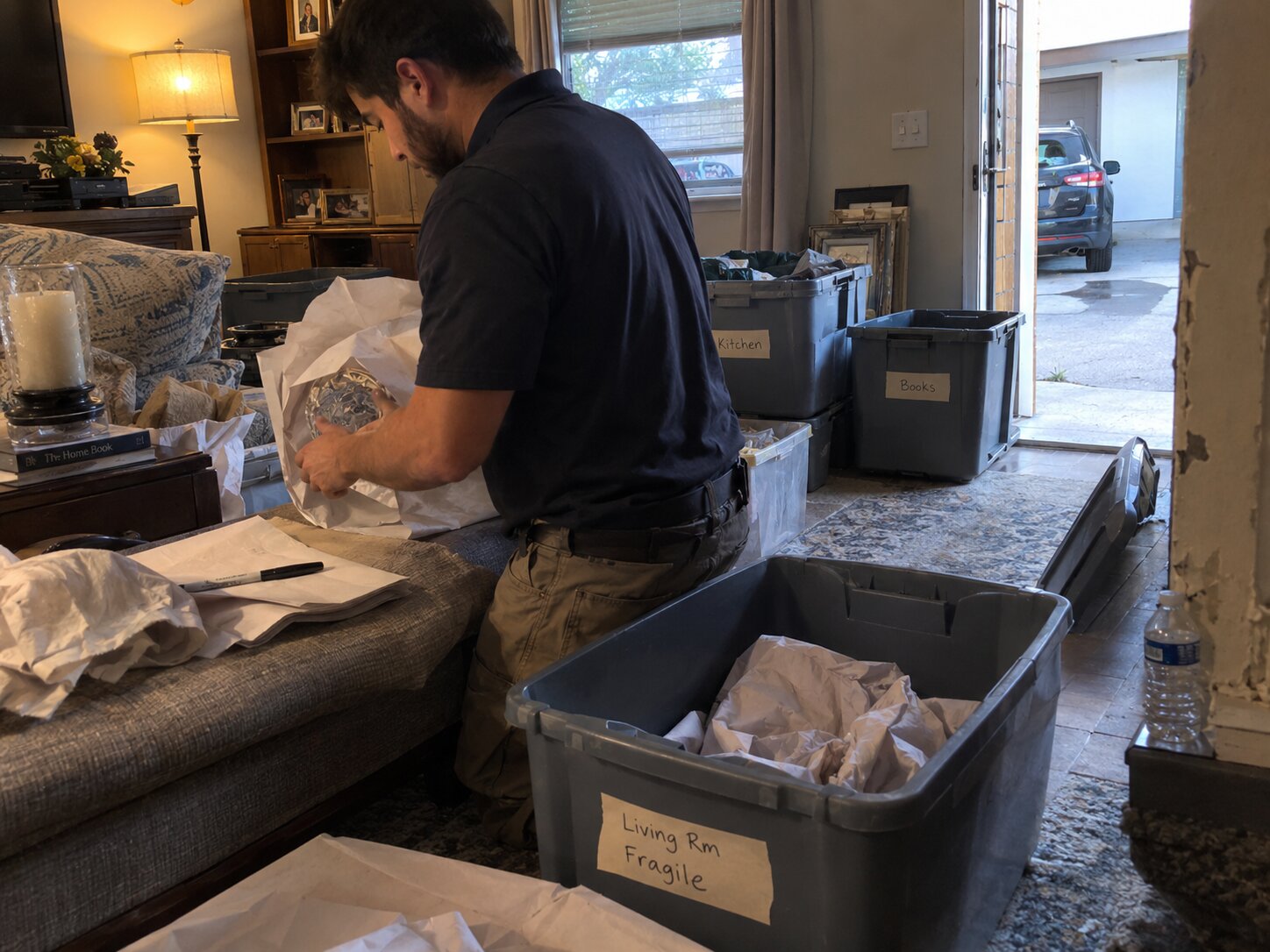
Contents Cleaning and Pack-Out — Utah County
Contents restoration is a distinct discipline within property restoration — the personal property, furniture, artwork, electronics, textiles, and household belongings that need to be removed, cleaned, and returned after fire, water, mold, or biohazard events. While structural restoration happens in the property itself, contents restoration typically happens off-site at specialized facilities with the equipment and expertise needed for professional processing. Vault Mold Removal coordinates contents pack-out, off-site processing, and return across Utah County restoration projects, working with specialty restoration facilities that handle the technical work of individual item cleaning and preservation. This page describes the pack-out process, off-site restoration techniques, and what property owners should understand about the contents portion of their overall restoration project.
The Pack-Out Process
Room-by-Room Inventory
Contents restoration begins with systematic inventory before any physical work. The inventory process:
- Photo documentation of every room and its contents in pre-pack-out condition
- Item-by-item photo and description for personal property
- Category assignment for each item (cleanable in place, requires off-site processing, non-salvageable)
- Value assessment where applicable (documented value for insurance purposes)
- Special handling notes for fragile, sentimental, or high-value items
The inventory serves two purposes: it’s the working document for the contents restoration process, and it’s the insurance claim documentation for any non-salvageable personal property. Insurance carriers typically require detailed inventory documentation for contents claims, so thorough documentation at the pack-out stage prevents claim disputes later.
Category Assignment
Every item gets categorized based on damage type, extent, and salvage potential:
- Cleanable in place: Items with limited damage that can be cleaned during the on-site restoration work without off-site transport
- Off-site cleanable: Items requiring specialty cleaning at restoration facilities but with reasonable salvage expectations
- Off-site restorable: Items requiring more intensive processing but with reasonable preservation potential
- Non-salvageable: Items where damage extent, safety concerns, or restoration cost exceeds practical value
- Property owner decision items: Items where salvage is possible but at cost that may exceed the property owner’s interest in preservation
Category assignments are typically documented with the property owner present or with subsequent review, so nothing gets discarded without appropriate authorization.
Pack-Out Physical Work
Once inventory and categorization are complete, physical pack-out proceeds:
- Careful packing of items using materials matched to the specific fragility and characteristics
- Labeling of every container with room origin, contents summary, and priority notes
- Loading onto climate-controlled transport vehicles
- Transport to the specialty restoration facility with chain-of-custody documentation
Standard pack-out for a fire-affected residential property typically takes 1–3 days depending on the property size and extent of contents. Larger properties or extensive contents can extend the timeline.
Off-Site Restoration Techniques
Different item types require different restoration approaches at the specialty facility:
Textiles and Upholstery
- Dry-cleanable garments: Professional dry cleaning at facilities equipped for smoke-affected or water-affected textiles
- Wet-cleanable textiles: Aqueous cleaning with specific detergents for the contamination type
- Upholstered furniture: Specialty cleaning with penetrating and extraction equipment, sometimes with ozone or hydroxyl treatment for odor
- Non-cleanable items: Assessment for material replacement (some upholstered furniture requires reupholstery rather than cleaning if contamination reaches padding)
Electronics
Electronics restoration is a specialty within contents processing because smoke, water, and other contamination has specific effects on electronic components:
- Smoke residue contains conductive particles that can cause short-circuits and corrosive compounds that damage circuit boards over time
- Water exposure requires immediate response — powered-on electronics with water contact often fail; unpowered water-exposed electronics can sometimes be salvaged if dried properly before power-on
- Standard restoration: HEPA vacuuming of exterior surfaces, chassis opening for interior cleaning, ultrasonic cleaning for circuit boards when appropriate, component-level testing after cleaning
- Some electronics are non-salvageable due to combustion product penetration or corrosion damage to sealed components
Documents and Photographs
Paper materials require specific handling to prevent additional damage during restoration:
- Freeze-drying: Water-affected papers are typically frozen to stop biological degradation, then freeze-dried (sublimation of ice directly to vapor) to remove moisture without further paper damage
- Photograph restoration: Water-affected photos require specific handling — some can be gently cleaned and dried, others require professional photo restoration services
- Document restoration: Important documents can be professionally restored, though costs may exceed practical value for standard papers
- Digital preservation: When physical restoration isn’t practical, digital scanning creates preservation copies before physical disposal
Artwork and Antiques
Artwork and antiques warrant specialty conservators for higher-value pieces:
- Paintings: assessment by professional conservators for cleaning, canvas repair, or reframing needs
- Antique furniture: refinishing specialists for wood damage; upholstery restoration for period pieces
- Ceramics and pottery: specialty cleaning for delicate items
- Metals: cleaning and refinishing appropriate to the specific metal and any patina considerations
Insurance coverage for high-value artwork typically has specific documentation requirements and may involve appraisal review during the claim.
Hard Goods
Non-porous hard goods (metal, ceramic, glass, sealed stone) are typically the easiest to restore:
- HEPA vacuuming to remove particulate
- Wet cleaning with appropriate solvents for the specific contamination
- Ultrasonic cleaning for items with complex surfaces (jewelry, small parts)
- Polishing or reconditioning for items requiring surface restoration
Ozone and Hydroxyl Treatment
Odor-affected items typically receive ozone or hydroxyl treatment as part of the off-site processing:
- Ozone treatment in dedicated chambers penetrates porous materials and neutralizes odor at the chemical level
- Hydroxyl treatment for materials that ozone might damage
- Treatment duration matched to odor loading and material sensitivity
Return and Reinstallation
Timing Coordination
Contents return happens after structural restoration is complete and the property is ready for reoccupation. Coordination typically follows this sequence:
- Structural restoration completion (drywall, flooring, paint, cabinetry)
- Final cleaning of the property
- Property owner walkthrough and acceptance of structural work
- Contents return scheduling
- Physical return with placement guidance
Returning contents to a property that isn’t fully ready produces problems: contents can be re-contaminated by ongoing construction dust or activity, structural workers can damage returned items, and the property owner is inconvenienced by contents in disorganized states during ongoing work.
Placement
Return placement depends on property owner preferences:
- Standard placement: Items returned to their pre-loss rooms in reasonable arrangement
- Detailed placement: Items placed in specific locations with photo documentation of pre-loss placement
- Container return: Items delivered in containers for property owner to unpack and place themselves
Most property owners prefer standard or detailed placement so they can immediately reoccupy the property rather than dealing with box-unpacking after moving back in.
Documentation of Return
Every returned item is documented against the pack-out inventory, with photos of returned condition. Any items that couldn’t be restored are documented as non-salvageable with the reasons, supporting the insurance claim for personal property replacement.
Storage During Restoration
Contents typically stay at the restoration facility from pack-out through return — the specialty facilities have the storage infrastructure and security appropriate for the timeframe. For extended restoration projects (larger fire losses running 6+ months), storage costs are typically included in the overall contents restoration scope. Insurance coverage for storage during restoration is generally standard under contents restoration provisions.
Frequently Asked Questions
- Why can’t contents just stay at the property during restoration?
- Several practical reasons make on-site retention impractical for most restoration situations. Restoration work generates significant dust, chemical exposure, and physical activity that would damage or re-contaminate items in the property during work. Contents in the way of structural restoration slow down the work and increase costs. Contents exposed to ongoing environmental conditions (before HVAC is restored, during periods of open construction, in areas without adequate climate control) can develop secondary damage. Off-site pack-out and processing at specialty facilities produces better outcomes: items get proper individual attention, environmental conditions during processing are controlled, and the structural work proceeds without complications from contents management.
- What happens if items can’t be restored during processing?
- Items assessed as non-salvageable are documented with photos, descriptions, and reasoning for the non-salvageable determination. This documentation is submitted to your insurance carrier for personal property claim payment. Depending on your policy, personal property coverage is either Actual Cash Value (depreciated value at time of loss) or Replacement Cost (cost to replace with new equivalent items). Non-salvageable items are then disposed through appropriate waste channels — large items typically through licensed haulers, hazardous items (electronics with fire damage, chemically contaminated items) through appropriate disposal channels. If property owners want the option to dispose of items themselves (recycling personal keepsakes, salvaging parts, etc.), that arrangement can be made before disposal.
- How do you handle sentimental items that have limited monetary value but high personal significance?
- Sentimental items receive priority handling for potential preservation whenever possible. The specific approach: assessment for cleaning potential regardless of monetary value, individual attention for pieces that couldn’t otherwise justify professional cleaning costs, professional consultation for items where preservation approaches might be creative (partial preservation, damaged-but-recognizable state, incorporating remaining pieces into replacement items), and honest communication when preservation isn’t possible so families can prepare emotionally for the loss. Family photos, letters, jewelry, wedding items, children’s artwork, and family documents get particular care.
- Can I visit my belongings at the restoration facility during processing?
- Yes, generally, though visits are scheduled rather than drop-in and typically limited to specific decision points. Common visit purposes: initial review of categorization decisions before disposal, mid-processing review of items in unusual restoration situations, selection of specific items for early return (items needed for immediate use that don’t require full facility processing time), and review of any items with uncertain preservation potential. Facility staff can typically show restoration in progress, explain the specific techniques being used on your items, and discuss any decisions that warrant your input.
- How long does the contents restoration process take?
- Depends significantly on scope. Small residential contents (limited affected areas, moderate item count) typically process within 2–4 weeks from pack-out through return-ready status. Standard residential fire contents typically process within 6–12 weeks. Larger residential or commercial contents can extend to 3–6 months. Specific items with long processing timelines (freeze-drying documents, extensive electronics restoration, artwork conservation) may take longer than standard timelines and sometimes return after other contents. The contents timeline generally runs parallel to structural restoration, with contents being ready for return by the time the property is ready for reoccupation.
Contact Vault Mold Removal — Provo, UT
For contents pack-out coordination, questions about specific item types, or restoration project planning that includes contents management, contact our office directly.
- Phone: (385) 250-2825
- Address: 1169 S 760 W, Provo, UT 84601
- Utah DOPL General Contractor License: #11876543-5501
- IICRC WRT / ASD / AMRT / OCT: #248317 / #248317-ASD / #319482 / #319482-OCT
Office Hours
- Monday – Saturday: 9:00 AM – 5:00 PM
- Sunday: Closed
Helpful guides: What to throw away · ACV vs replacement cost