
What water damage restoration costs
Pricing depends on the size of the loss, how much standing water there was, how long materials sat wet and what reconstruction is needed. Here’s a plain-English guide, with Vault’s actual ranges.
- Call any hour: (385) 250-2825 is answered live 24/7 by the Vault crew. 45-minute arrival inside Provo city limits (Monday–Saturday, 8 AM–5 PM); typically under 60 minutes elsewhere in our Utah County service area.
- In-house: free written estimates, water mitigation typically $3,500–$8,500, reconstruction $4,500–$9,500, mold inspections $99/$199/$349 and mold remediation from $500.
- Who does the work: Vault’s own W-2 crew, IICRC certified in WRT, ASD, AMRT and OCT, under Utah DOPL General Contractor License #11876543-5501. No subcontractors. Meet the team
- Insurance: Xactimate scopes, daily moisture readings on file, direct billing to State Farm, USAA, Allstate, Farmers and Bear River Mutual.
- Pricing: free written estimates. 24-month workmanship warranty · Wisetack financing
- Family-owned and veteran-operated, based in Provo since 2020.
Water damage restoration · Mold remediation · Sewage cleanup · Reconstruction & repairs
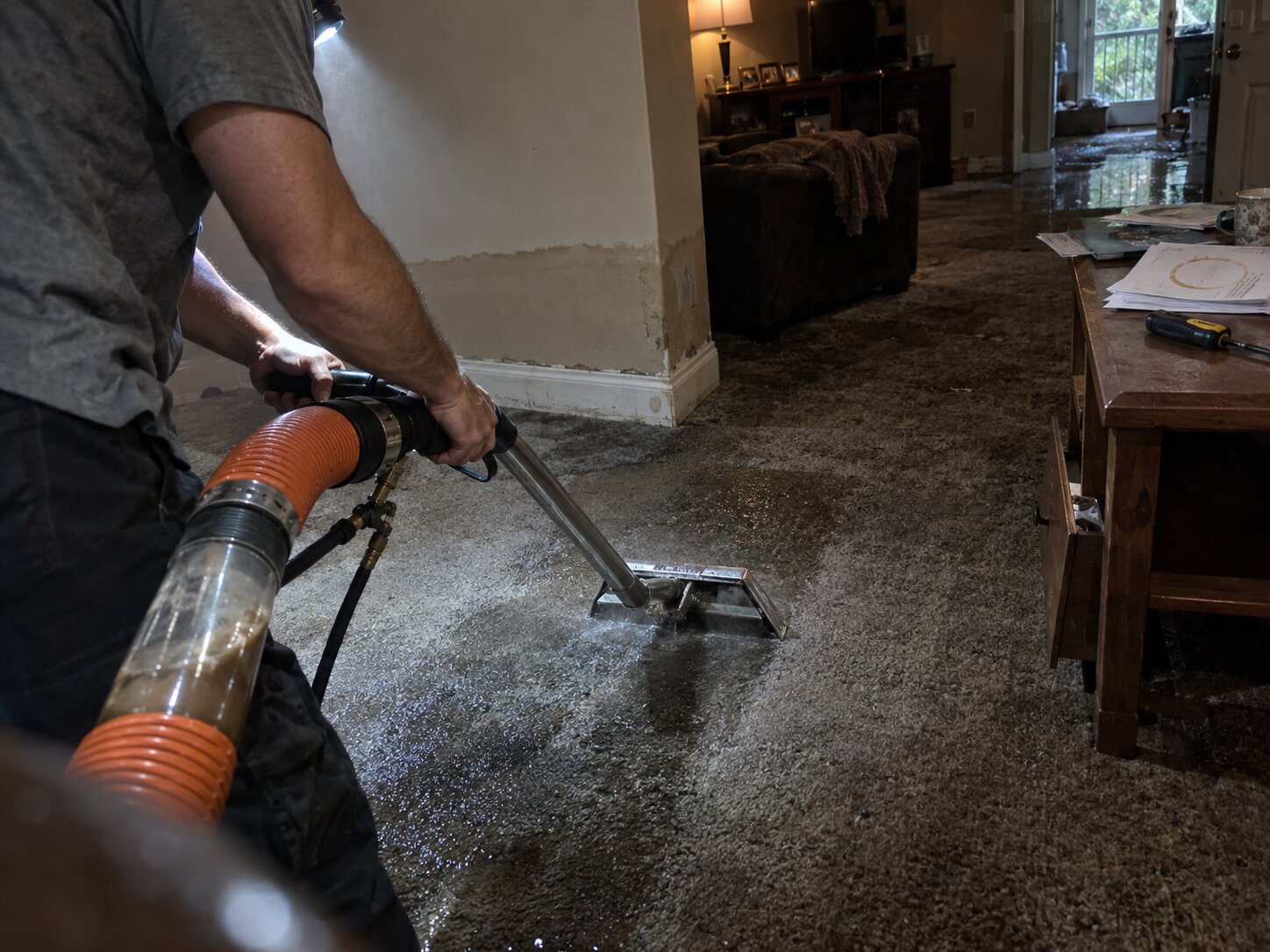
Water Damage Restoration Cost — Utah County
Water damage restoration cost varies significantly based on category, scope, materials affected, and specific project characteristics. Understanding the cost drivers helps property owners make informed decisions about scope, insurance coverage, and any optional upgrades during restoration. This page provides cost ranges typical for Utah County projects, along with explanation of the specific factors that produce cost variation. Actual costs for any specific project depend on the specific circumstances and are developed through Xactimate scope pricing during initial assessment; the ranges here are illustrative rather than binding quotes. Vault Mold Removal provides transparent cost documentation throughout restoration projects with detailed line-item scope development that supports insurance claim submission and property owner understanding of what’s included in the work.
Cost by IICRC Category
IICRC categorization is the primary driver of cost per affected area:
Category 1 (Clean Water)
Category 1 restoration is the least expensive category due to minimal material removal and standard disinfection protocols. Typical Utah County ranges:
- Small event (single room, moderate damage): $2,500–$5,500 for mitigation, $1,500–$8,000 for any reconstruction
- Standard event (multi-room, moderate scope): $5,000–$12,000 for mitigation, $8,000–$25,000 for reconstruction
- Larger event (extensive damage, significant scope): $10,000–$30,000 for mitigation, $20,000–$60,000 for reconstruction
- Very large event (whole-property, significant material replacement): $25,000+ for mitigation, $50,000+ for reconstruction
Category 2 (Grey Water)
Category 2 restoration is moderately more expensive than Category 1 due to enhanced disinfection and more material removal. Typical Utah County ranges:
- Small event: $3,500–$7,500 for mitigation, $2,500–$12,000 for reconstruction
- Standard event: $7,500–$18,000 for mitigation, $12,000–$35,000 for reconstruction
- Larger event: $15,000–$40,000 for mitigation, $30,000–$80,000 for reconstruction
- Very large event: $35,000+ for mitigation, $70,000+ for reconstruction
Category 3 (Black Water)
Category 3 restoration is significantly more expensive due to extensive material removal, comprehensive disinfection, and enhanced protocols. Typical Utah County ranges:
- Small event: $6,500–$14,000 for mitigation, $5,000–$20,000 for reconstruction
- Standard event: $12,000–$28,000 for mitigation, $20,000–$55,000 for reconstruction
- Larger event: $25,000–$60,000 for mitigation, $45,000–$120,000 for reconstruction
- Very large event: $55,000+ for mitigation, $100,000+ for reconstruction
Cost Components Explained
Emergency Response
Immediate response work including source containment, initial extraction, and drying setup:
- Emergency service call (initial response, assessment, immediate work): $500–$1,500 depending on scope and timing
- After-hours or weekend response typically incurs additional cost
- Emergency board-up or tarping for storm-related damage: $500–$2,500 depending on scope
Water Extraction
Standing water and saturation extraction:
- Category 1 extraction: $0.50–$1.50 per square foot of affected area
- Category 2 extraction: $1.00–$2.50 per square foot
- Category 3 extraction: $2.00–$4.50 per square foot
- Large-volume extraction (basement flooding, extensive coverage) may include additional equipment charges
Structural Drying
Equipment placement and monitoring during drying phase:
- Equipment rental costs: air movers $25–$40 per day per unit, dehumidifiers $75–$150 per day per unit
- Typical project uses 5–20 air movers and 1–4 dehumidifiers depending on scope
- Standard drying period: 3–7 days for most projects
- Total drying cost: $1,500–$8,000 for standard projects; $8,000–$25,000+ for larger projects
Antimicrobial Treatment
Disinfection protocol application:
- Category 1 antimicrobial: $0.25–$0.75 per square foot
- Category 2 antimicrobial: $0.50–$1.25 per square foot
- Category 3 antimicrobial: $1.00–$2.50 per square foot with multiple applications
Material Removal
Demolition and disposal of affected materials:
- Drywall removal (including disposal): $2–$4 per square foot
- Carpet and pad removal: $1–$2.50 per square foot
- Wood flooring removal: $2–$5 per square foot depending on flooring type
- Cabinet removal: $50–$150 per linear foot depending on cabinet type
- Insulation removal (attic or wall): $1–$3 per square foot
- Subflooring removal: $2–$5 per square foot
- Disposal fees: additional cost for larger projects, typically $200–$1,500 depending on debris volume
Contents Handling
Personal property protection during work:
- Contents pack-out for extensive work: $1,500–$5,000 for standard residential; higher for extensive contents
- Contents cleaning and off-site restoration: $500–$3,000+ depending on scope
- Contents storage during restoration: $150–$500 per month
- Contents return and placement: $500–$2,000 for standard residential
Reconstruction
Rebuilding after mitigation:
- Drywall installation and finish: $3–$6 per square foot
- Flooring installation: varies significantly by material ($3–$15+ per square foot)
- Painting: $1.50–$4 per square foot for wall painting
- Cabinet installation: $150–$400 per linear foot for standard cabinets
- Trim and moldings: $3–$8 per linear foot
- Electrical work: $75–$125 per hour for licensed electricians plus materials
- Plumbing work: $75–$150 per hour for licensed plumbers plus materials
Cost Drivers by Situation
Response Timing
Prompt response typically produces lower total cost even with the immediate emergency response fee:
- Response within 24 hours often keeps damage at initial category, minimizing scope
- Response after 48+ hours often results in category progression requiring more extensive work
- Response after mold has developed adds mold remediation to the scope
Extent of Damage
Larger affected areas cost more roughly proportionally, though not exactly linearly:
- Setup costs (equipment mobilization, initial assessment) are relatively fixed regardless of scope
- Per-square-foot costs decrease slightly for larger projects due to efficiency
- Complexity affects cost more than raw square footage in some cases
Materials Affected
The specific materials affected significantly influence cost:
- High-end finishes (hardwood flooring, custom cabinetry, specialty tile) increase replacement costs
- Standard finishes (carpet, laminate, standard drywall) are less expensive to replace
- Discontinued materials that can’t be perfectly matched may require broader replacement to maintain visual continuity
Accessibility
Physical accessibility of the affected area affects labor cost:
- Standard access (typical rooms with good access) is baseline cost
- Restricted access (small rooms, tight spaces, upper floors without direct access) increases cost
- Crawlspace or attic work is more expensive per square foot than living space work
- Occupied buildings requiring around-work scheduling can increase cost
Regulatory Requirements
Regulatory considerations affect cost:
- Building permits for reconstruction work
- Environmental compliance for larger disposal or specific contamination types
- Regulatory notification for Category 3 events involving specific contaminants
- OSHA-required protocols for Category 3 work
Insurance Coverage
Insurance coverage significantly affects out-of-pocket cost for restoration:
Coverage Determination
Standard homeowner policies typically cover water damage from sudden and accidental causes: pipe failures, appliance failures, and specific storm-related events. Policies typically exclude: flood damage (requires NFIP or private flood insurance), gradual leaks and long-term seepage, sewer backup (unless specific endorsement exists), sump pump failure (unless specific endorsement), and damage from unmaintained property conditions.
Deductibles
Insurance policies have specific deductibles:
- Standard property deductibles: $500–$2,500 for typical homeowner policies
- Wind and hail deductibles: sometimes percentage-based (1–5% of insured value)
- Flood deductibles: typically higher than property deductibles
- Named perils deductibles: may differ from general property deductibles
Payment Structure
Insurance claim payment typically follows this structure:
- Initial ACV (Actual Cash Value) payment for depreciated value of damaged property
- Depreciation withheld until reconstruction completes
- Depreciation recovery upon completion and submission of final documentation
- Contents claim developed separately from structural claim
Out-of-Pocket Cost
Typical out-of-pocket cost for insured events:
- Deductible portion of the claim
- Any scope items not covered by insurance (code upgrades beyond Ordinance and Law coverage, optional upgrades, non-covered perils)
- Additional Living Expense claim reimbursement structure (typically reimbursement after expense documentation rather than direct payment)
Cost Comparison: DIY vs. Professional Restoration
Some property owners consider DIY restoration for smaller water events. Practical considerations:
- Category 1 small events: DIY may be feasible for very small events (single small area, prompt response, no mold, no complexity). Cost savings can be significant if the work is done well.
- Category 2 or 3 events: DIY typically doesn’t produce adequate results due to disinfection and technical requirements. Health risks and insurance implications warrant professional response.
- Insurance-covered events: DIY doesn’t produce documentation supporting insurance claims, so the cost savings from DIY are offset by reduced insurance recovery.
- Extensive events: DIY typically isn’t practical for extensive scope regardless of category.
Frequently Asked Questions
- Why is water damage restoration so expensive?
- The cost reflects the specific work required to restore property to pre-loss condition safely and completely. Cost components include: labor (skilled restoration technicians, subcontractors for specialty trades), equipment (specialized drying and testing equipment representing significant investment), materials (both consumables during work and replacement materials for damaged elements), disposal (proper handling and disposal of contaminated materials), documentation (thorough project documentation supporting insurance claims and code compliance), overhead (business insurance, licenses, training, facilities), and profit margin. Restoration contractors have significant capital investment in specialty equipment (industrial dehumidifiers, extraction units, thermal imaging cameras, moisture meters) that isn’t practical for property owners to acquire for occasional use. The alternative — inadequate response producing recurring damage, mold development, or ongoing property issues — typically costs more in the long term than proper restoration initially. Cost management options: prompt response to limit scope, insurance coverage for eligible events, and cost-benefit analysis for optional upgrades vs. like-kind-and-quality replacement.
- Will my insurance cover the entire cost?
- Depends on the specific event, policy, and scope. For covered events, insurance typically pays: mitigation costs (extraction, drying, disinfection, initial cleanup), material replacement at like-kind-and-quality, reconstruction to pre-loss condition, contents replacement or restoration, Additional Living Expenses if the property is uninhabitable during restoration. Insurance typically doesn’t pay: your policy deductible, upgrades beyond like-kind-and-quality replacement (unless Ordinance and Law coverage applies to specific code upgrades), non-covered perils (flood damage without flood insurance, gradual seepage, wear-and-tear damage), work beyond the covered scope (unrelated home improvements bundled into the restoration project). For your specific situation, discussing the specific policy provisions with your adjuster or a public adjuster provides more accurate expectations than general guidance.
- Can I get a firm price before work begins?
- For initial scope, yes; for full project pricing, typically requires progression through the work. Standard practice: initial assessment produces preliminary scope with pricing ranges based on what’s visible; detailed scope development during mitigation as concealed damage becomes visible; change orders as unforeseen conditions are discovered; final pricing based on actual work performed. Xactimate scope development produces line-item pricing that both property owners and insurance adjusters can review. For property owners paying out-of-pocket, we can discuss upper limit expectations to prevent scope surprises, options for reducing scope if budget constraints matter, and priority sequencing so higher-priority work happens first. For insurance-covered events, coverage often extends to whatever the covered scope requires, with the property owner’s out-of-pocket limited to the deductible plus any non-covered scope. Firm fixed-price restoration contracts are uncommon in the industry because the specific scope often can’t be fully determined until work begins; time-and-materials or scope-based pricing is more typical.
- What are the biggest ways to reduce restoration cost without compromising quality?
- Several approaches: prompt response — the single biggest cost-reduction factor. Category 1 events addressed within 24 hours often stay Category 1 with minimal material replacement; delayed response often results in category progression requiring extensive replacement. Preservation vs. replacement decisions — some materials can be preserved with drying and disinfection rather than replaced; decisions favor preservation when practical. Scope discipline — keeping the restoration scope focused on the water damage rather than expanding to unrelated home improvements (which are legitimate but not typically insurance-covered). Insurance coordination — ensuring covered scope is captured in the insurance claim so property owner out-of-pocket is limited to the deductible. Contractor selection — using contractors who handle the entire restoration project (mitigation and reconstruction) rather than coordinating multiple contractors separately, which typically produces cost savings through reduced coordination overhead. What doesn’t work: choosing the lowest-priced contractor without regard to qualifications, which often produces incomplete work requiring rework or subsequent issues; DIY approaches for events beyond the property owner’s technical capability; or delaying professional response hoping problems resolve on their own.
- How does your pricing compare to other Utah County restoration contractors?
- Our pricing follows industry-standard Xactimate line-item costs for the Utah County market, similar to other established restoration contractors working in the area. What tends to vary between contractors: scope discipline (some contractors expand scope beyond what’s necessary; others cut scope to reduce initial cost but produce incomplete work), documentation quality (thorough documentation supports insurance claim success and prevents scope disputes), quality of work (properly-completed work vs. shortcut approaches), and communication throughout the project. Cost comparison between contractors sometimes reveals price differences that reflect scope differences (contractor A quotes lower because they’re not including work that contractor B includes) rather than actual price competition. For specific price comparison, comparing detailed scope documents produces meaningful information; comparing total prices without scope comparison often misleads. We can provide detailed scope documentation for any project so you have the information needed for informed comparison. Ultimately, the goal is properly-completed restoration at reasonable cost, not necessarily the lowest possible price.
Contact Vault Mold Removal — Provo, UT
For water damage restoration scope development, pricing consultation, or insurance claim coordination, contact our office directly.
- Phone: (385) 250-2825
- Address: 1169 S 760 W, Provo, UT 84601
- Utah DOPL General Contractor License: #11876543-5501
- IICRC WRT / ASD / AMRT / OCT: #248317 / #248317-ASD / #319482 / #319482-OCT
Office Hours
- Monday – Saturday: 9:00 AM – 5:00 PM
- Sunday: Closed
More guides: Your deductible, explained · ACV vs replacement cost
Related guides
Our Provo water damage restoration crew is an IICRC Certified Firm that bills your insurer directly. Call (385) 250-2825.