
Vault mold remediation at a glance
- Who does the work: Vault’s own W-2 crew, no subcontractors. Our mold lead is Ryan Bautista, Mold Remediation & Drying Specialist (IICRC WRT and AMRT). Meet the team
- Credentials: IICRC AMRT (Applied Microbial Remediation) firm certification #319482, plus WRT, ASD and OCT · Utah DOPL General Contractor #11876543-5501 · EPA RRP lead-safe firm #NAT-F187294-1 · The Hartford GL + WC · bonded · BBB Accredited. Verify our credentials
- Where we’re based: staffed office, shop and warehouse at 1169 S 760 W, Provo, UT 84601. Phone answered live 24/7 at (385) 250-2825.
Mold inspection and remediation pricing
| Service | Price | What’s included |
|---|---|---|
| Basic visual inspection | $99 | Visual inspection of one area |
| Inspection with moisture mapping | $199 | Visual inspection plus moisture meter and thermal camera |
| Inspection with air sampling | $349 | Moisture meter and thermal camera, plus air sampling analyzed by Sporecyte, an outside lab |
| Mold remediation | From $500 | Free written remediation estimate after the initial assessment |
Our 90-day mold warranty
Remediation is covered for 90 days from post-remediation clearance. If mold returns in that time, we reinspect within 7 business days and re-remediate at no charge. The warranty transfers once to a new owner with a signed transfer form. Warranty details
Paying for it
When mold is covered by your policy, we document it, write the scope in Xactimate and bill State Farm, USAA, Allstate, Farmers or Bear River Mutual directly. For deductibles, uncovered work or uninsured jobs, financing is available through Wisetack: $500–$25,000 over 3–24 months, with a soft credit check. Financing
Where we work
Provo, Orem, Springville, Vineyard, Lindon and Mapleton. See mold remediation in Provo, Orem, mold inspection and testing and black mold.
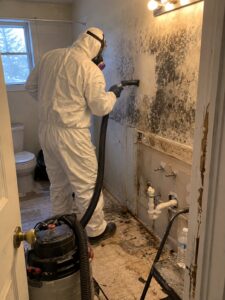 Black Mold Remediation — Stachybotrys chartarum in Utah County
“Black mold” is the popular term for Stachybotrys chartarum, a specific fungal species that has become the primary focus of consumer concern about indoor mold. The concern is partially justified — Stachybotrys does produce mycotoxins that can trigger health responses in sensitive individuals — and partially overblown, since media portrayals of “toxic black mold” causing severe illness or death in previously healthy people aren’t well-supported by peer-reviewed medical evidence. What matters practically is that Stachybotrys grows on chronically wet cellulose-rich materials (drywall paper, wet cardboard, saturated wood), it typically indicates a sustained moisture problem that has been present for weeks to months, and its remediation follows the same IICRC S520 methodology as any other mold species. Vault Mold Removal remediates Stachybotrys-involved projects across Utah County under S520 protocol with third-party post-remediation verification.
What Stachybotrys chartarum Actually Is
Stachybotrys chartarum is a slow-growing filamentous fungus that requires very specific conditions to establish: sustained moisture on cellulose-rich substrates. Unlike Aspergillus and Penicillium species that can colonize with limited moisture over shorter timeframes, Stachybotrys needs consistent wetting over extended periods — typically weeks minimum, often months.
Physical characteristics that distinguish Stachybotrys visually:
- Dark black or dark greenish-black coloration — distinct from the typical green of Aspergillus/Penicillium or the dark olive of Cladosporium
- Slimy or wet-appearing texture when actively growing on saturated substrate — unlike the powdery or fuzzy texture of most other indoor mold species
- Growth pattern that spreads across substrate rather than forming discrete colonies — Stachybotrys tends to create broad patches rather than isolated spots
Visual identification is suggestive but not definitive — several other mold species can appear similar, and laboratory analysis (surface swab culture or air sample) is required for confirmed identification. IICRC S520 remediation methodology doesn’t require species identification to proceed — the remediation approach is the same regardless — but species confirmation is often valuable for health documentation, insurance coordination, and post-remediation verification.
Where Stachybotrys Grows in Utah County Properties
Wall Cavities Behind Chronic Leaks
The most common Stachybotrys location in Utah County residential properties is wall cavities behind slow, chronic leaks that have been present but undiscovered for months. Typical sources:
- Shower valve leaks behind bathroom wall tile (particularly in older homes with cast iron drum traps or aging valve bodies)
- Ice maker supply line slow leaks behind refrigerators
- Dishwasher supply line seeping behind cabinets
- Toilet supply line or wax ring failures with slow seepage through subfloor
- Roof leaks producing chronic wall cavity moisture through interior finish penetrations
Discovery is typically prompted by musty odor, occupant health symptoms (chronic respiratory or sinus issues that don’t resolve with standard treatment), or visible drywall bulging/staining. By the time visible symptoms appear, Stachybotrys colonization has typically been present for weeks or months.
Crawlspaces with Chronic Moisture
Dirt-floor crawlspaces in older Provo, Springville, and Mapleton homes with chronic high humidity support Stachybotrys colonization on the underside of subflooring and on floor joists. The specific pattern: cellulose-rich wood surfaces exposed to sustained high humidity from evaporation off exposed soil, without adequate ventilation to remove the moisture. Colonization often extends across large portions of the crawlspace framing before being discovered.
Basement Areas After Extended Flooding
Basements that experienced water events (foundation seepage, plumbing leaks, appliance failures) and weren’t dried within IICRC S500 timeframes support Stachybotrys colonization on drywall, insulation, and framing. The specific risk window: water events discovered after 5–10+ days, particularly during warm months when microbial amplification proceeds fastest.
Attic Assemblies After Ice Dam Events
Repeated ice dam events over multiple winters can produce sustained moisture in attic assemblies that supports Stachybotrys colonization on the underside of roof decking, on ceiling drywall, and on wall top plates. This pattern is common in properties with inadequate attic ventilation or air sealing that allows repeated freeze-thaw moisture cycling.
Behind Kitchen and Bathroom Cabinets
Kitchen and bathroom base cabinets can hide slow plumbing leaks for extended periods. The cabinet interior remains visually acceptable while the wall cavity behind and beneath the cabinet supports Stachybotrys growth on saturated drywall and framing. Discovery is often prompted by musty odor when opening cabinet doors, or during cabinet removal for kitchen or bathroom renovations.
Health Considerations
Stachybotrys chartarum produces mycotoxins — specifically satratoxins and other trichothecene compounds — that can trigger health responses in exposed individuals. Documented health effects:
- Respiratory symptoms including chronic cough, wheezing, and sinus inflammation
- Exacerbation of pre-existing asthma or COPD
- Headaches, sometimes chronic
- Fatigue and general malaise
- Skin irritation in cases of direct contact
- Elevated risk of respiratory infection in immunocompromised individuals
Health effects vary significantly by individual sensitivity, exposure duration, and colony size. Occupants with allergies, asthma, autoimmune conditions, or compromised immune systems (transplant recipients, chemotherapy patients, HIV) are at higher risk of significant response. Otherwise healthy adults typically experience limited effects even with substantial exposure, though this doesn’t mean exposure is safe or should be tolerated.
What Stachybotrys does not do: it does not typically cause severe acute illness or death in previously healthy individuals from typical indoor exposure. The consumer media narrative of Stachybotrys as universally deadly isn’t supported by peer-reviewed medical evidence. What it can do is create chronic, low-grade health effects that significantly impact quality of life over sustained exposure periods, and it can be seriously harmful for immunocompromised individuals or infants.
Our Stachybotrys Remediation Approach
Stachybotrys remediation follows IICRC S520 protocol identical to remediation of any other mold species. The species doesn’t change the methodology — but the typical presence of Stachybotrys does suggest specific investigation priorities:
Hidden Colonization Investigation
Because Stachybotrys typically indicates chronic moisture, visible colonization is often the surface indicator of larger hidden colonization. Investigation before remediation begins:
- Comprehensive moisture mapping across the property
- Thermal imaging survey to identify hidden moisture patterns
- Selective exploratory openings in walls, ceilings, and floors adjacent to visible colonization
- Crawlspace and attic inspection for any related colonization
- Cabinet and fixture removal where appropriate to assess hidden areas
Moisture Source Investigation
Every Stachybotrys remediation project includes investigation of the underlying moisture source. Sustained moisture over weeks-to-months timeframe suggests specific source types (chronic leaks, ongoing seepage, ventilation issues) that must be permanently corrected before remediation can produce lasting results.
Standard S520 Containment and Removal
Once investigation is complete and moisture source correction is scheduled, standard S520 containment and physical removal proceed: full containment for larger colonies, negative pressure with HEPA filtration, complete PPE, physical removal of colonized materials, HEPA vacuuming of remaining surfaces, EPA-registered antimicrobial application, and post-remediation verification through third-party industrial hygienist.
Extended Post-Remediation Verification
For Stachybotrys projects specifically, we typically recommend extended PRV testing schedules: initial clearance at completion, 30-day follow-up verification, and 6-month follow-up verification. This extended monitoring provides documentation that the moisture source correction remains effective and that remediation didn’t miss hidden colonization that could re-emerge over time.
Frequently Asked Questions
- How can I tell if the dark mold in my property is Stachybotrys or something else?
- You can’t reliably tell by looking. Several mold species can appear dark or black: Aspergillus niger, Cladosporium in some growth conditions, Ulocladium, Alternaria, and various species of Chaetomium can all present dark coloration. Stachybotrys tends to have distinctive slimy texture when actively growing on saturated substrate, but that’s not always visible when growth is dry or old. Reliable identification requires laboratory analysis — either surface swab culture or air sample analysis by an accredited mycology lab. Cost typically runs $150–$400 depending on the number of samples and specific analysis requested. Practically, though, if you have visible dark mold growth on saturated cellulose material, IICRC S520 remediation methodology is the appropriate response regardless of specific species identification.
- Is Stachybotrys really as dangerous as the media portrays?
- For most healthy adults, no. Stachybotrys produces real health effects and shouldn’t be tolerated in occupied buildings, but the consumer media narrative of universal severe illness or death isn’t supported by peer-reviewed medical evidence. Typical Stachybotrys exposure produces chronic, low-grade symptoms (respiratory irritation, headaches, fatigue) that significantly impact quality of life but aren’t acutely dangerous for otherwise healthy adults. The real risks are for immunocompromised individuals (transplant recipients, chemotherapy patients, HIV), infants and young children, elderly people, and those with pre-existing severe respiratory conditions. For these populations, Stachybotrys exposure can produce serious health effects and requires prompt remediation. For the general population, it’s a real problem that warrants proper remediation but doesn’t warrant panic.
- Does health insurance cover treatment of Stachybotrys-related illness?
- Yes, for the medical treatment itself, though claim procedures depend on your specific insurance and how symptoms are diagnosed. Standard medical claims for respiratory symptoms, headaches, allergic responses, and related conditions are covered under standard health insurance regardless of the underlying cause. Where insurance sometimes disputes coverage is in cases where the diagnosis specifically attributes symptoms to mold exposure — some insurance carriers view “mold-related illness” claims with skepticism because the specific attribution can be difficult to prove medically. Documentation from an environmental physician or specialist familiar with mold-related health conditions typically supports coverage. Separately, if the mold exposure was caused by a covered water event on your homeowner or renter insurance, that policy may cover medical costs as part of the overall claim. This is a fact-specific question worth discussing with both your health insurance and homeowner insurance carriers.
- Can Stachybotrys grow behind wallpaper?
- Yes, and it’s a common hidden location. Wallpaper adhesive is cellulose-based, and the wallpaper itself is typically paper-based — both are ideal substrates for Stachybotrys when the wall behind the paper is wet. Vinyl wallpaper is particularly problematic because it creates a vapor barrier that traps moisture against the drywall, supporting sustained colonization even when the underlying leak has stopped. Removal of vinyl wallpaper often reveals extensive hidden Stachybotrys colonization on the drywall paper facing. Fabric-backed wallpaper has similar issues. Painted paper wallpaper has slightly less severe patterns but can still hide colonization. For Utah County properties built in the 1970s–1990s that still have original vinyl wallpaper, particularly in bathrooms and kitchens, wallpaper removal often reveals surprises.
- What’s the cost difference for Stachybotrys remediation versus other mold?
- Not significantly different for the remediation work itself. IICRC S520 methodology is the same regardless of species — same containment, same PPE, same removal criteria, same HEPA vacuuming, same antimicrobial application, same PRV clearance protocol. Cost drivers are the scope of colonization, complexity of the property, extent of investigation required, and reconstruction scope after remediation. Where Stachybotrys projects sometimes cost more: extended investigation because chronic moisture typically produces hidden colonization beyond the visible portion, moisture source correction work that’s more extensive than for acute water events, and extended PRV verification schedules for higher-confidence documentation. Typical residential Stachybotrys remediation runs $8,000–$25,000+ depending on scope — similar to other mold remediation of comparable scope.
Contact Vault Mold Removal — Provo, UT
For suspected Stachybotrys colonization, second opinions on prior black mold work, or questions about specific chronic moisture scenarios in your Utah County property, contact our office directly.
- Phone: (385) 250-2825
- Address: 1169 S 760 W, Provo, UT 84601
- Utah DOPL General Contractor License: #11876543-5501
- IICRC WRT / ASD / AMRT / OCT: #248317 / #248317-ASD / #319482 / #319482-OCT
Office Hours
- Monday – Saturday: 9:00 AM – 5:00 PM
- Sunday: Closed
Written warranty
24-month workmanship warranty on drying, structural repairs, drywall, flooring, cabinetry and paint done by Vault. 90-day mold warranty from post-remediation clearance for recurrence from the same moisture source. Both are transferable once to a new homeowner, in writing on the work order.
We bill your carrier directly
Direct-billing with State Farm, USAA, Allstate, Farmers and Bear River Mutual. Every scope is written in Xactimate; you pay only your deductible plus anything the policy doesn’t cover. Not on this list? We still handle the claim.
Helpful guides: Does bleach kill mold? · Mold air sampling
In Provo? See mold remediation in Provo for local inspection pricing ($99, $199 or $349) and how our crew handles a job from containment to clearance.