
Attic leaks
Roof leaks often start out of sight. Water gets past worn flashing, soaks the insulation and only shows up when it stains the ceiling below. Vault removes wet insulation and dries the roof deck and framing.
- Call any hour: (385) 250-2825 is answered live 24/7 by the Vault crew. 45-minute arrival inside Provo city limits (Monday–Saturday, 8 AM–5 PM); typically under 60 minutes elsewhere in our Utah County service area.
- What Vault does: attic inspection, wet insulation removal, moisture readings on the roof deck and framing, structural drying, and reconstruction after the roof is repaired.
- Who does the work: Vault’s own W-2 crew, IICRC certified in WRT, ASD, AMRT and OCT, under Utah DOPL General Contractor License #11876543-5501. Meet the team
- Insurance: Xactimate scopes, daily moisture readings, direct billing to State Farm, USAA, Allstate, Farmers and Bear River Mutual.
- Pricing: free written estimates. Water mitigation typically $3,500–$8,500; reconstruction $4,500–$9,500. 24-month workmanship warranty · Wisetack financing
- Family-owned and veteran-operated, based in Provo since 2020.
Clean water (Cat 1) · Grey water (Cat 2) · Black water (Cat 3) · Hidden leaks · Crawlspace · Attic leaks
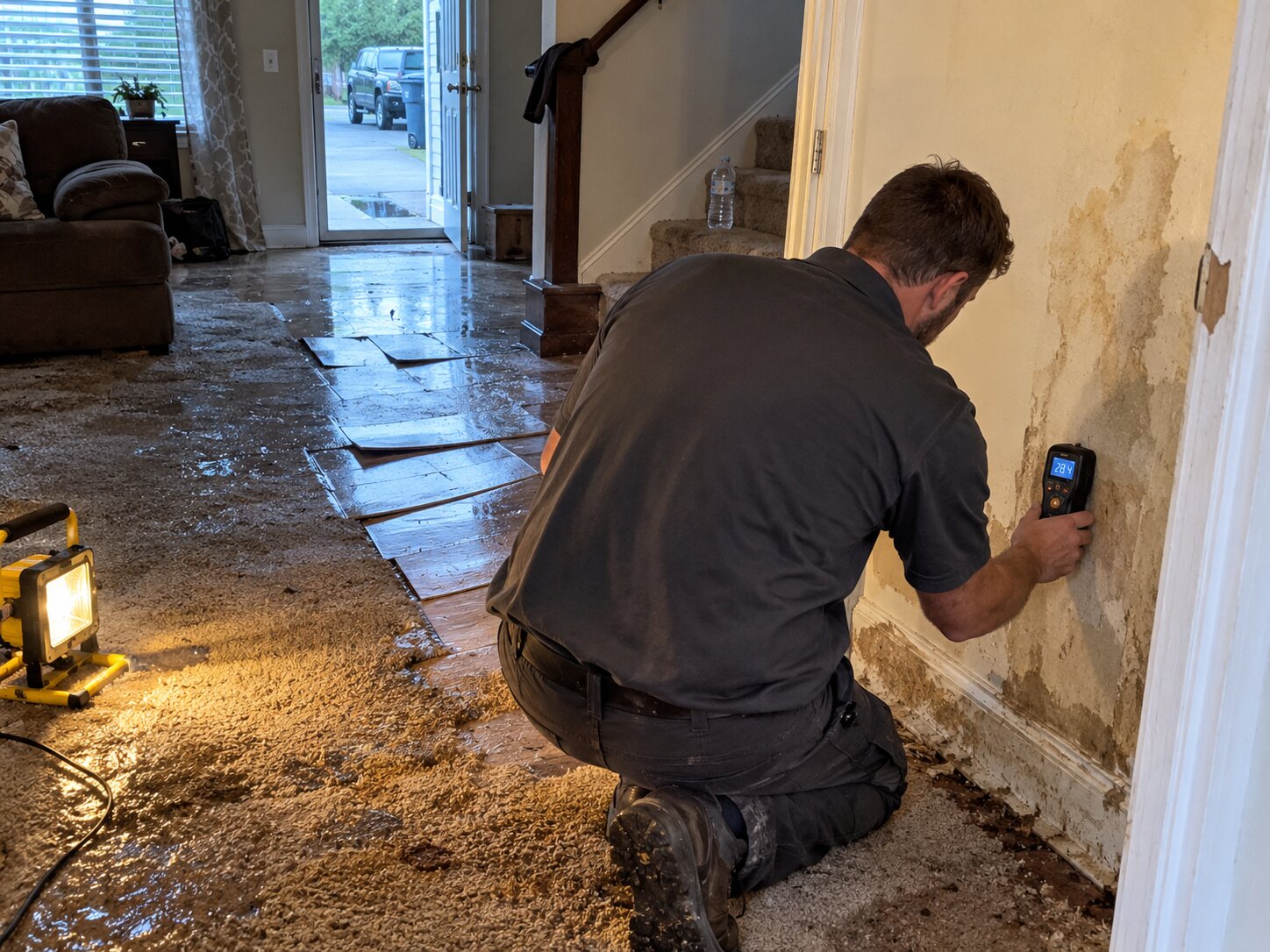
Attic Water Damage — Utah County Response
Attic water damage occupies a specific niche in restoration: like crawlspaces, attics are out-of-sight spaces where problems develop unnoticed until the damage extends into visible areas below; unlike crawlspaces, attics have different physical characteristics, different damage patterns, and different response requirements. Utah County attics have specific considerations: winter temperature extremes producing ice dam potential, summer temperature extremes producing HVAC condensate issues, and the unique regional pattern of ventilation approaches producing specific damage patterns. Attic water damage often reveals itself through ceiling damage in living spaces below rather than through visible symptoms in the attic itself, which means the water event has typically been developing for a while before it becomes apparent. Vault Mold Removal handles attic water damage across Utah County with attention to the specific patterns and considerations these spaces present.
Common Attic Water Damage Sources
Roof Leaks
Roof leaks are the most common source of attic water damage. Failure points include:
- Shingle damage or aging: Missing, damaged, or aged shingles allowing water penetration into the roof assembly. Utah County’s temperature extremes (winter freeze-thaw, summer UV and thermal cycling) affect shingle service life; typical asphalt shingle service life in Utah County is 15–25 years depending on quality and exposure.
- Flashing failures: Metal flashing at chimneys, roof penetrations, valleys, and edges can fail through corrosion, movement, or original installation defects. Flashing failures are among the most common roof leak sources.
- Vent boot and pipe boot failures: Rubber or synthetic collars around plumbing vents, exhaust vents, and other roof penetrations deteriorate with UV exposure and temperature cycling. Boot replacement is a common maintenance requirement.
- Skylight leaks: Skylight seals and flashing can fail, producing leaks that appear in the ceiling below the skylight location or track through the roof assembly to appear elsewhere.
- Ice dam damage: Ice dam events specifically produce water intrusion under shingles and into the roof assembly, often causing extensive attic damage.
- Wind damage: Storm-related shingle lifting or displacement exposes underlayment and decking to precipitation.
- Aging underlayment: Even when shingles remain intact, aging felt or synthetic underlayment can develop failures allowing water penetration.
HVAC-Related Attic Damage
Many Utah County homes have HVAC equipment installed in attics or ductwork running through attic spaces. HVAC-related attic damage includes:
- Air handler condensate line failures: Cooling operations produce condensate that must drain from the air handler. Line failures, secondary drain pan overflow, or condensate pump failures can produce significant water damage.
- Coil condensation issues: When coil insulation fails or when specific operating conditions produce excessive condensation, water can drip from the air handler assembly into surrounding areas.
- Ductwork condensation: Cooling ducts in warm humid attic conditions can develop exterior condensation on damaged or missing insulation.
- Furnace condensate lines: High-efficiency furnaces produce condensate that must drain. Line failures produce water damage similar to AC condensate issues.
- Whole-house humidifier failures: Humidifiers installed on furnace or air handler equipment can leak, producing water damage at the equipment location.
Plumbing in Attics
Some homes have plumbing lines running through attic spaces (typically supply lines for upper-floor bathrooms or laundry). Attic plumbing failures include:
- Freeze failures during winter cold snaps when attic temperatures drop below freezing
- Fitting failures at connections
- Pipe damage from other work in the attic (nails, screws, cutting during other projects)
Bathroom Exhaust Fan Issues
Bathroom exhaust fans should vent through the roof or through soffit vents to the exterior. Improperly installed exhaust systems can produce attic moisture issues:
- Fans vented directly into the attic space introducing shower moisture into attic conditions
- Duct failures where fan ducts have disconnected or been damaged, exhausting moisture into the attic
- Roof vent failures allowing moisture to accumulate at the roof cap
Ventilation Failures
Attic ventilation systems (ridge vents, soffit vents, gable vents) work together to move air through the attic space, removing moisture that migrates upward from the living space below. Ventilation failures produce chronic moisture problems:
- Blocked soffit vents from insulation installation, pest activity, or debris
- Failed ridge vent installations
- Inadequate ventilation for the specific attic configuration
- Baffle failures allowing insulation to block soffit air intake
Kitchen and Bathroom Vents
Kitchen range hoods and bathroom exhaust fans can produce attic moisture when they vent improperly or when their vent ducts fail.
Attic Damage Patterns
Insulation Saturation
Attic insulation absorbs water from leaks above, holding significant water volume before showing visible symptoms. Wet insulation:
- Loses R-value dramatically (wet fiberglass has near-zero R-value)
- Holds moisture against wood framing and other surfaces
- Develops mold within days at attic temperature conditions
- Compresses under water weight, losing effectiveness even after drying
- Can weigh significantly more when saturated, adding load to ceiling assemblies
Standard fiberglass batt insulation and blown-in fiberglass or cellulose insulation all have similar patterns of moisture absorption and inability to recover after wetting.
Framing Moisture Exposure
Roof framing (trusses or rafters) exposed to prolonged moisture develops specific issues:
- Wood decay in load-bearing members
- Fastener corrosion (nails, connector plates)
- Truss plate corrosion in specific areas, potentially compromising structural connections
- Long-term structural implications from repeated or chronic moisture exposure
Roof Decking Damage
Roof decking (OSB or plywood sheathing under the shingles) exposed to prolonged moisture develops:
- Delamination in plywood construction
- Swelling and structural compromise in OSB
- Rot in specific areas of extended exposure
- Reduced structural capacity affecting shingle attachment and load capacity
Ceiling Damage Below
Attic water damage typically appears in the living space below through:
- Ceiling staining (yellowish, brown, or orange discoloration)
- Paint peeling or bubbling
- Water spots that grow over time
- Visible water dripping in severe cases
- Sagging drywall in areas of extensive damage
- Ceiling texture damage (particularly popcorn texture that shows water damage prominently)
Mold Development
Attic mold is common with any prolonged moisture exposure. Attic conditions favor mold growth:
- Wide temperature range with periods conducive to growth
- Elevated humidity from ventilation issues or moisture events
- Abundant organic materials (wood, insulation, dust) as growth substrates
- Limited air movement in specific attic areas
Attic mold that’s confined to the attic space is a significant concern for both structural integrity and air quality, since air from the attic can migrate into living spaces below.
Attic Water Damage Response
Assessment
Attic assessment requires accessing the space and evaluating:
- Source of the water event (roof leak, HVAC, plumbing, condensation)
- Extent of insulation saturation
- Framing and decking moisture status
- Mold presence and extent
- Structural implications of the exposure
- Ventilation status and any issues
- Impact on the ceiling assembly below
Source Resolution
Source resolution comes before restoration:
- Roofing contractors for roof-source issues (leak repair, shingle replacement, flashing repair)
- HVAC contractors for HVAC-source issues (condensate line repair, coil work, duct repair)
- Plumbing contractors for plumbing failures
- General contractors for ventilation improvements or structural repairs
Material Removal
Attic material removal typically involves:
- Wet insulation removal (typically total replacement of affected insulation)
- Damaged decking replacement where structural compromise has occurred
- Damaged framing repair or replacement where rot is significant
- Ceiling drywall replacement where the ceiling below has been damaged
Drying
Attic drying uses specific approaches:
- Air movers positioned for framing airflow
- Dehumidification with equipment appropriate for attic space characteristics
- Heat introduction during winter events when practical
- Ventilation coordination to remove moisture-laden air
- Extended timelines compared to living space drying (typically 5–10 days for attic framing drying)
Target moisture content: 15% or lower for wood framing before restoration is considered complete.
Mold Remediation
Attic mold remediation follows IICRC S520 protocols:
- Assessment of contamination extent and Condition classification
- Containment where appropriate to prevent spread to living spaces below
- Removal of contaminated materials (insulation, some framing surfaces)
- HEPA vacuuming of remaining surfaces
- Antimicrobial application
- Post-remediation verification
Insulation Replacement
New insulation installation follows Utah County code requirements (Climate Zone 5B):
- R-49 recommended for attic spaces per current code
- Blown-in fiberglass or cellulose for standard applications
- Batt insulation between framing members where appropriate
- Baffles to maintain soffit ventilation paths
- Air sealing at penetrations before insulation installation
Ventilation Improvements
When ventilation issues contributed to the water damage, improvements may be part of the response scope:
- Soffit vent cleaning or replacement
- Ridge vent installation or repair
- Baffle installation or repair
- Rerouting improperly-vented bathroom or kitchen exhaust
Ceiling Restoration
Living space ceiling restoration follows standard drywall restoration protocols: damaged drywall removal, moisture verification of remaining structure, new drywall installation, joint work with tape and multiple compound coats, texture matching (knockdown, orange peel, or popcorn depending on existing finish), priming with stain-blocking primer, and painting to match existing color.
Frequently Asked Questions
- I see a small water spot on my ceiling. Is it worth calling for professional help for something so small?
- Yes, generally, because small ceiling stains typically indicate more significant attic damage than what’s visible. Water traveling from the actual leak source to the visible stain typically follows framing members and can affect substantial areas of insulation, decking, and framing before producing a visible spot below. What you see on the ceiling is often the smallest and latest indicator of a larger event above. Prompt professional assessment can identify: whether the leak is active or resolved, extent of the actual damage in the attic, whether mold has developed, and what response scope is appropriate. Small visible damage that turns out to be small actual damage is fine — but small visible damage that turns out to be extensive actual damage is much better addressed early. The cost of assessment is minor compared to what develops if extensive attic damage continues without response. And if you have insurance coverage for the underlying cause of the damage, prompt response supports the claim process better than delayed response.
- How do you know if my attic has mold or if it’s just discoloration from age?
- Assessment based on visual characteristics, location patterns, and sometimes air quality testing. Mold typically presents with specific characteristics that distinguish it from age-related discoloration: three-dimensional growth (mold has substance beyond just discoloration), specific color patterns (black, green, brown, or white depending on the specific mold species), moisture correlation (mold grows in areas with elevated moisture history), and organic substrate correlation (mold grows on wood, paper, dust rather than on inorganic surfaces). Age-related staining typically appears as flat discoloration without the three-dimensional characteristic, occurs on surfaces exposed to weather or UV, and doesn’t correlate with moisture patterns. Where visual assessment is uncertain, air quality testing (comparing airborne mold spore counts inside vs. outside the property) provides more definitive information about whether active mold contamination exists. For any visible growth that might be mold, professional assessment is appropriate before assuming it’s inconsequential.
- My attic is really tall and hard to access. Does that change anything?
- Yes, affects both cost and timeline. Attic characteristics affecting response: height (limited overhead space slows work compared to standing-height access), area (larger areas require more equipment and time), access dimensions (small hatches restrict equipment and material movement), floor structure (attics with permanent flooring vs. bare trusses require different work approaches), and lighting/electrical access (attics without dedicated lighting or outlets require portable lighting for all work). Utah County attics range from crawlspace-like restricted access to walk-in spaces with significant height. Response approaches adapt to the specific attic: crawlspace-like attics use protocols similar to crawlspace response; walk-in attics allow more efficient work. Cost implications: harder-to-access attics take longer to work in, which affects labor cost. Timeline implications: complex access can extend drying and reconstruction timelines. These factors are addressed during initial scope development so you have accurate expectations.
- Should I replace all my attic insulation after a water event or just the affected area?
- Depends on the extent of the event and the condition of your existing insulation. Standard response involves removing insulation that was directly affected by the water event (wet or contaminated), with adjacent unaffected insulation typically preserved. Situations where broader replacement might make sense: older insulation approaching end of service life where partial replacement leaves mismatched materials, existing insulation that’s already inadequate for current code requirements (older homes may have insulation at pre-2000 R-values, well below current R-49 recommendations for Climate Zone 5B), and situations where opening the attic anyway provides opportunity for improvement at incremental cost. The decision balances immediate water event response with longer-term attic improvement. Insurance coverage typically pays for like-kind-and-quality replacement of the affected insulation, not upgrades to current code standards; the difference between insurance coverage and full replacement is a decision for the property owner based on cost-benefit for the specific situation.
- How long does attic water damage restoration take?
- Typical timeline: 5–10 days for the mitigation phase plus 1–3 weeks for reconstruction depending on the ceiling damage extent below. Small attic water events (localized damage, limited insulation replacement, no significant mold): 1–2 weeks total. Standard attic events (moderate damage, insulation replacement, some mold, ceiling repair below): 3–5 weeks. Larger attic events (extensive damage across large attic area, significant mold contamination, substantial ceiling reconstruction): 6–10 weeks. Very large events with structural implications or extensive contamination: 3–6 months. Timeline drivers: source resolution timing (roofing contractor availability for roof-source events), drying time for framing (typically the constraint on the mitigation phase), mold remediation when required, and reconstruction scope for ceilings below.
Contact Vault Mold Removal — Provo, UT
For attic water damage response, mold assessment, or coordination for roof-related restoration projects, contact our office directly.
- Phone: (385) 250-2825
- Address: 1169 S 760 W, Provo, UT 84601
- Utah DOPL General Contractor License: #11876543-5501
- IICRC WRT / ASD / AMRT / OCT: #248317 / #248317-ASD / #319482 / #319482-OCT
Office Hours
- Monday – Saturday: 9:00 AM – 5:00 PM
- Sunday: Closed
Helpful guides: Clogged gutters · Wet insulation · Bathroom fans and attic moisture