
Clean water (Category 1) damage
Clean water is Category 1: a supply line, a water heater or an overflow from a sink or tub. Caught quickly, most materials can be dried and saved.
- Call any hour: (385) 250-2825 is answered live 24/7 by the Vault crew. 45-minute arrival inside Provo city limits (Monday–Saturday, 8 AM–5 PM); typically under 60 minutes elsewhere in our Utah County service area.
- What Vault does: extraction, structural drying with LGR dehumidifiers and air movers, moisture readings until the material is at dry standard, and refinishing where materials were saved.
- Who does the work: Vault’s own W-2 crew, IICRC certified in WRT, ASD, AMRT and OCT, under Utah DOPL General Contractor License #11876543-5501. Meet the team
- Insurance: Xactimate scopes, daily moisture readings, direct billing to State Farm, USAA, Allstate, Farmers and Bear River Mutual.
- Pricing: free written estimates. Water mitigation typically $3,500–$8,500; reconstruction $4,500–$9,500. 24-month workmanship warranty · Wisetack financing
- Family-owned and veteran-operated, based in Provo since 2020.
Clean water (Cat 1) · Grey water (Cat 2) · Black water (Cat 3) · Hidden leaks · Crawlspace · Attic leaks
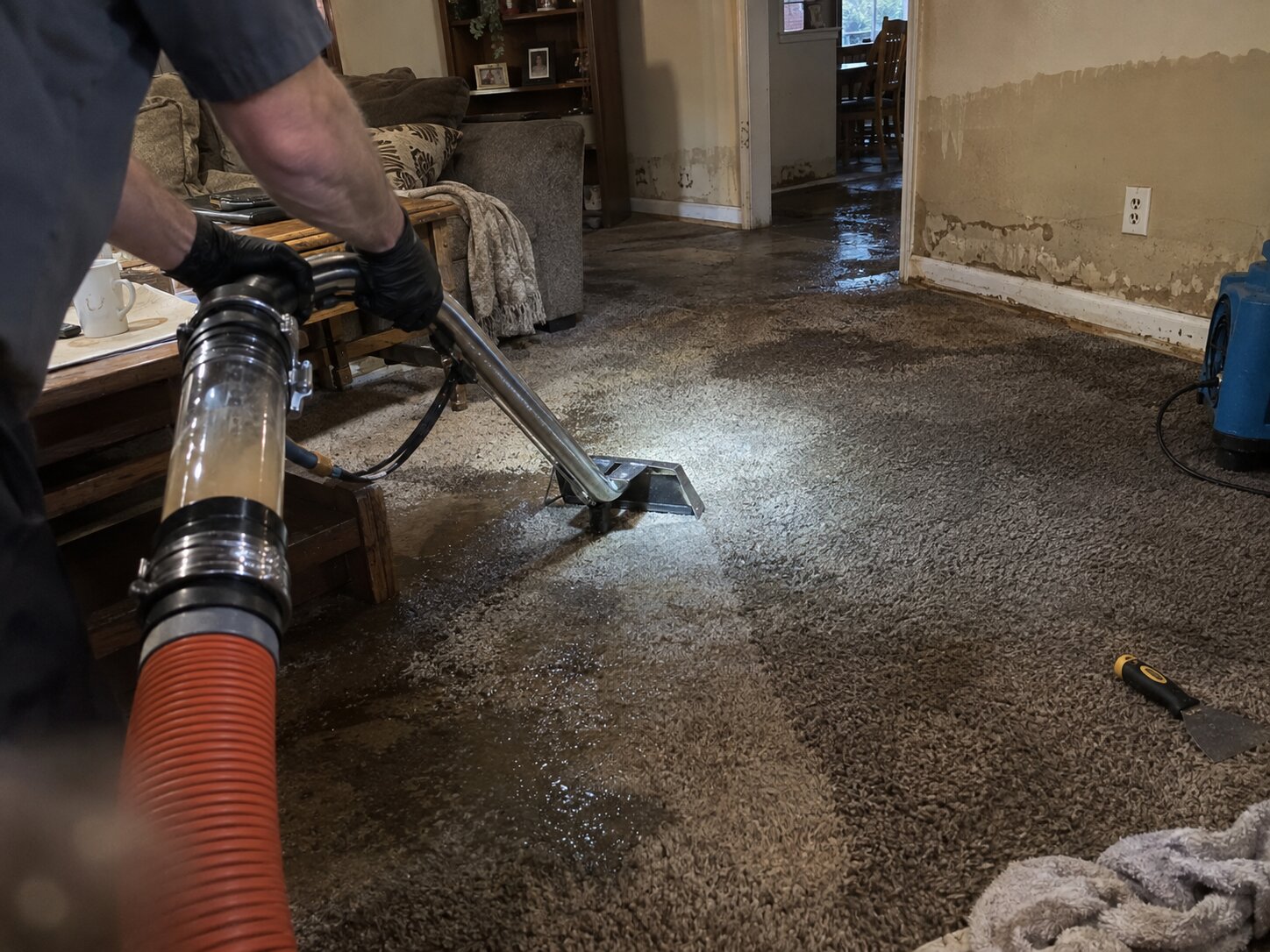
Category 1 Clean Water Damage — Utah County Response
Clean water damage — IICRC Category 1 under the S500 Standard — is water damage from a source that doesn’t pose substantial harm to humans on initial contact. The response protocols are the least restrictive of the three categories, materials often can be dried in place rather than replaced, and cost implications are typically lower than higher-category events. The key phrase, though, is “initial contact.” Category 1 water begins degrading toward Category 2 immediately upon contact with contaminated surfaces, dust, or organic materials, and Utah County’s summer temperatures accelerate the progression significantly. Response speed is what keeps a Category 1 event at Category 1; delayed response often produces category progression that changes the scope requirements substantially. Vault Mold Removal handles clean water damage across Utah County with IICRC S500 protocols, appropriate equipment scaling, and rapid response timelines to preserve Category 1 status where possible.
Common Category 1 Water Sources
Supply Line Failures
Supply line failures produce Category 1 water damage from potable water intended for consumption. Common failure points:
- Toilet supply lines: The braided steel or flexible plastic lines connecting toilets to shut-off valves. Failure typically involves the flexible portion at the connections, with braided steel outlasting plastic significantly. Utah’s hard water (22–26 gpg through Central Utah Water Conservancy District supply) shortens service life for flexible lines through mineral buildup at connections.
- Sink supply lines: Similar construction to toilet supply lines, with similar failure patterns.
- Washing machine supply lines: Under continuous pressure and typically longer than sink or toilet lines. Rubber hose lines are the most common failure point; braided stainless steel lines have significantly longer service life.
- Ice maker supply lines: Small-diameter plastic or copper lines running from a wall or floor connection to the refrigerator. Failure points include the shut-off valve connections and any joints or bends in the line.
- Dishwasher supply lines: Similar to sink supply lines, running from under-cabinet plumbing to the dishwasher.
Water Heater Failures
Water heater tank failures produce significant water release. Most residential Utah County water heaters are 40–80 gallon units; commercial water heaters can be significantly larger. Failure modes:
- Tank corrosion failure: After years of service, the tank interior corrodes through, releasing the tank contents. Utah’s mineral-heavy water accelerates corrosion, making 8–12 year service life more common than the 10–15 years typical in soft-water regions.
- Fitting failure: Connections at the top of the water heater (cold water inlet, hot water outlet, T&P relief valve) can fail, producing continuous water release.
- T&P valve discharge: Temperature and Pressure relief valve activation is a safety response to overheating or overpressure. Discharge is typically brief but can produce significant water release during malfunction conditions.
Fixture Failures
Plumbing fixture failures produce Category 1 water damage:
- Faucet failures where cartridges or valve components deteriorate
- Toilet fill valve or flapper failures producing continuous running (though this typically doesn’t produce flooding since water goes down the drain)
- Bathtub or shower valve failures
- Hose bib (outdoor faucet) failures, particularly after freeze events
Rain and Snowmelt Intrusion (Initial Contact)
Precipitation entering through roof leaks, window failures, or wall penetrations is Category 1 in its initial state as it enters the building. Categorization progresses if the water contacts contaminated surfaces during its path through the building. Common initial-contact scenarios: roof leaks during rain events (contact with roof underlayment, decking, framing typically doesn’t produce immediate categorization progression), window leaks during heavy precipitation, and skylight seal failures.
HVAC Condensate Line Failures
Air conditioning systems produce condensate water that must be drained. Condensate line failures produce Category 1 water damage in most residential situations:
- Clogged condensate lines causing overflow at the air handler drain pan
- Broken condensate lines in attic spaces or crawlspaces
- Malfunctioning condensate pumps
Refrigerator and Freezer Failures
Refrigerator water damage typically comes from ice maker supply line failures (see supply line failures above) or from defrost drain failures allowing internal freezer condensate to escape. Both produce Category 1 water damage initially.
IICRC S500 Response for Category 1
PPE Requirements
Category 1 response uses standard PPE:
- Safety glasses or protective eyewear
- Nitrile gloves for hand protection
- Water-resistant footwear
- Standard work clothing
Enhanced PPE (respirators, protective suits) is not required for standard Category 1 response, though enhanced protection may be used for specific tasks (mold-affected areas during selective demolition, dusty conditions).
Water Extraction
Category 1 water extraction follows standard protocols:
- Portable extraction units for smaller-volume events
- Truck-mounted extraction for larger-volume events
- Discharge typically to sanitary sewer through cleanouts (Category 1 water is appropriate for standard drainage systems)
Dry-In-Place vs. Removal Decisions
The primary advantage of Category 1 response over higher categories is the ability to dry many affected materials in place rather than removing and replacing them:
- Carpet: Category 1 water contact allows drying in place if response is prompt and pad condition permits. Older or heavily-contaminated pad may still require removal.
- Wood flooring: Solid wood flooring can typically be dried in place with proper equipment (mat drying systems, dehumidification) if response is within the first 24–48 hours. Engineered flooring is more variable; laminate typically requires replacement.
- Drywall: Category 1 contact often allows drying in place for the initial 24–48 hours; longer exposure or contact with insulation typically requires removal.
- Insulation: Wet insulation typically requires removal regardless of category because drying in place isn’t reliably effective; fiberglass insulation loses R-value when wet and often develops mold.
- Cabinetry and millwork: Solid wood typically dries acceptably; MDF and particleboard construction typically require replacement due to swelling and structural failure.
Drying Protocols
Category 1 drying uses standard structural drying equipment:
- Air movers for surface evaporation acceleration
- Dehumidifiers (LGR for standard conditions, desiccant for winter or specific applications) for moisture removal from the air
- Heat to accelerate evaporation where beneficial
- Containment where needed to concentrate drying effort
Standard drying timeline for Category 1 events is 3–5 days from setup to verified dry conditions.
Disinfection
Category 1 disinfection is minimal:
- Application of standard antimicrobial products to surfaces after extraction to prevent bacterial growth during drying
- No specific pathogen-directed disinfection protocols
- Standard cleaning of contents that had water contact
Documentation
Category 1 documentation supports both scope development and insurance claim submission:
- Photo documentation of affected areas before and during work
- Moisture readings at initial assessment, during drying, and at completion
- Equipment placement documentation
- Scope narrative describing categorization decision and response protocols
- Daily moisture logs during drying phase
- Completion verification with final moisture readings at target dry standard
What Preserves Category 1 Status
Response Speed
The single most important factor in maintaining Category 1 status: response within the first 24 hours of the event. Water that gets extracted and drying setup within 24 hours typically remains Category 1 through the response. Water sitting for 48+ hours typically progresses to Category 2 regardless of the initial source.
Temperature Control
Utah County summer temperatures accelerate category progression. During summer events, air conditioning during response reduces progression rate. Winter events at cooler temperatures have slower progression rates.
Prompt Extraction
Standing water accelerates category progression through contact with contaminated surfaces (floor dust, subfloor debris, contents contamination). Prompt extraction removes this progression pathway.
Source Control
Ongoing water release from an unaddressed source continues to introduce fresh water into the situation, but the water that has been sitting continues to degrade. Immediate source shutoff limits the total volume and duration of exposure.
What Causes Category Progression
Category 1 events can progress to Category 2 or Category 3 through several mechanisms:
- Time: Extended contact with organic materials produces bacterial growth
- Cross-contamination: Water that contacts contaminated surfaces (dirty floors, contaminated contents, subfloor debris) picks up contamination
- Extension to sewer or drain systems: Water flowing through drain openings can become contaminated by drain contents
- Contact with pest infestations: Rodent or insect droppings on contaminated surfaces
- Extension to contaminated storage areas: Water reaching garages, basements, or other areas with chemical or biological contamination
Frequently Asked Questions
- Can I extract Category 1 water myself before you arrive?
- Yes, and it can significantly help preserve Category 1 status. Practical steps: shut off the water source immediately, use towels or wet-vac equipment to extract standing water, move contents out of the affected area, and open windows or run fans to increase air circulation. Cautions: electrical safety (don’t use electrical equipment in standing water areas), personal safety (wet floors are slip hazards, contact with hidden electrical or structural issues), and structural safety (weakened flooring, ceiling damage from above). If DIY extraction reveals more damage than expected or if the situation appears more complex than initial assessment, professional response is warranted before continuing DIY work. Any water event with unclear source, extensive area affected, or damage in multiple rooms typically warrants professional response from the start rather than DIY effort.
- How can you tell if my water is still Category 1 when you arrive?
- Assessment based on multiple indicators: elapsed time since the event (recent events with known Category 1 source typically remain Category 1 in the first 24 hours), water appearance (Category 1 water is typically clear or lightly discolored; darker colors suggest contamination), odor (Category 1 water doesn’t have significant odor; unpleasant odors suggest progression), materials contacted (extended contact with contaminated surfaces suggests progression), and moisture pattern (localized damage from a clean source vs. widespread damage or unusual patterns suggesting multiple sources or unclear source). In borderline cases, we typically apply Category 2 protocols to ensure appropriate response even for events that might still technically be Category 1. This conservative approach protects both the property owner and the response team; over-response is easier to justify than under-response if issues develop later.
- My insurance adjuster says my claim is a “sudden and accidental” water damage claim. Does that match Category 1?
- Related but not identical. “Sudden and accidental” is an insurance coverage term describing the cause of loss (was the water damage the result of a sudden, unexpected event vs. gradual seepage that occurred over time). “Category 1” is a restoration term describing the contamination level of the water. Most sudden and accidental water damage from clean sources (supply line failures, water heater failures) is both sudden-and-accidental for insurance and Category 1 for restoration. But some Category 3 events are also sudden and accidental (sudden sewer backup), and some Category 1 water can result from gradually-developed conditions (slow leaks eventually producing visible damage). Coverage determination looks at cause of loss; restoration scope looks at contamination category. Both matter but they answer different questions.
- Why does my carpet need to come out if the water was clean?
- Depends on the specific situation. In many Category 1 events, carpet can stay in place and be dried; the pad underneath is more variable. Pad often needs to come out because: it holds moisture longer than the carpet face, extended pad moisture causes bacterial growth even in Category 1 water, and pad replacement is typically inexpensive compared to trying to preserve compromised pad. Carpet face itself typically can stay if the event is caught early. Carpet decisions for specific situations: face and pad both dry in place if response is prompt and the carpet is in good condition, pad removal with face retention if pad is compromised but face is salvageable, and full removal if extensive contamination or extended exposure has occurred. The scope discussion during initial assessment covers the specific carpet decision for your situation.
- How long will my Category 1 restoration take?
- Typical timeline: 3–5 days for the drying phase, with any material replacement extending the overall project by 1–3 weeks depending on the extent of replacement needed. Category 1 events with minimal material replacement (mostly drying-in-place) complete faster than events requiring drywall replacement, flooring replacement, or cabinetry work. Small events (single room, limited scope) can complete in a week including any drywall or flooring work. Larger events (multiple rooms, more extensive damage) can extend to 2–4 weeks total. Very small events (dry-in-place with no material replacement) may complete in 4–5 days total. The drying phase is typically the same for all Category 1 events regardless of scope; the reconstruction phase varies significantly based on what needs to be replaced.
Contact Vault Mold Removal — Provo, UT
For Category 1 clean water damage response, particularly for sudden events where response speed preserves scope, contact our office directly. Business-hours calls answered live; after-hours calls route to on-call rotation.
- Phone: (385) 250-2825
- Address: 1169 S 760 W, Provo, UT 84601
- Utah DOPL General Contractor License: #11876543-5501
- IICRC WRT / ASD / AMRT / OCT: #248317 / #248317-ASD / #319482 / #319482-OCT
Office Hours
- Monday – Saturday: 9:00 AM – 5:00 PM
- Sunday: Closed
Helpful guides: How long drywall takes to dry · What if water damage isn’t fixed?