
Water Damage Restoration — Vineyard, Utah
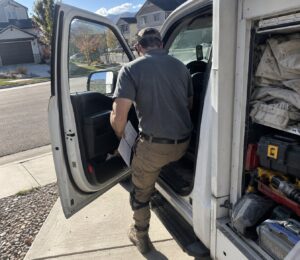
Vineyard occupies a unique position in Utah County: the newest incorporated city in the county, sitting on the eastern shore of Utah Lake north of Provo, developed almost entirely since 2010 on the site of the former Geneva Steel mill. This developmental history produces specific characteristics that distinguish Vineyard water damage response from other Utah County cities. The property stock is overwhelmingly new construction with modern building systems and code compliance; the neighborhoods are HOA-managed master-planned communities; the shoreline location produces specific flood exposure considerations; and the demographic profile skews younger and more family-oriented than more established Utah County cities. Our response to Vineyard properties typically runs 45–71 minutes during business hours. This page covers Vineyard-specific water damage response including the specific patterns produced by the city’s unique development history and geographic position.
Vineyard at a Glance
City Overview
Vineyard was incorporated in 1989 but remained largely undeveloped until the closure of the Geneva Steel mill in 2001 and subsequent site remediation opened the way for master-planned residential development. Since 2010, the city has grown from approximately 200 residents to over 15,000 in the 2020 census, making it one of the fastest-growing cities in Utah by percentage. Elevation sits at approximately 4,500 feet, essentially at Utah Lake elevation. The city is bounded on the west by Utah Lake and connects to Orem to the east and Lindon to the north.
Property Types
Vineyard’s property mix reflects its overwhelmingly recent development:
- New single-family homes (2010–present): The vast majority of Vineyard’s residential inventory, characterized by contemporary construction, modern building systems, and current-code compliance
- Townhomes and attached single-family: Substantial townhome development throughout the city
- Multi-family (apartments, condos): Growing multi-family inventory including large apartment complexes and condominium developments
- Commercial and mixed-use: Emerging commercial development including retail, restaurants, and mixed-use projects
- Lake-adjacent properties: Specific inventory close to Utah Lake shoreline with unique considerations
- Rare older construction: Very limited older housing stock predating the 2010 development wave
Water Supply and Infrastructure
Vineyard water is supplied through the city’s water system, connected to the Central Utah Water Conservancy District through modern distribution infrastructure. Water characteristics:
- Hard water (22–26 gpg mineral content, similar to the rest of Utah County)
- Modern distribution infrastructure throughout the city (advantage of new development)
- Standard pressure and quality typical of Utah County water supply
Common Water Damage Patterns in Vineyard
Vineyard water damage patterns reflect the specific characteristics of new construction and lake-adjacent location:
- Fitting and connection failures in new construction: Despite modern materials, PEX and CPVC fittings can fail, particularly during the first few years of settlement and use
- Appliance-related events: New homes typically have new appliances but appliance-related water damage (washing machines, dishwashers, water heaters) still occurs
- Landscaping and drainage issues: New development can have specific grading or drainage issues producing property water intrusion
- Utah Lake proximity flood risk: Properties near the shoreline have flood exposure from lake elevation variation and high-water events
- HOA-managed common area events: Master-planned community configurations produce specific coordination requirements for shared building elements
- Multi-family incidents: Growing multi-family inventory produces regular multi-unit response requirements
Vineyard Water Damage Services
Vineyard-focused services offered:
- Water damage restoration in Vineyard
- Emergency water damage response in Vineyard
- Water extraction in Vineyard
- Moisture detection in Vineyard
- Dehumidification in Vineyard
Vineyard-Specific Considerations
New Construction Water Damage Patterns
New construction has different water damage characteristics than older housing:
- Modern building materials: Engineered lumber, OSB sheathing, contemporary insulation, and modern finishes have different response characteristics than older materials
- Modern building envelope: Better sealing and insulation means water damage sometimes shows less prominently but can affect more comprehensive building assemblies
- Modern HVAC: High-efficiency systems with sophisticated condensate management, humidification, and other features can produce different water damage patterns
- PEX and CPVC plumbing: Predominant plumbing systems in Vineyard construction, generally reliable but with specific failure patterns at fittings and connections
- Builder warranty considerations: Newer construction may have builder warranty coverage for specific defects producing water damage
- Warranty exclusions: Standard homeowner insurance and builder warranty have specific coverage boundaries; water damage may involve coordination between both coverage sources
HOA Coordination in Master-Planned Communities
Most Vineyard developments are master-planned communities with HOAs. HOA coordination affects water damage response:
- HOA authorization requirements for work affecting shared elements
- Master policy coordination for damage involving building envelope or common areas
- Coordination with property management companies operating on behalf of HOAs
- Compliance with community-specific requirements for exterior work, materials, and contractor selection
- Individual owner vs. HOA responsibility for specific damage elements
Utah Lake Flood Risk
Vineyard’s position on the Utah Lake shoreline creates specific flood exposure:
- Lake elevation variation from year to year based on precipitation and water management
- Specific properties in FEMA-designated flood zones with mandatory flood insurance for mortgage lenders
- Historic high-water events (including the 1983 event that produced significant Utah Lake shoreline flooding) as a reference for maximum flood exposure
- Standard homeowner insurance excludes flood damage; NFIP or private flood insurance recommended for properties in flood-exposed areas
- Modern construction in Vineyard incorporates flood-resistant design in many properties, though this doesn’t eliminate all flood risk
Geneva Steel Site Considerations
Development on the former Geneva Steel site involved extensive environmental remediation before residential construction was permitted. Considerations:
- Site remediation completion produced environmentally clean development conditions
- Some site-specific considerations may still apply for specific properties depending on precise location and history
- Standard water damage response protocols apply without site-history complications for typical residential events
Fast-Growing Community Dynamics
Vineyard’s rapid growth produces specific dynamics:
- Ongoing construction in many parts of the city, sometimes affecting response logistics
- Newer neighborhoods and streets that may not appear in older GPS/mapping systems
- Diverse HOA structures across different developments
- Growing commercial base but still limited compared to established cities
Vineyard Insurance Environment
Insurance carriers active in Vineyard residential market:
- State Farm (significant presence)
- USAA (with military-connected families)
- American Family, Farmers, Liberty Mutual, Progressive, Auto-Owners
- Bear River Mutual (Utah-based)
- Some specialized coverage for Vineyard-specific considerations
Vineyard has some specific patterns compared to more established cities: newer homes with builder warranty coordination affecting some claim structures, HOA master policies covering more building elements than in older non-HOA communities, and specific flood insurance requirements for properties in mapped flood zones.
Access and Response Considerations
Response to Vineyard from our Provo base typically uses I-15 to the Vineyard exits (SR-114 or 400 South), with response time varying by specific location within the city:
- Standard response times: 45–71 minutes during business hours
- After-hours response: 2–5 hours for standard events
- Rush hour periods (particularly along I-15 north from Provo) can extend response times
- Some newer development areas may present GPS or navigation challenges
Frequently Asked Questions
- My Vineyard home is only a few years old. Should water damage still happen?
- Newer homes reduce but don’t eliminate water damage risk. Common water damage sources in newer construction: appliance failures (new appliances still fail; supply lines still develop leaks; the shift is toward earlier-in-service-life failures rather than end-of-service-life failures common in older homes), fitting and connection failures (PEX and CPVC systems are reliable overall but individual fittings still fail; installation issues occasionally produce leaks), builder-related issues (specific installation defects, moisture entry from construction, code compliance issues during initial build), landscaping and drainage (new grading sometimes produces water intrusion patterns; hardscape and softscape settling can affect drainage), and weather-related events (windstorms, ice dams, and other weather events affect new construction the same as older homes). The specific patterns differ from older construction but total risk is similar; new construction just tends toward different failure modes. Newer homes may also have builder warranty coverage for specific defects, which can affect claim response for water damage attributable to construction issues rather than covered perils.
- My property is close to Utah Lake. What flood insurance considerations apply?
- Depends on your specific FEMA flood zone classification and elevation relative to the lake. FEMA maps specific flood zones based on flood risk analysis: high-risk zones (Zone A, AE) typically require mandatory flood insurance for mortgage-holding property owners; moderate-risk zones (Zone X shaded) suggest flood insurance is recommended but not mandatory; minimal-risk zones (Zone X) have low flood risk. Utah Lake elevation variation affects specific flood exposure: during high-water years (Utah Lake elevation reaches its regulatory maximum), certain shoreline properties can experience direct flooding; during typical years, flood risk is limited to specific shoreline properties. For your specific property: check FEMA’s flood map service (msc.fema.gov) for your address, consult your insurance agent about flood insurance options, and review your mortgage documents for any flood insurance requirements. Even properties technically outside high-risk zones near Utah Lake may benefit from flood insurance as a precaution, particularly given the modest cost relative to potential flood damage.
- How does HOA coordination work for water damage in my Vineyard property?
- Depends on the specific damage type and your HOA structure. Standard HOA coordination for water damage: HOA master policy typically covers building envelope (exterior walls, roof, foundation) and common areas; individual homeowners are responsible for interior damage covered by their homeowner (HO-3) or condo (HO-6) policies. For your specific situation: identify whether the damage source is HOA-responsibility (main plumbing, roof, exterior wall) or individual-responsibility (interior plumbing, appliances, contents); notify your HOA and property management if the damage may involve HOA responsibility; coordinate with both your insurance carrier and the HOA master policy carrier if both are involved; understand your CC&Rs (Covenants, Conditions & Restrictions) provisions for how water damage is handled in your specific community. Some HOAs have specific procedures requiring notification within specific timeframes; missing these deadlines can affect claim coverage. Our approach coordinates with HOAs and property management as appropriate for the specific damage scope, though the responsibility discussion between individual owner and HOA is typically resolved separately from the physical restoration work.
- Do you work with the specific builder warranty companies common in Vineyard?
- We handle response for water damage regardless of the specific coverage source, and coordinate with builder warranty companies when their coverage applies. Common builder warranty structures in Vineyard: developer-provided initial warranty (typically 1–10 years depending on specific defect type), third-party structural warranty coverage (10-year structural warranty is standard for new construction in Utah), and manufacturer warranties for specific components (HVAC equipment, appliances). Water damage claims involving builder warranty typically involve: identification of whether the damage is warranty-eligible (construction defect vs. covered peril under homeowner insurance), coordination between builder warranty and homeowner insurance if both apply, and documentation supporting the specific coverage claim. For Vineyard property owners with builder warranty concerns, we can adapt our response and documentation to support whatever coverage structure applies to your specific situation. The physical restoration work happens regardless of the coverage source; the claim structure coordinates separately.
- Any specific considerations for Vineyard being on the former Geneva Steel site?
- Very limited practical impact on standard water damage response. The Geneva Steel site went through extensive environmental remediation before residential construction was permitted, with completion certified by EPA and state environmental authorities. The remediated site was determined suitable for residential use, and Vineyard’s residential development proceeded based on this clearance. For standard water damage response, we treat Vineyard properties like any other residential properties in Utah County. Specific considerations that might apply in unusual situations: extensive soil disturbance during work (unlikely for typical restoration but relevant for major structural or foundation work) may warrant specific handling; older institutional records about specific site history may be relevant for particular properties; and any specific environmental disclosures at property purchase would identify specific considerations for that property. For typical water damage response — extraction, drying, mold remediation, reconstruction — there’s no meaningful difference from standard Utah County work. For any specific concerns about site history for your particular property, discussing with the property developer or reviewing your title documentation would provide specifics.
Contact Vault Mold Removal — Provo, UT
For water damage response in Vineyard or coordination for specific projects, contact our office directly.
- Phone: (385) 250-2825
- Address: 1169 S 760 W, Provo, UT 84601
- Utah DOPL General Contractor License: #11876543-5501
- IICRC WRT / ASD / AMRT / OCT: #248317 / #248317-ASD / #319482 / #319482-OCT
Office Hours
- Monday – Saturday: 8:00 AM – 5:00 PM
- Sunday: Closed
Who shows up on your job
You get Vault’s W-2 crew — Marcus, Ryan, Elena, Daniel and Joseph — not a lead-gen handoff and not a franchise sub. Reconstruction (drywall, flooring, cabinetry, paint) is done by the same crew under Utah DOPL License #11876543-5501.
Written warranty
24-month workmanship warranty on drying, structural repairs, drywall, flooring, cabinetry and paint done by Vault. 90-day mold warranty from post-remediation clearance for recurrence from the same moisture source. Both are transferable once to a new homeowner, in writing on the work order.
We bill your carrier directly
Direct-billing with State Farm, USAA, Allstate, Farmers and Bear River Mutual. Every scope is written in Xactimate; you pay only your deductible plus anything the policy doesn’t cover. Not on this list? We still handle the claim.
More Vineyard services: Basement flooding cleanup in Vineyard · Structural drying in Vineyard
Business owners in Vineyard: Commercial Water Damage Restoration in Vineyard, UT — call (385) 250-2825, answered live 24/7.
Fire damage in Vineyard: Fire Damage Restoration in Vineyard, UT — call (385) 250-2825, answered live 24/7.
Helpful guides: What if water damage isn’t fixed? · Water meter leak test · Your deductible, explained
What our Vineyard customers say
“We discovered water damage near our washing machine after noticing the flooring starting to lift. They helped identify the wet areas and explained how the drying equipment would work. The process was easier to understand than I expected, and I appreciated the updates.”
— Emily B., Vineyard, Utah
Other cities we serve
Frequently asked questions
How fast is Vault's response in Vineyard?
Vault serves Vineyard 24/7 from our Provo base. Call (385) 250-2825 and the crew is dispatched live.
What's common in Vineyard jobs?
Newer construction with PEX manifolds, HVAC condensate issues, townhome party-wall cross-unit damage, Utah Lake shoreline groundwater, and basement waterproofing defects. All of these are published Vineyard case studies on our site.
Do you handle PEX manifold failures?
Yes. In newer homes, a single failed PEX fitting can leak inside a wall for a while before anyone notices. We locate the wet area with thermal imaging and moisture meters, remove damaged materials, and dry the cavity.
Will you bill my insurance directly?
Yes. Vault bills State Farm, USAA, Allstate, Farmers, and Bear River Mutual directly, and works with other carriers.
Questions we didn’t cover? Call (385) 250-2825.