
About this job
A real Vault job in Provo. The crew that handled it was Vault’s own W-2 team — no subcontractors, no franchisee hand-off. Same crew answers the phone and shows up at the door.
- Call any hour: (385) 250-2825 answered live 24/7. 45-min guarantee Provo (Mon-Sat 8-5); under 60 min elsewhere in Utah County.
- Who did the work: Vault’s W-2 crew, IICRC WRT/ASD/AMRT/OCT, Utah DOPL #11876543-5501.
- Insurance: Xactimate scopes submitted direct to State Farm, USAA, Allstate, Farmers, Bear River Mutual, and most national carriers.
- Pricing: water mitigation $3,500-$8,500; reconstruction $4,500-$9,500. 24-month warranty, Wisetack financing.
- Family-owned and veteran-operated, based in Provo since 2020.
See Vault in Provo, all Provo case studies, or water damage services.
Real Vault job — Rivergrove, Provo
- Approximate location
- Near the Provo River corridor
- When
- March 2026
- What happened
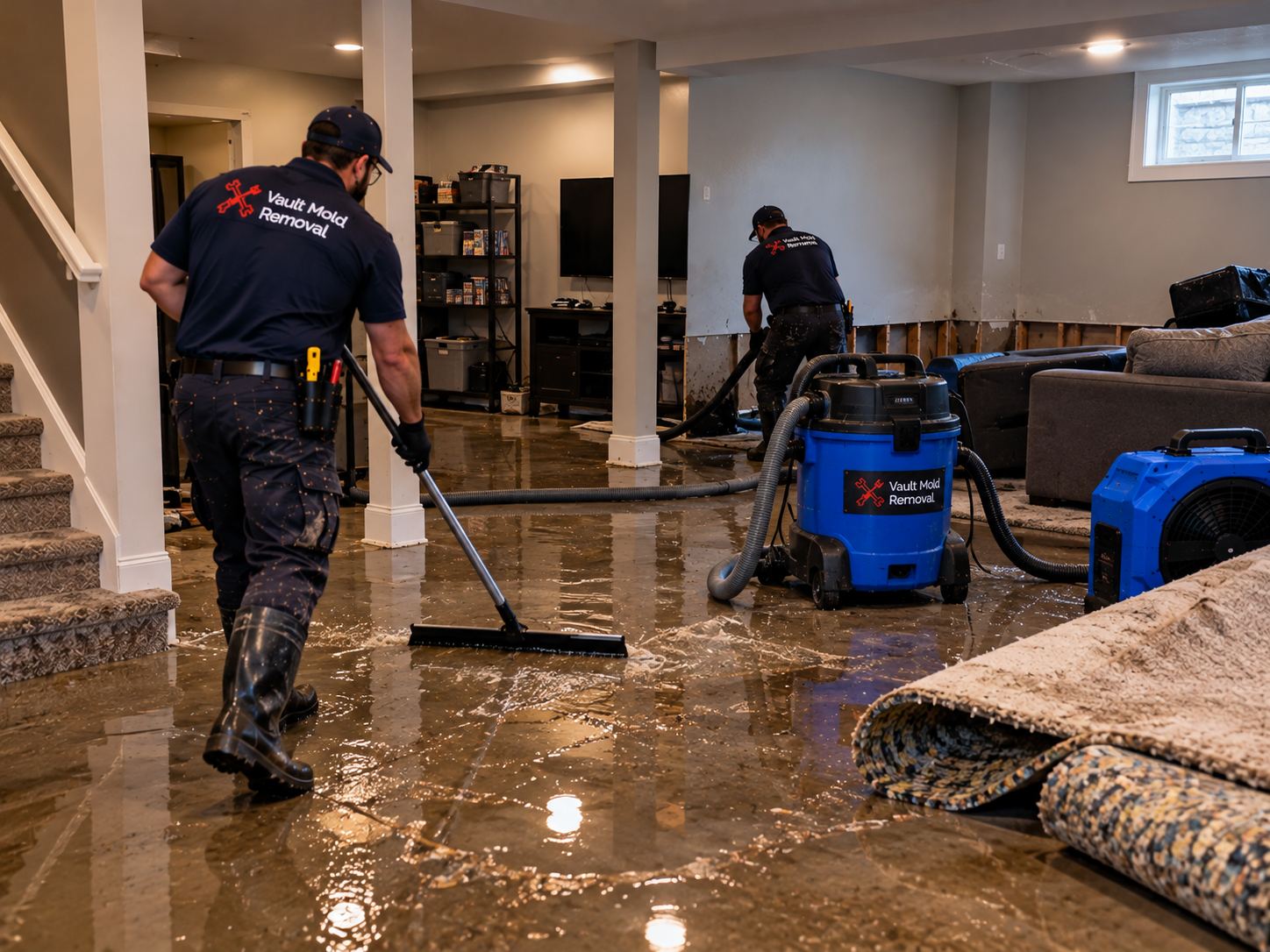
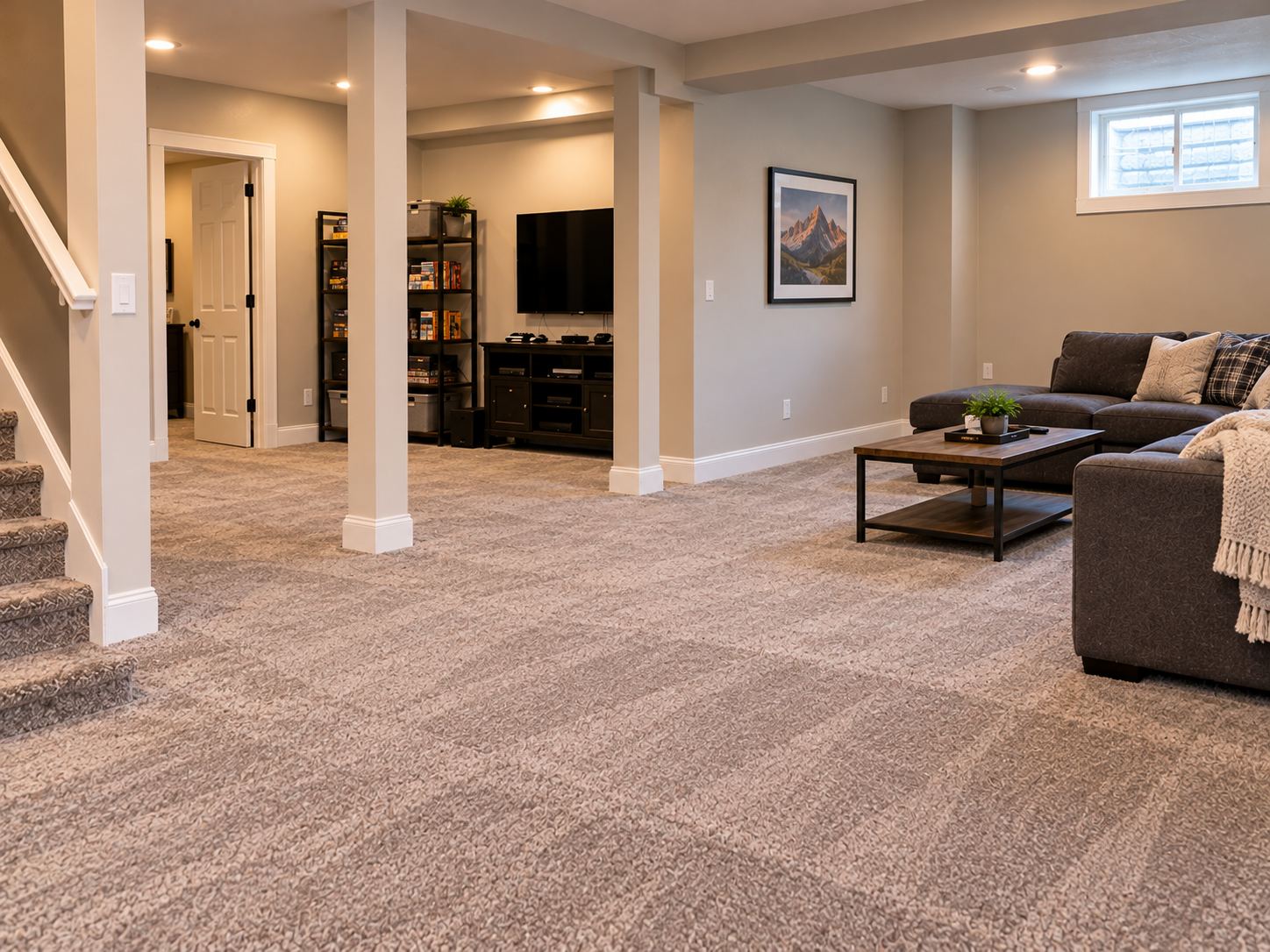
- Basement sump pump failed during spring snowmelt, flooding a finished recreation room.
- What Vault did
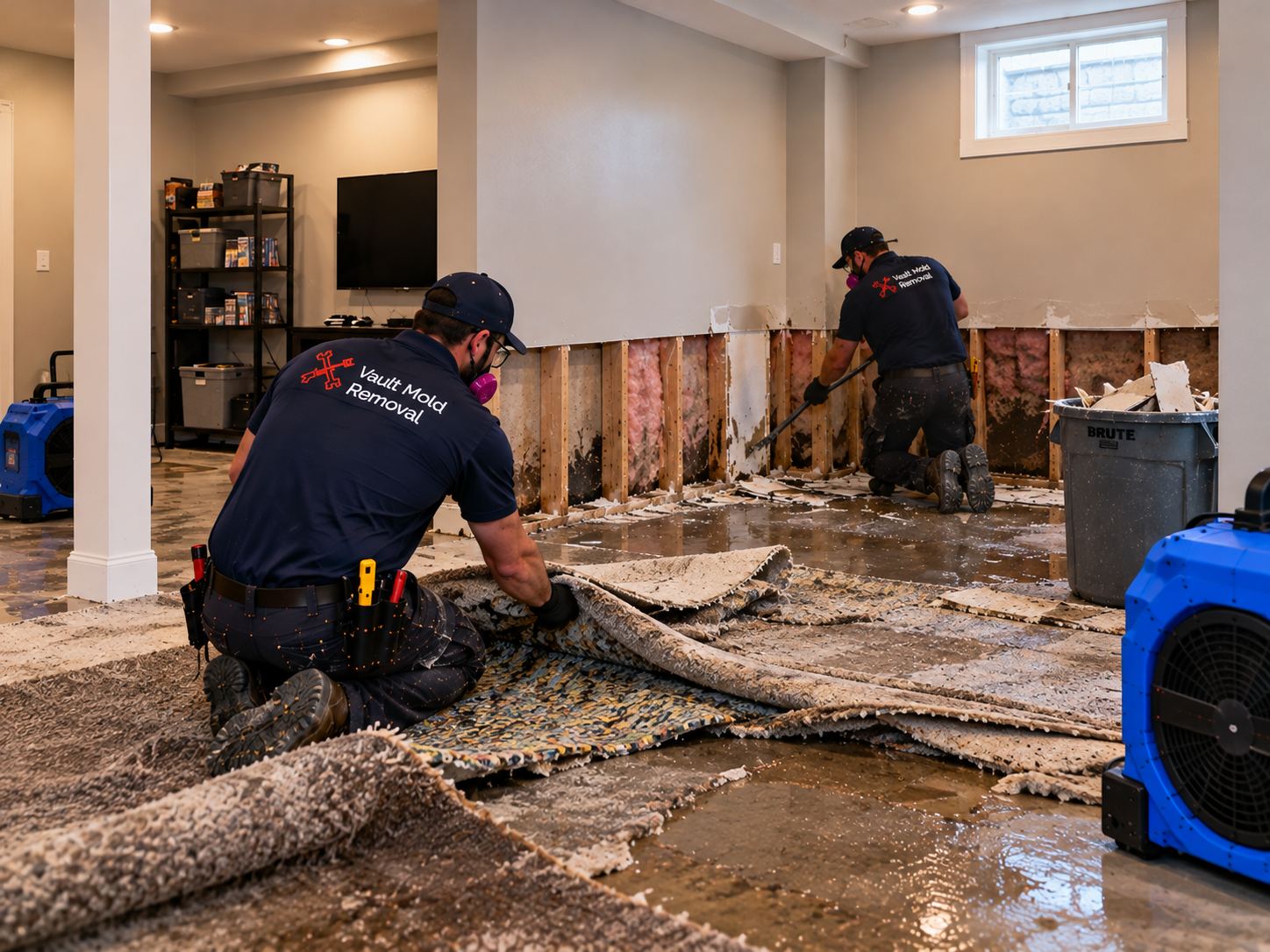
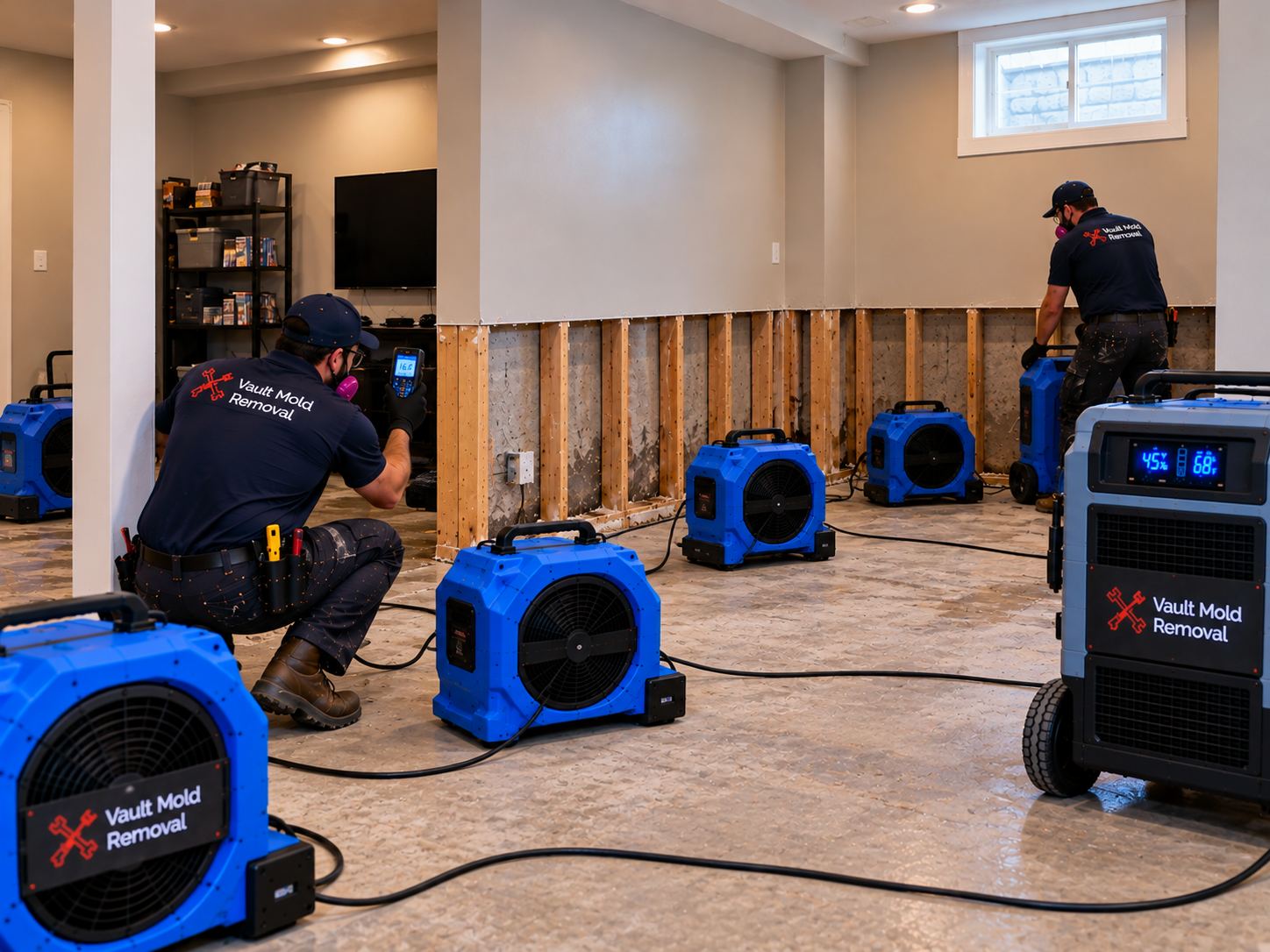
- Standing water extraction, carpet removal, and structural drying.
Water Damage Restoration in Rivergrove, Provo
Rivergrove sits just north of the Provo River corridor, slightly upslope and away from the immediate riparian zone that defines Riverbottoms. Streets like River Bottoms Boulevard, Riverside Drive, and Grove Circle run through primarily 1960s and 1970s mid-century residential development on lots where higher elevation put them outside the FEMA-designated 100-year floodplain that affects some Riverbottoms parcels. Housing stock is well-maintained middle-class residential with mature landscaping, and the neighborhood has a settled established character. From a restoration standpoint, Rivergrove is generally straightforward mid-century Provo work without the floodplain complications that make Riverbottoms restoration diagnostically distinct.
Response time from our Provo dispatch to a Rivergrove address averages 26 minutes daytime and 50 minutes overnight, logged over three years of dispatch records. Central Rivergrove runs 24 to 26 minutes daytime. Eastern Rivergrove approaching the Provo River corridor runs 27 to 30 minutes daytime.
What Rivergrove Construction Looks Like
Rivergrove’s housing stock is dominated by 1960s and 1970s mid-century tract construction with high consistency. Shared characteristics: platform framing with fire blocking, copper supply lines (original 1960s-1970s installations, now approaching 55 to 65 years of service), cast-iron drain with ABS conversions over the decades, drywall over 2×4 framing, forced-air HVAC with ductwork typically routed through crawlspace or attic. Foundations split roughly 60/40 between full basements and shallow crawlspaces.
Some 1980s and 1990s infill construction fills scattered remaining lots. Similar profile to the surrounding mid-century tract housing but with updated materials — later copper supply lines, ABS drain more universal, standard drywall assemblies.
Post-2000 infill and occasional teardown-and-rebuild activity has added modern construction (engineered floors, PEX manifold, spray foam) to some Rivergrove lots but represents only 5-8% of current housing stock. The neighborhood is not undergoing significant redevelopment in the way Grandview North is.
River Proximity Without Floodplain Complications
Rivergrove’s positioning slightly upslope from the immediate Provo River corridor puts most of the neighborhood outside FEMA’s Special Flood Hazard Area — the floodplain complications that affect Riverbottoms restoration don’t apply to most Rivergrove work. Standard HO-3 policies handle plumbing-source losses without the coverage-source complexity that Riverbottoms sometimes involves.
That said, the water table in Rivergrove is higher than in most Provo neighborhoods due to Provo River proximity. Deep basement construction is limited by high water table conditions, which is why shallow crawlspaces are common in the neighborhood. For crawlspace losses, ambient humidity in the drying chamber runs higher than in more elevated Provo neighborhoods, which affects LGR dehumidifier efficiency — we sometimes deploy desiccant supplementation earlier in the drying process than we would in Edgemont or Grandview.
Mature Tree Canopy Considerations
Rivergrove has one of the most consistent mature tree canopies in Provo — cottonwoods, sycamores, and mature deciduous species throughout the neighborhood, some over 60 years old. This affects restoration in the same ways covered on our Grandview South page: root intrusion in cast-iron drain lines is common (sewer backup risk); gutter overflow from leaf debris causes water damage at eaves and wall-roof intersections; and heavy branches during winter storms can damage roofs and produce water intrusion from failed shingles or flashing.
Typical Rivergrove Failure Patterns
- Copper pinhole leaks in 1960s-1970s original installations
- Age-related failure of original copper supply lines. Same pattern as adjacent mid-century Provo neighborhoods.
- Water heater tank rupture
- Standard failure mode. Basement or crawlspace mechanical rooms usually have inadequate drainage for full tank release.
- Washing machine and dishwasher supply-hose failures
- Standard modern-appliance failure mode at braided stainless connections.
- Cast-iron drain root intrusion
- Mature tree root systems attack cast-iron drain runs at fitting joints. Sewer backups (Category 3) are relatively common in older Rivergrove homes.
- Crawlspace flooding from high water table during spring runoff
- Rivergrove’s higher water table can push groundwater into crawlspaces during peak snowmelt seasons even without direct flooding. Typically not covered under HO-3 (that’s flood coverage territory).
Insurance Documentation for Rivergrove Losses
Utah Code 31A-26-301.5 requires acknowledgment within 15 days and coverage determination within 30 days of proof of loss. Rivergrove claims run standard mass-market carrier programs — State Farm, USAA, Allstate, Farmers, and Bear River Mutual are common. Documentation preferences vary slightly between carriers but baseline standards fit all.
Watch-items on Rivergrove claims: pre-1978 homes fall under EPA RRP for lead-safe work practices during demolition or reconstruction; sewer backup requires specific endorsement to be covered; groundwater intrusion during spring runoff typically isn’t covered under standard HO-3; gradual pinhole damage can face coverage disputes.
Frequently Asked Questions
- My neighbor is in the flood zone but I’m not. Do I still need flood insurance?
- Not required by FEMA or your mortgage lender unless your property is within the SFHA. Whether it’s worth carrying anyway is a personal risk decision. Flood mapping updates periodically, and neighborhoods bordering the SFHA sometimes see boundary revisions that add previously-excluded parcels. Additionally, floods can affect properties outside mapped zones during extreme events. Flood insurance is relatively inexpensive outside the SFHA ($400 to $700 annually is common) compared to inside. That’s a personal decision rather than a restoration one.
- My crawlspace is damp all year. Is that from the water table or from a leak?
- Distinguishing these matters. Persistent dampness from high water table is a chronic environmental condition, not a covered water damage claim. Persistent dampness from a leak is a covered loss if the leak is sudden and accidental. We diagnose during the initial visit — hygrometric survey to measure ambient conditions, moisture readings on framing at grid coordinates, water testing if the source is uncertain. If the dampness is water-table related, the fix is vapor barrier installation, crawlspace encapsulation, or dehumidification — not covered by insurance but can prevent long-term problems. If it’s a leak, that’s a covered restoration claim.
- My cast-iron drain has been backing up for years. What are my options?
- Two paths. Restoration handles the immediate backup damage (as a Category 3 loss under IICRC S500). Long-term, drain replacement — either sectional repair or full drain line replacement — is licensed plumbing work. Some carriers offer service-line coverage endorsements that cover part of the drain replacement cost when root intrusion or age-related failure is the cause. Coordination with a plumber for drain scope and possibly hydro-jetting to clear immediate blockage is part of the restoration response.
- Does having a mature tree in my front yard affect my insurance premium or coverage?
- Not typically for coverage, but sometimes for pricing. Very large trees close to structures can be flagged as a risk factor for wind damage or drain root issues by some carriers. If a mature tree is dropping large branches or is showing signs of decay, arborist evaluation for potential removal is worth considering — not restoration scope but sometimes recommended when we identify tree-related damage risk during response.
- How does Rivergrove restoration compare to more elevated Provo neighborhoods?
- Similar equipment, similar process, longer drying times in some cases. High water table means ambient humidity in below-grade spaces runs higher, which slows LGR dehumidifier efficiency. We sometimes supplement with desiccant earlier in the drying cycle than we would in Edgemont or Grandview. The base cost per square foot is similar; total drying time can run 1 to 2 days longer for below-grade losses.
Contact Vault Mold Removal
Phone: (385) 250-2825
Address: 1169 S 760 W, Provo, UT 84601
Hours: Monday–Saturday, 9:00 AM – 5:00 PM
Service Area: Rivergrove, all Provo neighborhoods, and surrounding Utah County communities.
Water damage in Provo?
Call (385) 250-2825 — answered live 24/7 by the Vault crew, not a call center. Inside Provo city limits, Monday–Saturday, 8 AM–5 PM, we guarantee arrival in 45 minutes — see the terms.
Real Vault jobs in Provo
Each of these is a real job done by Vault’s own W-2 crew. Call (385) 250-2825, answered live 24/7.
- Downtown — February 2026
- East Bay — July 2026
- Edgemont — June 2026
- Foothills — May 2026
- Franklin — December 2025
- Franklin South — March 2026
- Grandview North — September 2026
- Grandview South — August 2026
- Indian Hills — April 2026
- Joaquin — November 2025
- North Park — January 2026
- Oak Hills — July 2026
- Provost — June 2026
- Riverbottoms — May 2026
- Rivergrove — March 2026
- Rock Canyon — February 2026
- Sherwood Hills — April 2026
- Sunset — August 2026
- Timp — December 2025
- Wasatch — January 2026
- 1908 Joaquin Bungalow Galvanized Failure
- Downtown Mid-Rise Sprinkler Discharge
- Edgemont Hidden Crawlspace Pinhole
- Foothills Walkout Washer Cascade
- Franklin Sewer Backup Root Intrusion
If a job like this is happening to you
Vault handles jobs like the one above every day across Utah County. Here’s what else is worth reading before you call:
- Why Vault — W-2 crew, 45-min Provo guarantee, in-house mold clearance, no franchise call center.
- Insurance claims — how we document the damage and bill State Farm, USAA, Allstate, Farmers, Bear River Mutual directly.
- 24-month warranty — what’s covered and how to open a claim.
- Wisetack financing — $500-$25,000 over 3-24 months, soft credit check.
- Service area — confirm your city is one of the 6 we cover.
- Water damage timeline — why every hour of head start cuts the final bill.
Call now: (385) 250-2825 — answered live 24/7 by the Vault crew.
Photos from this Rivergrove job
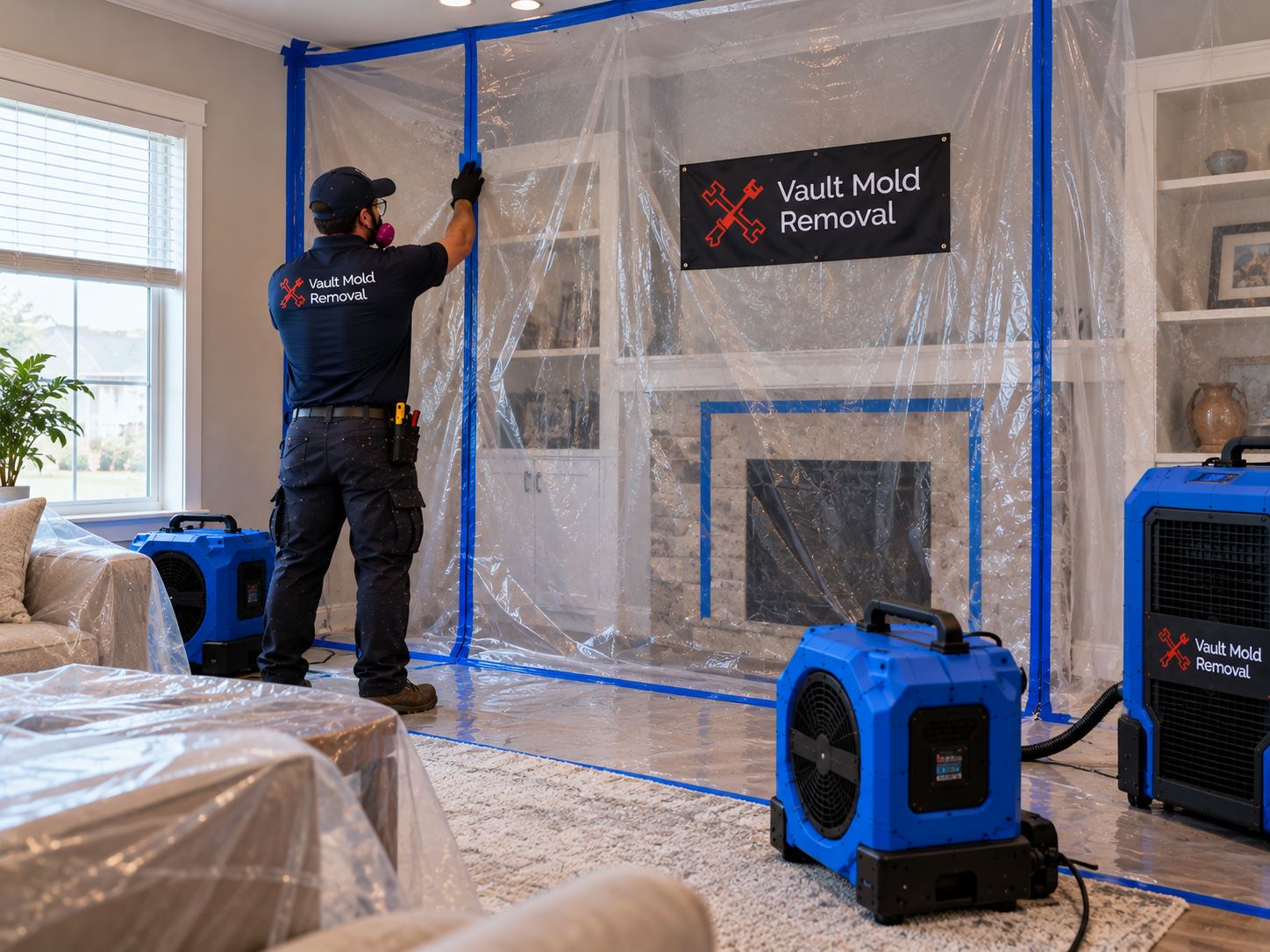
Real photos taken by the Vault crew during this Rivergrove, Provo water damage job in March 2026 — basement sump pump failure along the Provo River corridor.
Dealing with something similar?
This job started with a basement sump pump failure. If that sounds like what you’re facing, these guides cover what to do first:
Spring flood prep in Utah · Water damage vs flood — insurance
Or call (385) 250-2825 — answered live 24/7.
Helpful guides: What if water damage isn’t fixed? · Documenting damage for insurance
Need help with a job like this?
water damage restoration in Provo · emergency water damage restoration in Provo · sewage cleanup in Provo · mold remediation in Provo
Have a job like this in Provo? See emergency water damage in Provo, or call (385) 250-2825 for a free written estimate.