
About this job
A real Vault job in Provo. The crew that handled it was Vault’s own W-2 team — no subcontractors, no franchisee hand-off. Same crew answers the phone and shows up at the door.
- Call any hour: (385) 250-2825 answered live 24/7. 45-min guarantee Provo (Mon-Sat 8-5); under 60 min elsewhere in Utah County.
- Who did the work: Vault’s W-2 crew, IICRC WRT/ASD/AMRT/OCT, Utah DOPL #11876543-5501.
- Insurance: Xactimate scopes submitted direct to State Farm, USAA, Allstate, Farmers, Bear River Mutual, and most national carriers.
- Pricing: water mitigation $3,500-$8,500; reconstruction $4,500-$9,500. 24-month warranty, Wisetack financing.
- Family-owned and veteran-operated, based in Provo since 2020.
See Vault in Provo, all Provo case studies, or water damage services.
Real Vault job — Grandview North, Provo
- Approximate location
- Near 2200 N and 900 W
- When
- September 2026
- What happened
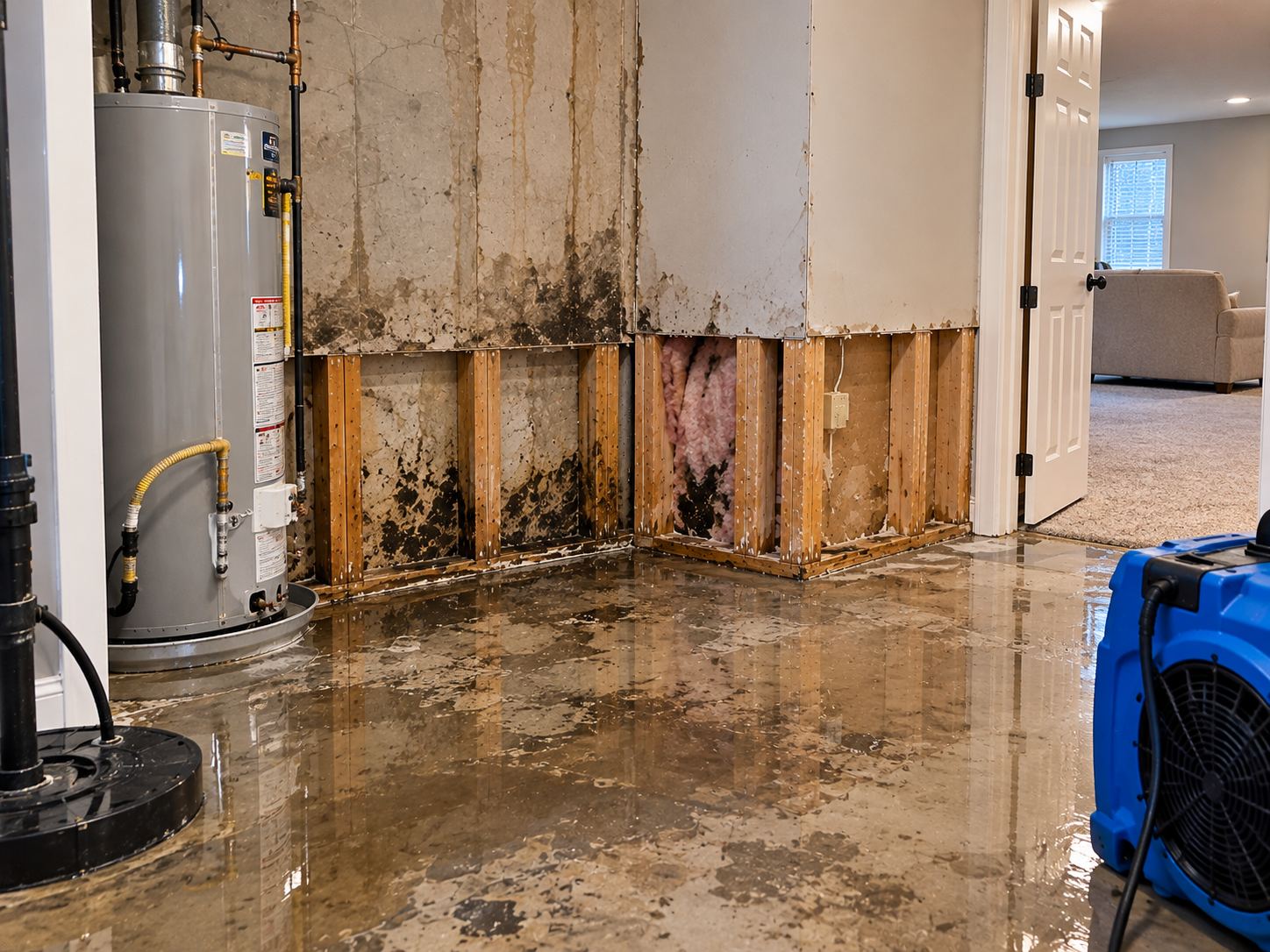
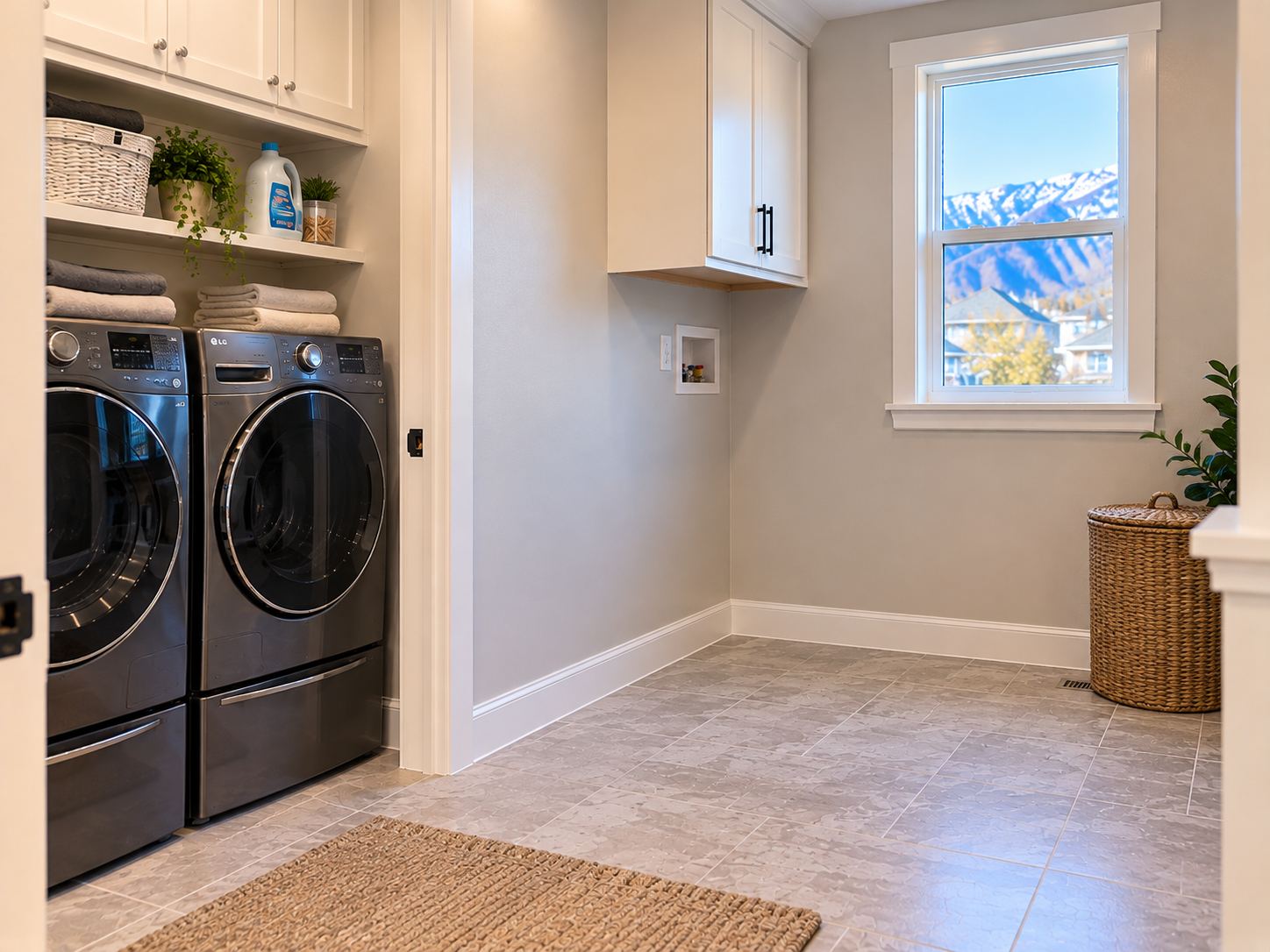
- Upstairs laundry supply hose failed while homeowners were away, flooding laundry room and ceiling below.
- What Vault did
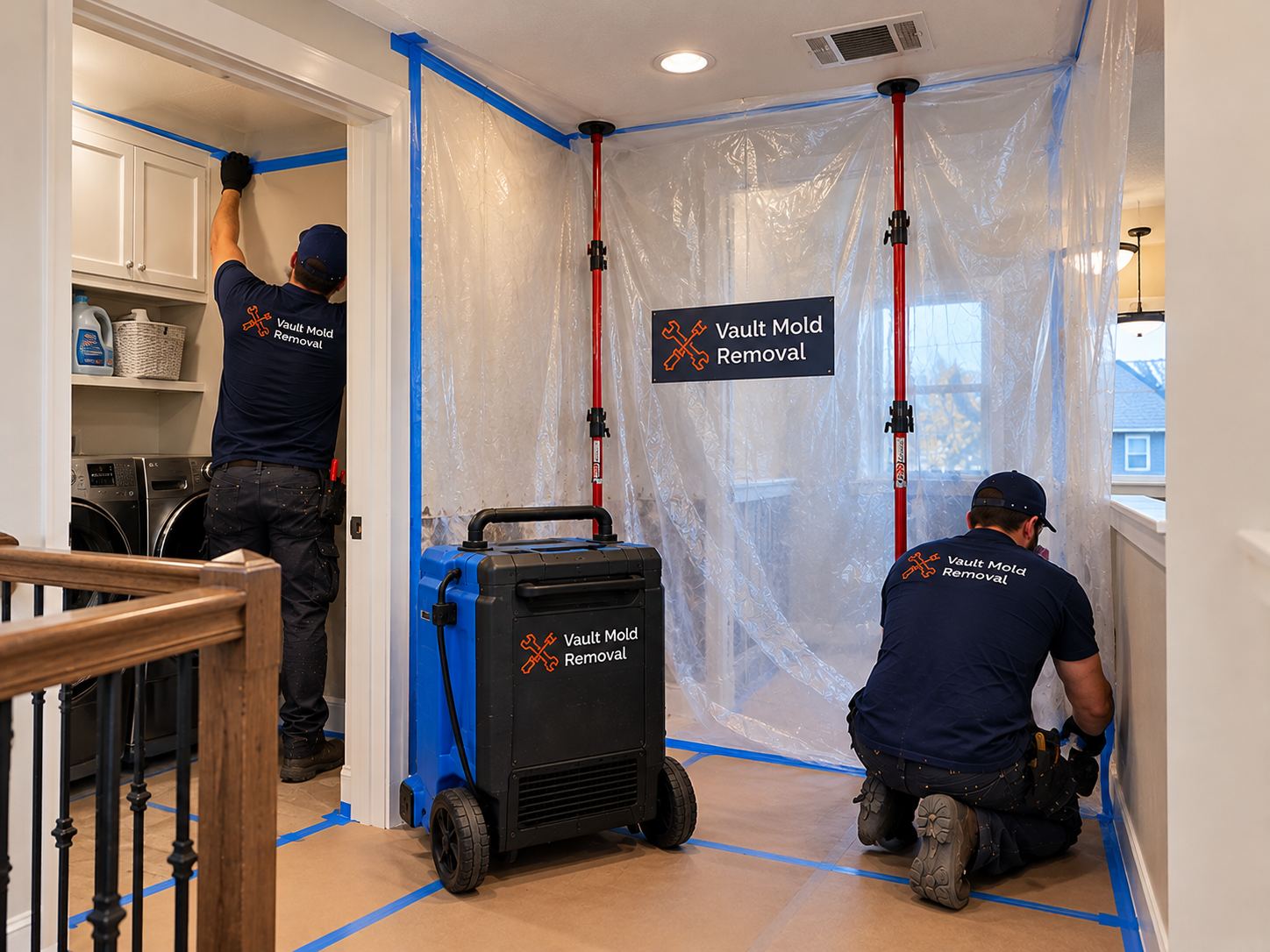
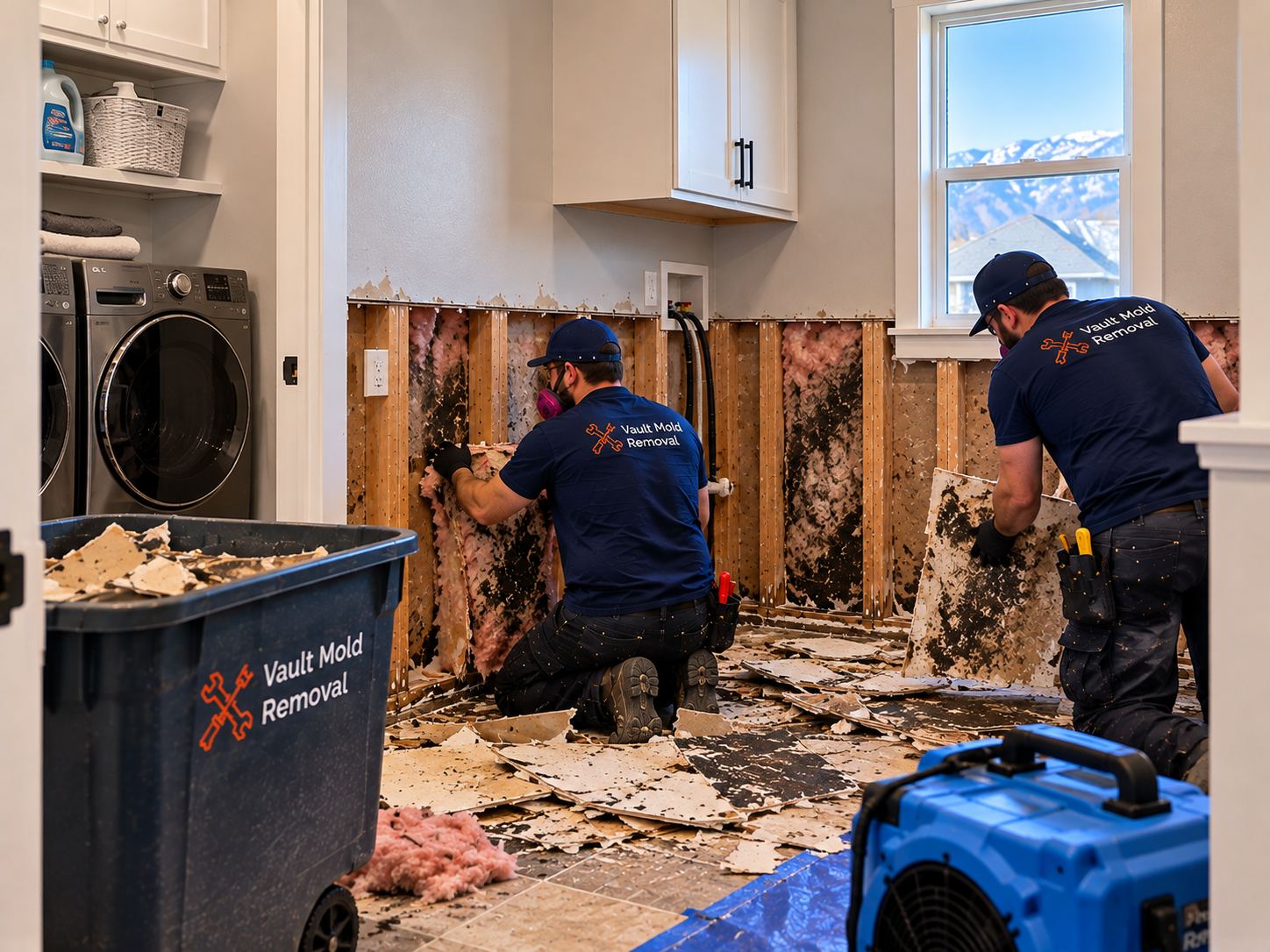
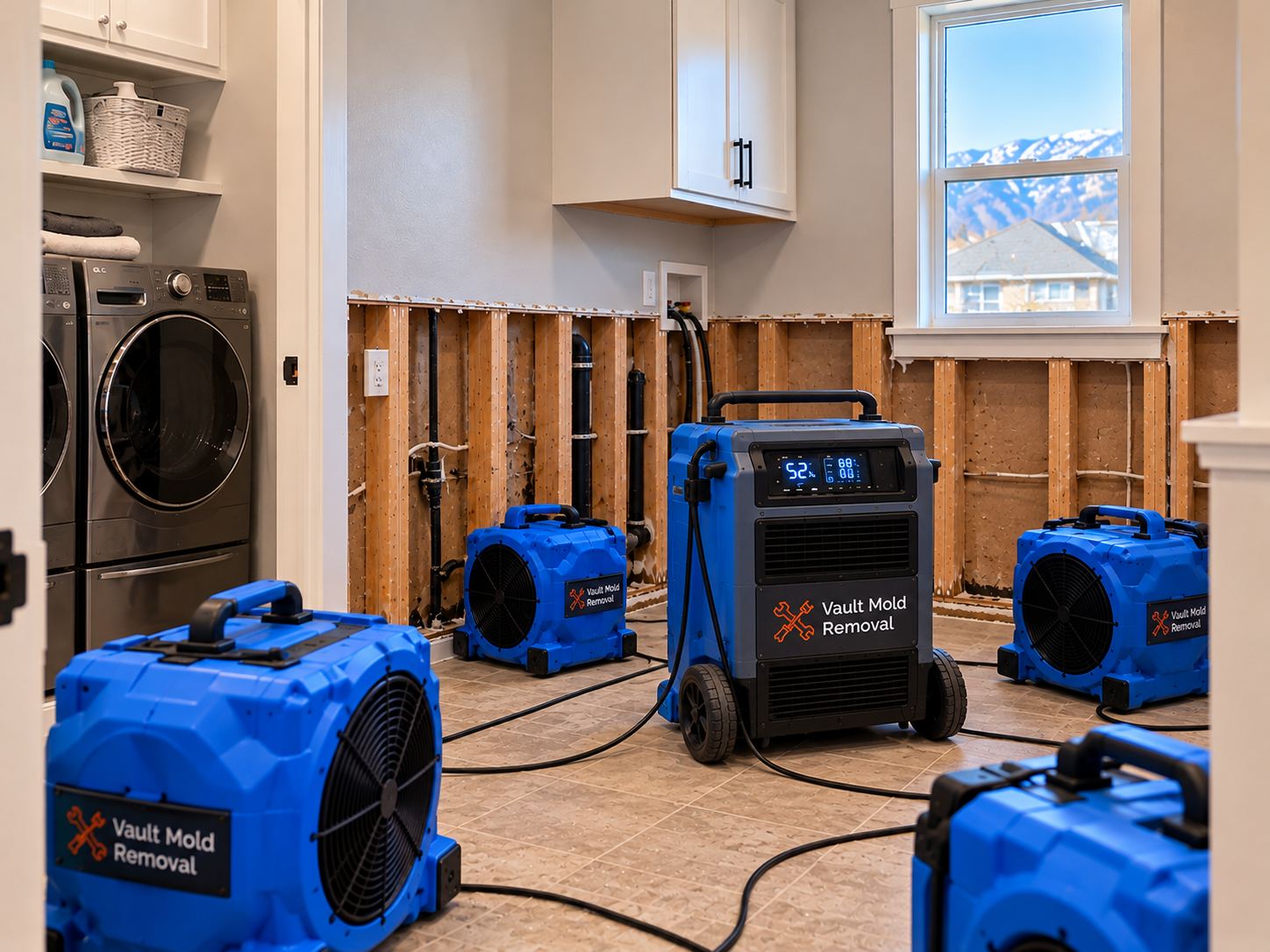
- Extraction, ceiling removal, and drying.
Water Damage Restoration in Grandview North, Provo
Grandview North occupies the northwest quadrant of Provo, running roughly from 500 West westward to Geneva Road, and from Center Street north up toward the Orem border. Development happened in overlapping waves from the 1960s through the 1990s, mostly on former agricultural parcels that were subdivided and built out with quarter-acre to third-acre lots. The neighborhood is currently in a redevelopment phase — some original 1960s homes on larger lots are being torn down and replaced with contemporary custom construction, which means adjacent lot construction activity can affect neighbors during restoration. This is one of the more mixed-generation neighborhoods in Provo from a construction standpoint.
Response time from our Provo dispatch to a Grandview North address averages 27 minutes daytime and 51 minutes overnight, logged over three years of dispatch records. Central Grandview North near 500 North and 1000 West runs 25 to 27 minutes daytime. Western Grandview North approaching Geneva Road runs 29 to 32 minutes daytime.
What Grandview North Construction Looks Like
Grandview North’s mid-century tract construction (1960s-1970s) shares the standard Provo mid-century profile: platform framing with fire blocking, copper supply, cast-iron drain converted to ABS in many homes, drywall over 2×4 studs, forced-air HVAC. Foundations are mostly full basements or shallow crawlspaces depending on lot slope. Single-story ranchers dominate, with some split-level and two-story colonial construction on larger lots.
1980s and 1990s fill-in construction on remaining parcels added copper-and-early-PEX supply, ABS drain, standard drywall, and slab-on-grade foundations on some infill lots. Materials are more consistent, failure modes more predictable.
Post-2010 teardown-and-rebuild construction on original 1960s lots is fully modern: engineered floor systems, PEX manifold plumbing, spray foam insulation, walkout basements where lot slope allows, high-efficiency HVAC. These replacement homes represent maybe 8-10% of current Grandview North housing stock but the percentage is growing.
Adjacent Construction Activity Considerations
Active teardown-and-rebuild activity on an adjacent lot can affect your restoration in specific ways. Construction dust migration can complicate mold remediation if we’re running containment for IICRC S520 mold work — negative-air pressure isolation has to account for adjacent construction dust as well as interior contamination. Underground utility work during adjacent construction can occasionally affect your water service (pressure fluctuations, brief service interruptions), which matters if we’re pressure-testing your plumbing during diagnosis. Traffic and access for our trucks can be constrained by construction staging on adjacent lots.
None of this changes the fundamental restoration approach — same equipment loadout, same IICRC standards — but we sometimes coordinate with adjacent construction site supervisors on scheduling and access when both projects are running simultaneously. This is more common in Grandview North than most Provo neighborhoods because of the redevelopment activity level.
Typical Grandview North Failure Patterns
- Copper pinhole leaks in 1960s-1970s original installations
- Age-related failure of original copper supply lines now approaching or past 55-year service life. Common in the tract housing generation.
- Water heater tank rupture
- Standard failure mode. Basement mechanical rooms usually have inadequate drainage for full tank release.
- Washing machine and dishwasher supply hose failures
- Braided stainless supply-hose failures at fittings. Cold-water washing machine hose failures particularly common during winter freeze events.
- Frozen supply lines in unheated basement or crawlspace runs
- Provo January design temperature 7°F. Some Grandview North basements with minimal insulation and exposed supply lines freeze during extended cold snaps.
- Toilet supply-line and fill-valve failures
- Standard failure mode; fill valves fail open, supply-lines fail at connections. Sustained overflow if unnoticed.
Insurance Documentation for Grandview North Losses
Utah Code 31A-26-301.5 requires acknowledgment within 15 days and coverage determination within 30 days of proof of loss. Grandview North claims run standard mass-market carrier programs — State Farm, USAA, Allstate, Farmers, and Bear River Mutual are common. Post-2010 teardown replacement homes sometimes carry high-net-worth carrier programs (Chubb, PURE, AIG Private Client), which change documentation preferences slightly. Our baseline standard fits either.
Watch-item on Grandview North claims: pre-1978 homes fall under EPA RRP requirements at 40 CFR 745 for lead-safe work practices during demolition or reconstruction. The 1960s-1970s housing stock is nearly universally pre-1978; 1980s fill-in construction is not. We test rather than assume when uncertain.
Frequently Asked Questions
- My neighbor is doing a teardown and rebuild while my restoration is happening. Is that a problem?
- Manageable with coordination but not ideal. Construction dust migration can complicate mold remediation if we’re running containment for IICRC S520 work. Access for our trucks can be constrained by their construction staging. We coordinate directly with the adjacent construction site supervisor on scheduling, dust management, and access. In most cases both projects run concurrently without significant issue; occasionally we adjust timing on containment-sensitive phases.
- My house is 1967 with original copper. Do I need to think about re-piping?
- Yes, moderately. Original copper supply installed in 1967 is now 58 years old, past documented 50-year service life for copper in aggressive water chemistry (which Provo’s supply is). Pinhole failures at fittings and bends are common in this cohort. A plumbing assessment by a licensed plumber can evaluate remaining wall thickness. Whole-house re-pipe to PEX is a common decision after the first pinhole failure or with an assessment showing significant wear.
- How does mid-century construction compare to modern for restoration cost and time?
- Similar cost per square foot for standard drying and reconstruction work, sometimes lower for mid-century because materials are more predictable and there’s no engineered floor complexity. Modern construction can be higher for engineered floor cavity drying, spray foam removal, and matching for specialty finishes. The bigger cost driver on either is the extent of the loss rather than the construction era.
- My basement has a 1968 electrical panel. Is that a problem?
- Potentially. Some 1960s panels — Federal Pacific Stab-Lok, Zinsco, some Bulldog and ITE panels — have known safety issues even when dry. Water exposure to these panels significantly increases hazard. We kill the panel before entering water-affected areas near it, and coordinate with a licensed electrician for assessment before energizing anything back. Panel replacement, if needed, is not restoration scope but we integrate scheduling.
- The construction site next door has trucks parked on my street constantly. Will your trucks be able to access my house?
- Usually yes, though sometimes with adjustments. If our trucks can’t park at your driveway or street frontage due to adjacent construction staging, we run longer supply lines from a nearby staging point. This adds equipment setup time but doesn’t prevent the response. In extreme cases where access is completely blocked, we coordinate with the adjacent contractor to clear staging temporarily.
Contact Vault Mold Removal
Phone: (385) 250-2825
Address: 1169 S 760 W, Provo, UT 84601
Hours: Monday–Saturday, 9:00 AM – 5:00 PM
Service Area: Grandview North, all Provo neighborhoods, and surrounding Utah County communities.
Water damage in Provo?
Call (385) 250-2825 — answered live 24/7 by the Vault crew, not a call center. Inside Provo city limits, Monday–Saturday, 8 AM–5 PM, we guarantee arrival in 45 minutes — see the terms.
Real Vault jobs in Provo
Each of these is a real job done by Vault’s own W-2 crew. Call (385) 250-2825, answered live 24/7.
- Downtown — February 2026
- East Bay — July 2026
- Edgemont — June 2026
- Foothills — May 2026
- Franklin — December 2025
- Franklin South — March 2026
- Grandview North — September 2026
- Grandview South — August 2026
- Indian Hills — April 2026
- Joaquin — November 2025
- North Park — January 2026
- Oak Hills — July 2026
- Provost — June 2026
- Riverbottoms — May 2026
- Rivergrove — March 2026
- Rock Canyon — February 2026
- Sherwood Hills — April 2026
- Sunset — August 2026
- Timp — December 2025
- Wasatch — January 2026
- 1908 Joaquin Bungalow Galvanized Failure
- Downtown Mid-Rise Sprinkler Discharge
- Edgemont Hidden Crawlspace Pinhole
- Foothills Walkout Washer Cascade
- Franklin Sewer Backup Root Intrusion
If a job like this is happening to you
Vault handles jobs like the one above every day across Utah County. Here’s what else is worth reading before you call:
- Why Vault — W-2 crew, 45-min Provo guarantee, in-house mold clearance, no franchise call center.
- Insurance claims — how we document the damage and bill State Farm, USAA, Allstate, Farmers, Bear River Mutual directly.
- 24-month warranty — what’s covered and how to open a claim.
- Wisetack financing — $500-$25,000 over 3-24 months, soft credit check.
- Service area — confirm your city is one of the 6 we cover.
- Water damage timeline — why every hour of head start cuts the final bill.
Call now: (385) 250-2825 — answered live 24/7 by the Vault crew.
Photos from this Grandview North job
Real photos taken by the Vault crew during this Grandview North, Provo water damage job in September 2026 — upstairs laundry supply hose failed while the homeowners were away at 2200 N / 900 W.
Dealing with something similar?
This job started with an upstairs laundry hose that burst while the owners were away. If that sounds like what you’re facing, these guides cover what to do first:
Washing machine overflow or hose burst · Water damage on your ceiling
Or call (385) 250-2825 — answered live 24/7.
Helpful guides: What if water damage isn’t fixed? · Documenting damage for insurance
Need help with a job like this?
water damage restoration in Provo · emergency water damage restoration in Provo · sewage cleanup in Provo · mold remediation in Provo
Have a job like this in Provo? See emergency water damage in Provo, or call (385) 250-2825 for a free written estimate.