
Water damage restoration when it can’t wait, in Orem, Utah: Vault is a licensed, family-owned IICRC Certified Firm that answers live 24/7 and gives free written estimates.
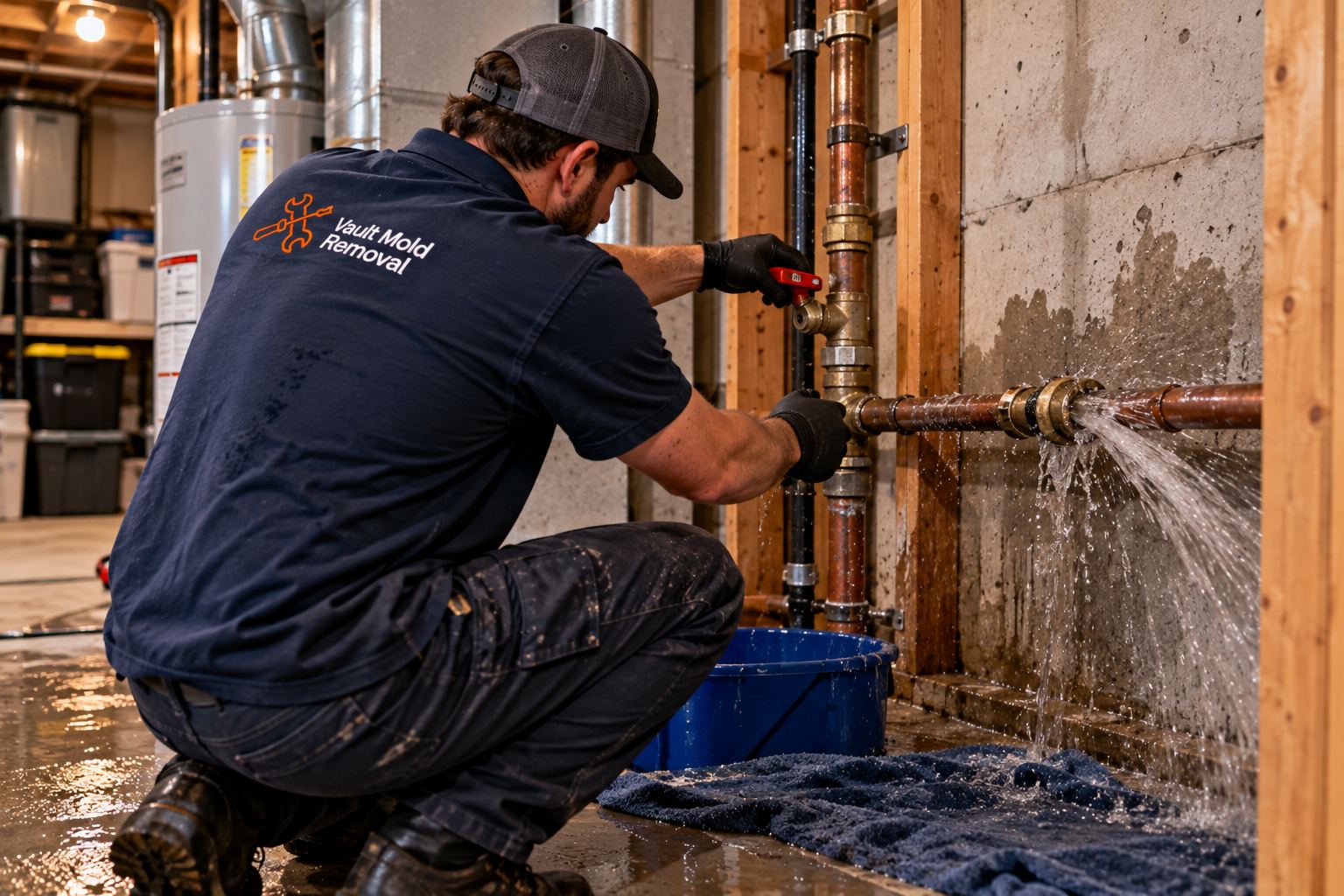
A burst pipe, a failed water heater or a flooded basement does the most damage in the first hours. Our emergency water damage restoration crew stops the source, removes the water and starts drying, then handles the damage restoration and repairs afterward.
Calls are answered live 24/7, and our current average arrival in Orem is about 41 minutes. Details: emergency water damage service.
What happens after you call: the crew stops the source, extracts standing water, finds hidden moisture with a FLIR thermal camera and sets up drying chambers. Moisture readings are logged every day until the structure is dry, and call-answered, dispatch and arrival times are printed on your work order. If every technician is on a job, the call rolls to the owner’s cell, not voicemail.
What it costs: typical Utah water mitigation runs $3,500–$8,500 and reconstruction $4,500–$9,500, and the written estimate is free. Covered losses are billed to your insurer directly — you pay the deductible and anything not covered — and Wisetack financing covers $500–$25,000 over 3–24 months, subject to approval.
The rebuild is done by the same W-2 crew — no subcontractors — so drywall, flooring and cabinets are handled by the people who dried the house. If water sat long enough for mold, inspections are $99, $199 or $349 depending on testing, and removal starts at $500.
If water is coming into your Orem home or business right now, call (385) 250-2825. The phone is answered live 24/7 by the Vault crew, not a call center. Vault Mold Removal provides emergency water damage restoration in Orem, Utah: we stop the source, extract standing water, set up drying equipment and document the damage for your insurance claim. Arrival to Orem averages about 41 minutes from our Provo office. Burst pipes, failed water heaters, washer hoses and sewage backups do the most damage in the first hours, so the sooner drying starts, the less drywall, flooring and cabinetry has to come out.
Vault water damage work in Orem
Vault handles water damage work in Orem from a staffed office, shop and warehouse at 1169 S 760 W in Provo.
- Call any hour: (385) 250-2825 is answered live 24/7 by the Vault crew, not a call center. Arrival to Orem typically under 60 minutes.
- Who does the work: Vault’s own W-2 crew, IICRC certified in WRT, ASD, AMRT and OCT, under Utah DOPL General Contractor License #11876543-5501. No subcontractors. Meet the team
- Insurance: Xactimate scopes, daily moisture readings on your work order, direct billing to State Farm, USAA, Allstate, Farmers and Bear River Mutual.
- Pricing: free written estimates. Water mitigation typically $3,500–$8,500; reconstruction $4,500–$9,500. 24-month workmanship warranty · Wisetack financing
- Family-owned and veteran-operated, based in Provo since 2020.
Vault in Orem · Water damage restoration · Mold remediation · Sewage cleanup
Emergency Water Damage Response in Orem, Utah
Emergency water damage response is what we do for active water events: burst pipes still releasing water, water heater tanks that have just failed, active roof leaks during storms, sewage backups producing ongoing contamination. These situations require immediate response to limit ongoing damage development. The difference between a 30-minute response and a 4-hour response is measured in additional saturated flooring, additional wall damage, additional contents affected, and additional restoration scope. Our emergency response to Orem addresses runs 41–68 minutes during business hours from our Provo office, with 2–4 hour typical after-hours response through on-call rotation. This page covers emergency water damage response specifically for Orem properties.
What Constitutes an Emergency Water Event
Active Water Situations
Emergency response is appropriate for:
- Currently active water flow that hasn’t been stopped (broken pipe still releasing water, appliance failure with ongoing leak, active roof leak during precipitation)
- Recent water events with standing water requiring immediate extraction
- Ongoing water intrusion from external sources (roof damage during storm, foundation intrusion during high groundwater)
- Category 3 events (sewage backup) requiring immediate containment
- Events affecting sensitive areas (electrical equipment, valuable contents, occupied residential areas)
Time-Sensitive Damage Development
Water damage develops predictably over time:
- 0–24 hours: Primary water damage from initial water contact; extractable water and saturation but limited secondary damage
- 24–48 hours: Secondary damage development including furniture damage, drywall swelling, subfloor saturation, and beginning of microbial concerns
- 48–72 hours: Mold amplification begins under typical residential conditions
- Beyond 72 hours: Extensive microbial development, structural damage progression, and increasingly difficult restoration
Emergency response in the 0–24 hour window significantly limits damage development compared to delayed response.
Emergency Response Timing
Business Hours Response
Monday–Saturday 9 AM–5 PM emergency response:
- Standard response time 41–68 minutes to Orem addresses from our Provo office
- Priority routing for active water events
- Immediate crew dispatch upon phone contact
- Equipment deployment based on initial phone assessment
After-Hours Response
After-hours emergency response:
- 2–4 hour typical response through on-call technician rotation
- Nights, Sundays, and holidays covered by on-call system
- Faster response possible when technicians are available closer to Orem
- Priority for particularly severe active events
What Determines Response Time
Response time to your specific Orem address depends on:
- Specific Orem location (proximity to our Provo office affects timing)
- Traffic conditions on University Parkway, I-15, and connecting routes
- Current crew locations and availability
- Time of day (rush hours slow response)
- Specific circumstances of your event (severity affects priority)
Immediate Response Actions
Upon Arrival
Our first actions upon arrival at your Orem property:
- Safety assessment: Identify any electrical hazards, structural issues, or other safety concerns
- Source containment: Stop ongoing water flow if source hasn’t already been resolved
- Initial scope assessment: Identify affected areas and water category
- Emergency equipment deployment: Extractors, pumps, containment equipment as appropriate
- Property owner communication: Explain what we found and what response involves
- Insurance notification support: Documentation from initial arrival supporting claim development
Immediate Mitigation
Initial mitigation during emergency response:
- Water extraction using appropriate equipment for the specific situation
- Contents protection (moving affected items, elevating furniture, protecting valuables)
- Structural stabilization if fire or extensive damage warrants
- Category-appropriate handling from the start (Category 3 gets full protocols even in emergency response)
- Initial drying equipment setup during or immediately after extraction
Documentation During Emergency Response
Documentation supporting insurance claims:
- Photos and video of initial conditions before mitigation begins
- Moisture readings at multiple locations documenting extent
- Water category assessment with documentation
- Scope documentation supporting Xactimate claim development
- Complete documentation available to your insurance adjuster
What Property Owners Should Do Before We Arrive
Safety First
Actions to take while awaiting our arrival:
- Turn off electricity to affected areas at breaker panel if water has reached outlets or electrical equipment (only if you can safely access the panel without walking through affected water)
- Turn off water main if the source is a plumbing failure (Orem main water shutoff typically located near street or at property entrance)
- Keep children and pets away from affected areas
- Avoid contact with Category 2 or Category 3 water
- Don’t enter areas with significant standing water if electrical hazards are possible
Damage Limitation
Damage limitation you can do safely:
- Move valuable and easily-portable items away from affected areas
- Elevate furniture on blocks or foil (helps prevent furniture damage from continued exposure)
- Remove wet items from affected areas if you can safely do so
- Contain ongoing water with towels or buckets where practical (limits spread until we arrive)
What Not to Do
Actions to avoid:
- Don’t use household vacuums on standing water (safety risk and damages the vacuum)
- Don’t turn on ceiling fans if water is present in ceiling areas (electrical hazard)
- Don’t attempt to extract Category 3 water without proper equipment and PPE
- Don’t move electrical equipment while standing in water
- Don’t wait to see if things dry out (mold begins developing in 48–72 hours)
Common Orem Emergency Water Scenarios
Frozen Pipe Failures
Winter frozen pipe events are common in Orem:
- Exterior wall pipe failures during freezing temperatures
- Uninsulated basement or crawl space pipe failures
- Outdoor spigot failures affecting interior pipes
- Higher-elevation foothill neighborhoods (Suncrest, Cascade, Northridge) more susceptible
- Rapid response essential to limit damage from continuous water release
Water Heater Catastrophic Failures
Water heater failures in Orem properties:
- Tank rupture releasing 40–80 gallons of water
- Continuous water flow if supply hasn’t been shut off
- Basement or utility room location concentrating damage
- Utah’s hard water accelerating tank corrosion (8–12 year service life typical)
Appliance Failures
Common appliance failures producing emergency events:
- Washing machine hose failures releasing water at supply pressure
- Dishwasher supply or drain failures
- Refrigerator ice maker line failures
- Water softener bypass failures
Roof Failures During Storms
Storm-related roof failures:
- Wind damage during Utah County storm events
- Ice dam failures during winter conditions
- Heavy precipitation exceeding roof drainage capacity
- Aging roofing reaching failure point during weather events
Sewer Backups
Sewer backup emergencies:
- Category 3 water requiring immediate containment
- Sewer service line failures on property side
- Sewer main backups affecting property-side drainage
- Full emergency response protocols including containment and PPE
Frequently Asked Questions
- My pipe just burst in my Orem home and water is everywhere. What do I do right now?
- Take these immediate actions in order. First: shut off water at the main if you can safely reach the shutoff (typically in the basement, garage, or near the water heater; if you don’t know where your main shutoff is, this is a good time to learn for future reference); if the shutoff is in an area affected by water and electrical hazards are possible, shut off electricity at the breaker panel first if you can safely reach it. Second: call us at (385) 250-2825 immediately — describe the situation briefly and we’ll dispatch response; even a few minutes of ongoing water release matters, so calling should happen as soon as the source is contained. Third: while waiting for our response (41–68 minutes business hours, 2–4 hours after hours), move valuables and portable items away from affected areas if safe to do so; elevate furniture on blocks or aluminum foil to prevent damage; keep children and pets out of affected areas; and don’t attempt DIY extraction with household equipment (unsafe with standing water). Fourth: contact your insurance carrier to report the loss; most carriers have 24-hour claim reporting for emergency events; documentation of initial contact supports your claim. Our arrival begins the professional response phase; before then, focus on stopping the source, ensuring safety, and limiting further damage where you can safely do so.
- How quickly do I need to respond to water damage to prevent mold?
- The mold amplification window is typically 48–72 hours at typical residential temperatures. Mold development timeline: hours 0–24 — primary water damage from initial water contact with limited microbial development; hours 24–48 — conditions increasingly favorable for microbial growth if drying hasn’t begun; hours 48–72 — mold amplification typically begins in residential conditions; beyond 72 hours — increasing mold development that requires more extensive response. Response timing implications: prompt response (within 24 hours ideally, and definitely within 48 hours) significantly reduces mold development risk; drying phase that reaches dry standards within a week further reduces mold risk; delayed response beyond 72 hours typically means mold remediation becomes part of the scope; and situations where property owners can’t respond promptly (traveling, unable to identify damage promptly) benefit from prompt response as soon as damage is discovered. For your specific situation: contact us as soon as you’re aware of the water damage; even if the initial event was days ago, prompt response from the point of discovery limits continued development; and situations where response can begin the same day are optimal for outcomes. Delayed response doesn’t automatically mean extensive mold, but it does increase risk and often produces larger scope of eventual response.
- Do you provide 24-hour emergency response to Orem?
- Yes, though timing differs between business hours and after-hours response. Business hours response (Monday–Saturday 9 AM–5 PM): standard 41–68 minute response time to Orem addresses; priority routing for active water events; immediate crew dispatch upon phone contact; equipment deployment based on initial phone assessment. After-hours response (nights, Sundays, holidays): 2–4 hour typical response through on-call technician rotation; faster response possible when technicians happen to be located closer to Orem; priority routing for particularly severe events; response covers same range of services as business hours including all IICRC S500 water damage protocols. Response quality: same equipment, same certified technicians, same response standards for both business hours and after-hours response; difference is primarily timing due to on-call rotation vs. immediate business hours dispatch. For your specific situation: business hours events receive faster response; after-hours events still receive response, just with somewhat longer timing due to logistics; and any active water event benefits from calling immediately regardless of time of day. If your event occurs after hours, don’t wait for business hours to call — ongoing damage during those additional hours produces more scope than the delayed response would save.
- What if I can’t stop the water source myself?
- We can address source control as part of our response. Source control situations: property owner unable to locate or access main water shutoff; shutoff valves that don’t fully close due to age or damage; specific fixtures requiring specialty shutoff not accessible; ongoing external sources (roof leaks during precipitation, foundation intrusion during high groundwater) that can’t be simply shut off; and situations where property owners aren’t sure how to safely address the source. Our response for source control: on-arrival assessment identifies the specific source and shutoff needs; we can typically address property-level shutoffs if property-owner shutoffs weren’t accessible; we coordinate with Orem City water for meter-level shutoff when property-level control isn’t possible; we coordinate with plumbers for source-specific resolution requiring plumbing repair (broken pipe repair, fixture replacement); and for external sources (roof damage, storm-related intrusion), we implement temporary protection while permanent repairs are coordinated. Contact information for Orem water service: Orem City Public Works can be reached at 801-229-7500 for water utility emergencies. Practical guidance: if you can’t safely address the source, focus on safety (electrical shutoff if applicable, keeping people out of affected areas) and call us; we address source control alongside the water damage response as an integrated approach. Don’t attempt source control that requires actions you’re not comfortable with; our technicians handle source control safely as part of routine emergency response.
- Will my insurance send someone before you can begin work?
- Not typically for emergency mitigation; insurance adjusters usually assess after emergency mitigation is underway or complete. Standard insurance claim sequence for water damage: property owner notifies carrier of loss; adjuster is assigned (varies by carrier and event severity); adjuster may inspect promptly for larger claims or during business hours, or may inspect within days for smaller claims; adjuster inspection during or after emergency mitigation is standard rather than before. Emergency mitigation before adjuster inspection: your policy requires you to take reasonable steps to prevent further damage (mitigation obligation); waiting for adjuster inspection before emergency mitigation is neither required nor recommended; emergency mitigation begun promptly is expected and covered; and documentation from emergency mitigation supports the adjuster’s later assessment. What we document during emergency response: photo/video of initial conditions before mitigation; moisture readings at multiple locations; water category assessment; scope documentation; and complete records available for adjuster review. What happens with adjuster involvement: adjuster inspection happens within their standard timing (typically 24–72 hours for standard residential claims); they review our documentation and add their own assessment; scope is developed jointly between our documentation and their assessment; and coverage decisions are made based on the specific claim circumstances. For your Orem event: contact your carrier promptly to open the claim; begin emergency mitigation with us without waiting for adjuster; and coordinate with adjuster when they arrive. Waiting for adjuster before beginning mitigation is not recommended and can produce coverage issues for the additional damage that occurs during delay.
Contact Vault Mold Removal — Provo, UT
For emergency water damage response in Orem, contact our office directly.
- Phone: (385) 250-2825
- Address: 1169 S 760 W, Provo, UT 84601
- Utah DOPL General Contractor License: #11876543-5501
- IICRC WRT / ASD / AMRT / OCT: #248317 / #248317-ASD / #319482 / #319482-OCT
Office Hours
- Monday – Saturday: 8:00 AM – 5:00 PM
- Sunday: Closed
Written warranty
24-month workmanship warranty on drying, structural repairs, drywall, flooring, cabinetry and paint done by Vault. 90-day mold warranty from post-remediation clearance for recurrence from the same moisture source. Both are transferable once to a new homeowner, in writing on the work order. Full terms at /warranty/.
We bill your carrier directly
Direct-billing with State Farm, USAA, Allstate, Farmers and Bear River Mutual. Every scope is written in Xactimate; you pay only your deductible plus anything the policy doesn’t cover. Not on this list? We still handle the claim.
Who shows up on your job
You get Vault’s W-2 crew — Marcus, Ryan, Elena, Daniel and Joseph — not a lead-gen handoff and not a franchise sub. Reconstruction (drywall, flooring, cabinetry, paint) is done by the same crew under Utah DOPL License #11876543-5501.
Dispatch times are logged, not promised
Every emergency call to Vault produces a dispatch log entry. Those entries aren’t marketing — they appear on your work order, available to you and your adjuster.
| Field | What we log |
|---|---|
| Call answered | Timestamp when a Vault technician picked up (385) 250-2825. |
| Dispatch | Timestamp when the truck left the Provo office. |
| Arrival | Timestamp when the crew pulled into your address. |
| First reading | Initial moisture reading per IICRC S500 category and class. |
Emergency water damage in Orem: common questions
How fast can you get to my Orem home?
We dispatch from our Provo office. Arrival in Orem is typically under 60 minutes. The hard 45-minute guarantee applies only Monday–Saturday, 8 AM–5 PM, inside Provo city limits.
Who answers if I call at night?
The Vault crew answers (385) 250-2825 live, 24/7. There’s no call center. If every technician is on a job, the call rolls to the owner’s cell instead of going to voicemail.
Is my arrival time documented?
Yes. The time we answer your call and the time the crew arrives are both logged on your work order.
Will you bill my insurance?
We bill State Farm, USAA, Allstate, Farmers and Bear River Mutual directly and write scopes in Xactimate. You pay your deductible plus anything the policy doesn’t cover. Financing is available for that part.
Who does the work?
Vault’s own W-2 crew does every job. They’re IICRC certified and work under Utah DOPL General Contractor License #11876543-5501. Vault is family-owned and veteran-operated.
Helpful guides: Water damage electrical safety · Documenting damage for insurance · Plumber or restoration first?
All our services in Orem
Emergency water damage restoration in Orem: find us and quick answers
When water is actively coming in, the first hours matter most. Vault’s crew stops the source, extracts standing water and sets up drying for Orem homes and businesses.
Where we are
1169 S 760 W, Provo, UT 84601
Phone: (385) 250-2825 (answered live 24/7)
Email: info@vaultmoldremoval.xyz
Office: Monday–Saturday, 8 AM–5 PM
Getting to you
Arrival to Orem averages about 41 minutes from our Provo office.
Quick answers
What counts as a water damage emergency in Orem?
Active leaks, burst pipes, water heater or washer failures, water through a ceiling, standing water in a basement, sewage backups, or water near outlets. If you’re not sure, call (385) 250-2825 and the crew will tell you on the phone.
How fast is emergency response to Orem?
Arrival to Orem averages about 41 minutes from our Provo office. The phone is answered live 24/7, and the dispatch time is logged on your work order.
What does emergency water damage work cost?
Typical water mitigation runs $3,500–$8,500. The written estimate is free, insured jobs are billed to your carrier directly, and Wisetack financing ($500–$25,000 over 3–24 months) covers deductibles or uninsured work.
Check our license in the Utah DOPL license lookup; our crew works to IICRC standards.
For emergency water damage restoration in Orem, call (385) 250-2825 any hour. A real person on the Vault crew answers.
Call (385) 250-2825Get a free estimate More about Vault in Orem
Emergency water damage costs in Orem: no surprises
| Service | Typical cost |
|---|---|
| Water mitigation (extraction, flood cuts, drying) | $3,500–$8,500 |
| Reconstruction (drywall, flooring, cabinetry, paint) | $4,500–$9,500 |
| Written estimate | Free |
| Wisetack financing | $500–$25,000 over 3–24 months |
No surprises: you get a free written estimate before work starts. On insured jobs Vault documents the damage, records daily moisture readings, writes the scope in Xactimate and bills State Farm, USAA, Allstate, Farmers or Bear River Mutual directly, so you pay your deductible plus anything the policy doesn’t cover.
Water damage detection in Orem
Water travels inside walls and under floors before it shows. Vault finds it with FLIR thermal cameras and Delmhorst and Protimeter moisture meters, then maps every wet area before drying starts. More on moisture detection in Orem.
Commercial water removal in Orem
Vault also handles water damage for Orem businesses, offices and rental buildings with the same W-2 crew and insurance documentation. See commercial water damage in Orem.
Related services in Orem
- Water extraction in Orem
- Structural drying in Orem
- Basement flooding in Orem
- Mold remediation in Orem
- Sewage cleanup in Orem
Call (385) 250-2825 for emergency water damage restoration in Orem, any hour.
Flood cleanup and water damage restoration
When water is coming in, the first hour decides how much has to be torn out later. Vault answers (385) 250-2825 live 24/7 with our own crew, and arrival to Orem averages about 41 minutes from our Provo office. Here is what to do before we arrive and what our emergency water damage restoration in Orem covers once we are there.
The first hour
- Stop the water at the main shutoff valve, usually where the water line enters the house or near the water heater.
- Stay safe: do not walk through standing water near outlets or appliances. If you can reach the breaker panel from a dry spot, turn off power to the wet area.
- Protect belongings: lift furniture off wet carpet, move rugs, electronics and papers to a dry room.
- Take photos and video of every wet room before anything is moved. Your insurer will ask for them.
- Skip the shop vac on sewage and do not run a household vacuum on wet floors.
- Call us at (385) 250-2825; we talk you through the rest while the crew is on the way.
What counts as a water damage emergency
- A burst pipe or failed supply line in Orem, especially during a winter freeze (frozen pipe: what to do)
- A water heater leak or rupture (water heater leak: what to do)
- A flooded basement from a sump pump failure or spring snowmelt (basement flooding in Orem)
- A sewage backup from a toilet, floor drain or main line (sewage cleanup in Orem)
- Water coming through a ceiling or light fixture
- Roof and window leaks after wind-driven rain (storm damage)
Cleaning flood water from carpet, hardwood floors and drywall
- Carpet and pad: pad soaked by clean water is usually replaced; carpet can sometimes be dried in place if we get there fast. Anything touched by sewage or outside flood water is removed.
- Hardwood floors: dried with mat drying systems and dehumidifiers where the wood is salvageable, with moisture readings until it is back to normal. See structural drying in Orem.
- Drywall and insulation: wet drywall is cut above the water line inside ZipWall containment with a HEPA air scrubber, so the wall cavity can dry.
- Crawl spaces and basements: standing water is extracted and the space is dried with dehumidifiers. See water extraction in Orem.
Repairs after the water is out
The same crew. Drywall, flooring, trim, cabinets and paint are rebuilt under our Utah DOPL General Contractor license, and every repair carries a 24-month workmanship warranty. We document the damage, write the scope in Xactimate and bill your insurer directly. See reconstruction and repairs.
Jobs we have done here
- Orem case study: January 2023 freeze supply line burst
- Orem case study: finished basement water heater rupture
Water in your Orem home or business right now? Call (385) 250-2825 for emergency flood cleanup and water damage restoration.
More questions
Can I pay over time?
Financing is available through Wisetack, from $500 to $25,000 over 3–24 months, with a soft credit check and subject to approval. See financing.
Services and service area
Our emergency water damage restoration services cover Orem homes and commercial property around the clock. The phone is answered live 24/7, our average arrival in Orem is about 41 minutes, and the crew starts water extraction and structural drying as quickly as the property allows.
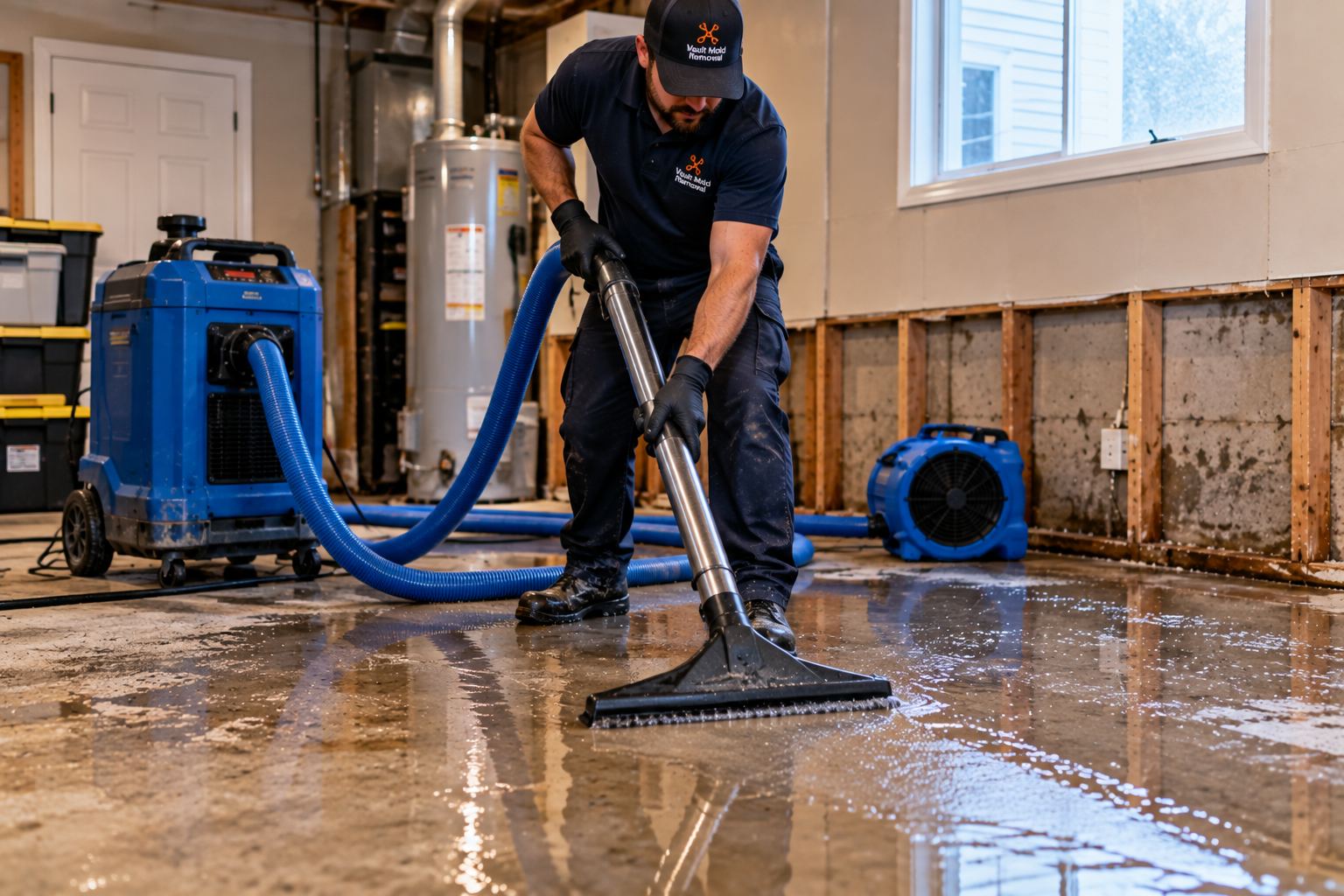
The process: stop the source, remove standing water, move or protect contents, then dry walls, floors and framing with air movers and dehumidifiers while we take daily moisture readings. When materials are damaged, our local crew does the damage repair too, so homeowners deal with one company from flood cleanup to finished restoration.
Burst pipes, a failed water heater, a leaking roof after a storm, or sewage coming up a drain all get the same fast response. Service areas: Orem and the surrounding communities we serve — Provo, Springville, Vineyard, Lindon and Mapleton. Call (385) 250-2825; every water damage job gets a free written estimate.
Call (385) 250-2825Free estimateFinancingOur processAll local services
Emergency water damage restoration in Orem: what to expect
First 10 minutes: what to do before the Orem crew arrives
A few steps make a real difference while you wait:
- Shut off the main water valve if the leak is on a supply line
- Turn off power to wet rooms only if you can reach the breaker from a dry spot
- Take photos and video of the damage for your insurance claim
- Move electronics, papers and rugs out of the water
How fast the crew reaches Orem
Arrival in Orem averages about 41 minutes from our Provo office at 1169 S 760 W. The 45-minute arrival guarantee applies only inside Provo city limits, daytime Monday–Saturday 8 AM–5 PM.
Who answers when you call from Orem
The phone is answered live 24/7 by the Vault crew — no call center. If every technician is on a job, the call rolls to the owner’s cell, not voicemail. Call-answered, dispatch and arrival times are logged and printed on your work order. (385) 250-2825
Water extraction in Orem homes
Standing water comes out first, before it wicks deeper into drywall, flooring and cabinets. Floors and furniture are protected with plastic, ZipWall and floor protection before work starts.
Structural drying and daily readings on Orem jobs
Wet areas are dried inside drying chambers. Hidden moisture is found with a FLIR thermal camera, and readings from Delmhorst and Protimeter meters are logged every day until the structure is dry.
Flood cuts and containment in Orem basements
When wet drywall has to come out, the cut is made inside ZipWall containment with 6-mil plastic, a zipper door and a HEPA air scrubber, so dust stays in the work area.
Keeping mold out after an Orem flood
The EPA advises drying wet materials within 24–48 hours to keep mold from starting. If growth is already there, inspections are $99 (visual, one area), $199 (with moisture meter and thermal camera) or $349 (with air sampling and lab analysis), and removal starts at $500.
Sewage backups in Orem
A backed-up drain is “black water” and is handled with sealed containment and PPE. See sewage backup help in Orem; our crew also does the sewer line work in-house.
What it costs in Orem
Every job starts with a free written estimate. Typical Utah ranges:
| Service | Typical Utah cost |
|---|---|
| Emergency water damage restoration — mitigation (extraction and drying) | $3,500–$8,500 |
| Reconstruction after water damage | $4,500–$9,500 |
| Mold removal | from $500 |
- Emergency water damage restoration estimate: free and written
- Emergency water damage restoration billed to your insurer directly when the claim is covered
- Emergency water damage restoration financing through Wisetack, subject to approval
Insurance claims for Orem water damage
We document the damage, take daily moisture readings, write the scope in Xactimate and bill your insurer directly — State Farm, USAA, Allstate, Farmers, Bear River Mutual and others. You pay the deductible and anything not covered.
Financing for Orem homeowners
Wisetack financing covers $500–$25,000 over 3–24 months, with a soft credit check, subject to approval.
Rebuilding your Orem home after the drying
The same crew handles the rebuild — drywall, flooring and cabinets — so you deal with one company and one estimate. Workmanship carries a 24-month warranty, transferable once.
The crew that works on Orem homes
All W-2 employees, no subcontractors: Marcus Wheeler (Senior Water Damage Restoration Tech), Ryan Bautista (Mold Remediation & Drying Specialist), Elena Fritsch (Restoration Project Manager), Daniel Hoffmann (Emergency Response Tech) and Joseph Miles (Contents Cleaning & Restoration Specialist).
More questions from Orem homeowners
What does emergency water damage restoration cost?
Typical Utah ranges are $3,500–$8,500 for mitigation (extraction and drying) and $4,500–$9,500 for reconstruction. The written estimate is free.
Is your crew IICRC certified?
Yes. Vault is an IICRC-certified firm for water damage restoration (WRT #248317) and applied structural drying (ASD #248317-ASD), and every crew member holds WRT.
Can you come tonight if my home is flooding?
Call any time — the phone is answered live 24/7 by the crew, and arrival in Orem averages about 41 minutes.
What should I do if a burst pipe floods my basement?
Shut off the main water valve, keep out of standing water near outlets, take photos for insurance and call (385) 250-2825.
Will insurance pay for the damage to my home?
If the loss is covered, we document it, write the scope in Xactimate and bill your insurer directly. You pay the deductible and anything not covered.
How do I know my home is completely dry?
Moisture readings are taken every day with Delmhorst and Protimeter meters and logged until they are back to normal, so dryness is measured, not guessed.
Can I get a free estimate?
Yes — estimates for water damage, sewage and sewer line work are free and written.
How do you keep my belongings safe during the work?
Floors and furniture are protected with plastic and floor protection, and contents are handled by Joseph Miles, our Contents Cleaning & Restoration Specialist.
Other questions we hear
Does the 45-minute arrival guarantee cover my area?
The guarantee covers Provo city limits, daytime Monday–Saturday 8 AM–5 PM. Arrival in Orem is about 41 minutes.
What happens if every technician is already on a job?
The call rolls to the owner’s cell, not voicemail, so a person still answers.
How do you dry out a flooded basement?
Standing water is extracted, the area is dried inside drying chambers and readings are logged daily. See basement flooding help in Orem.
Do you handle sewage backups too?
Yes. Backed-up drains are “black water” and are handled with sealed containment and PPE. See sewage backup help in Orem.
Can water damage cause mold?
It can. The EPA advises drying wet materials within 24–48 hours to keep mold from starting.
Need emergency water damage service in Orem? Average arrival in Orem is about 41 minutes. Call (385) 250-2825, answered live 24/7.