
About this job
A real Vault job in Provo. The crew that handled it was Vault’s own W-2 team — no subcontractors, no franchisee hand-off. Same crew answers the phone and shows up at the door.
- Call any hour: (385) 250-2825 answered live 24/7. 45-min guarantee Provo (Mon-Sat 8-5); under 60 min elsewhere in Utah County.
- Who did the work: Vault’s W-2 crew, IICRC WRT/ASD/AMRT/OCT, Utah DOPL #11876543-5501.
- Insurance: Xactimate scopes submitted direct to State Farm, USAA, Allstate, Farmers, Bear River Mutual, and most national carriers.
- Pricing: water mitigation $3,500-$8,500; reconstruction $4,500-$9,500. 24-month warranty, Wisetack financing.
- Family-owned and veteran-operated, based in Provo since 2020.
See Vault in Provo, all Provo case studies, or water damage services.
Real Vault job — Joaquin, Provo
- Approximate location
- Near 700 N and 500 E
- When
- November 2025
- What happened
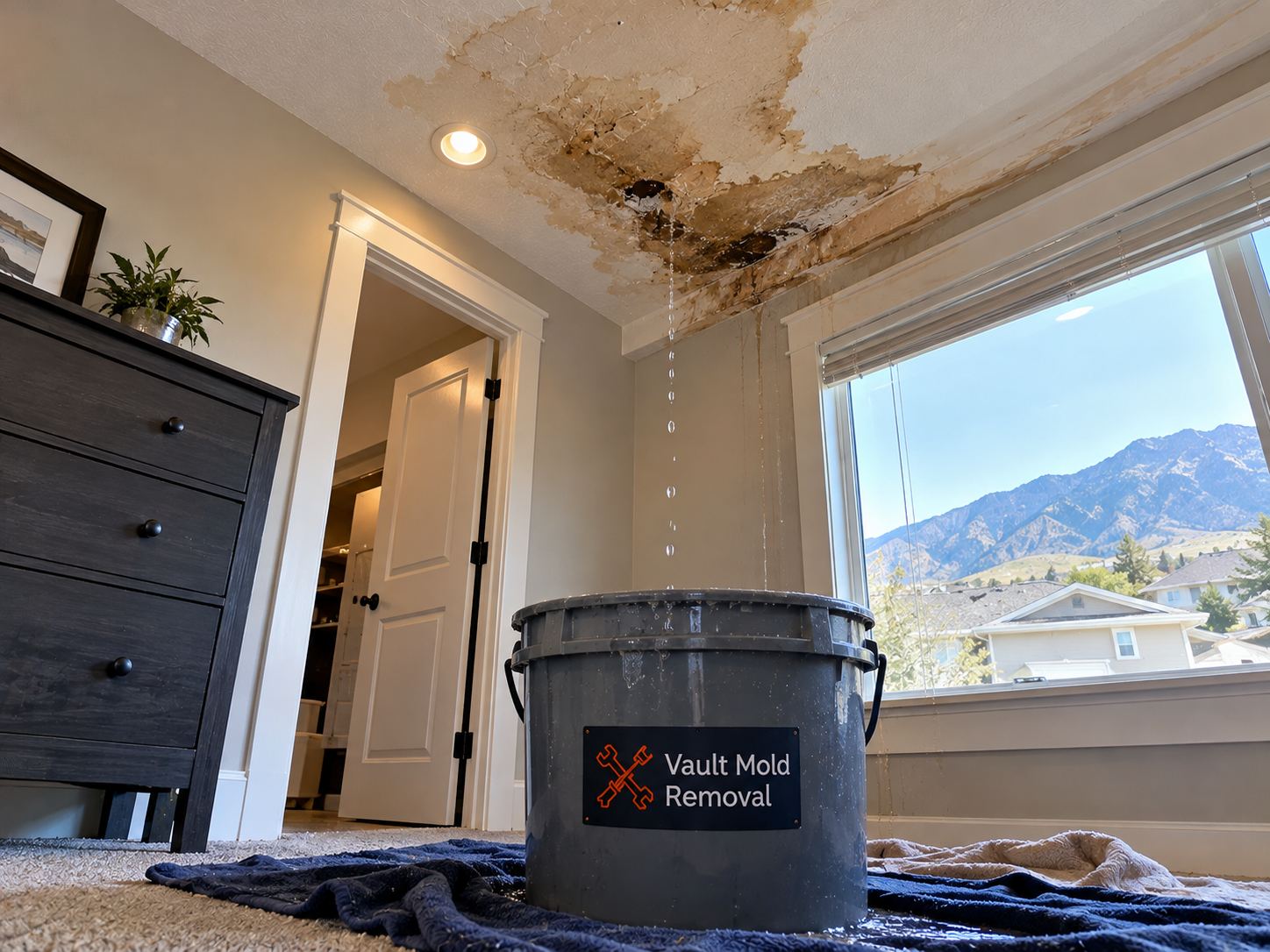
- Aging upstairs bathroom drain pipe leaked into downstairs rental unit, damaging ceiling drywall, wall cavities, and laminate flooring.
- What Vault did
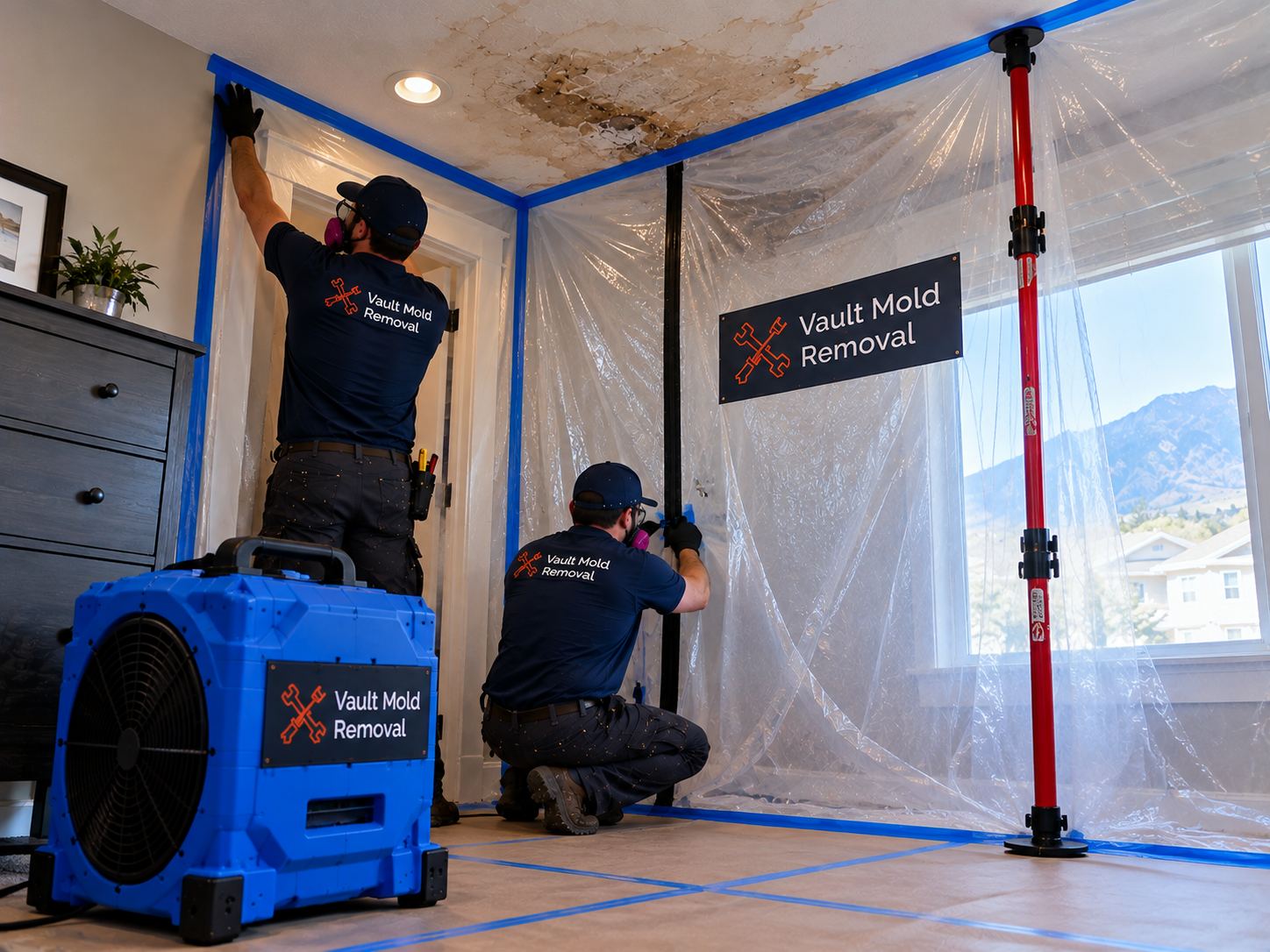
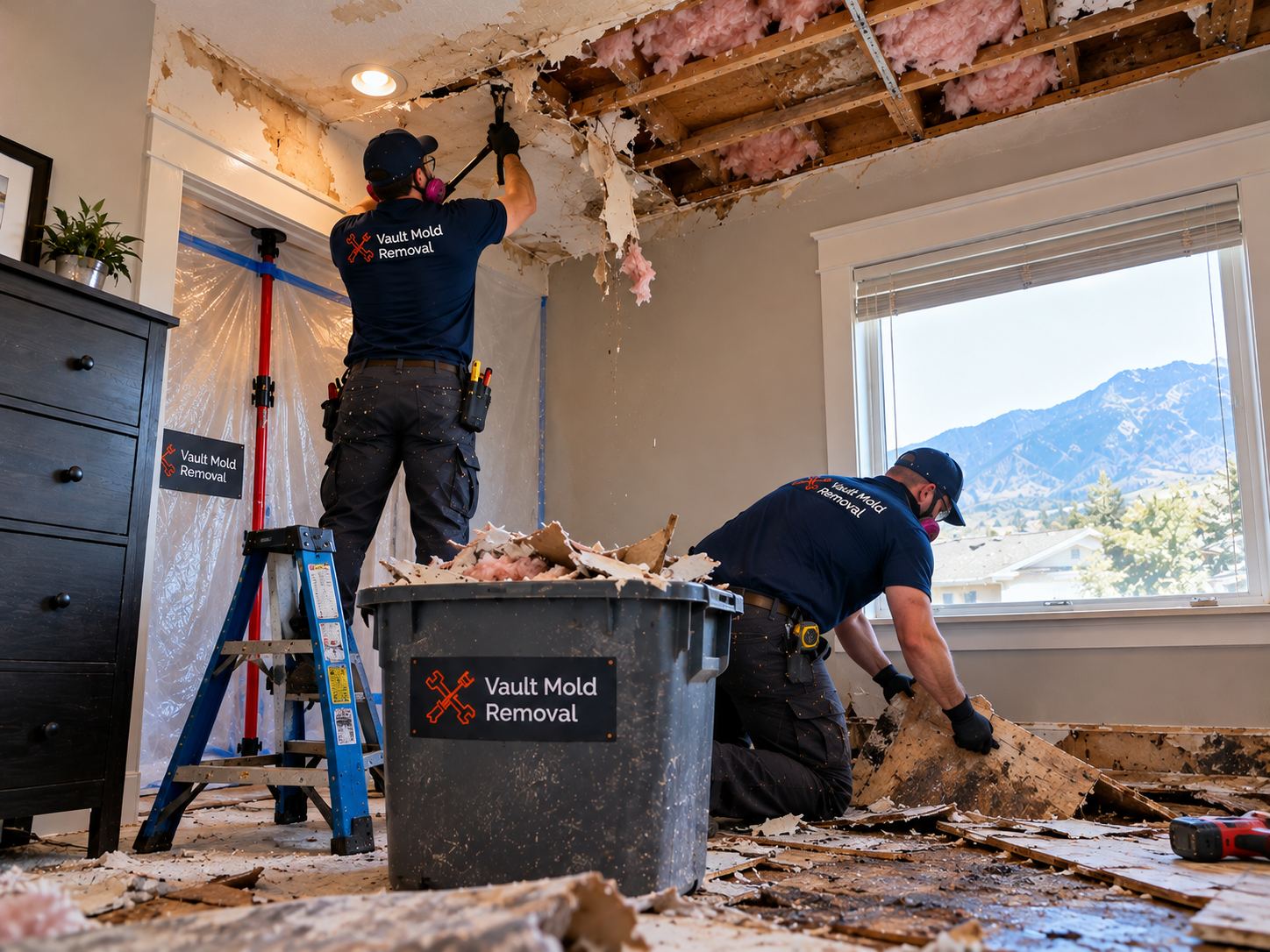
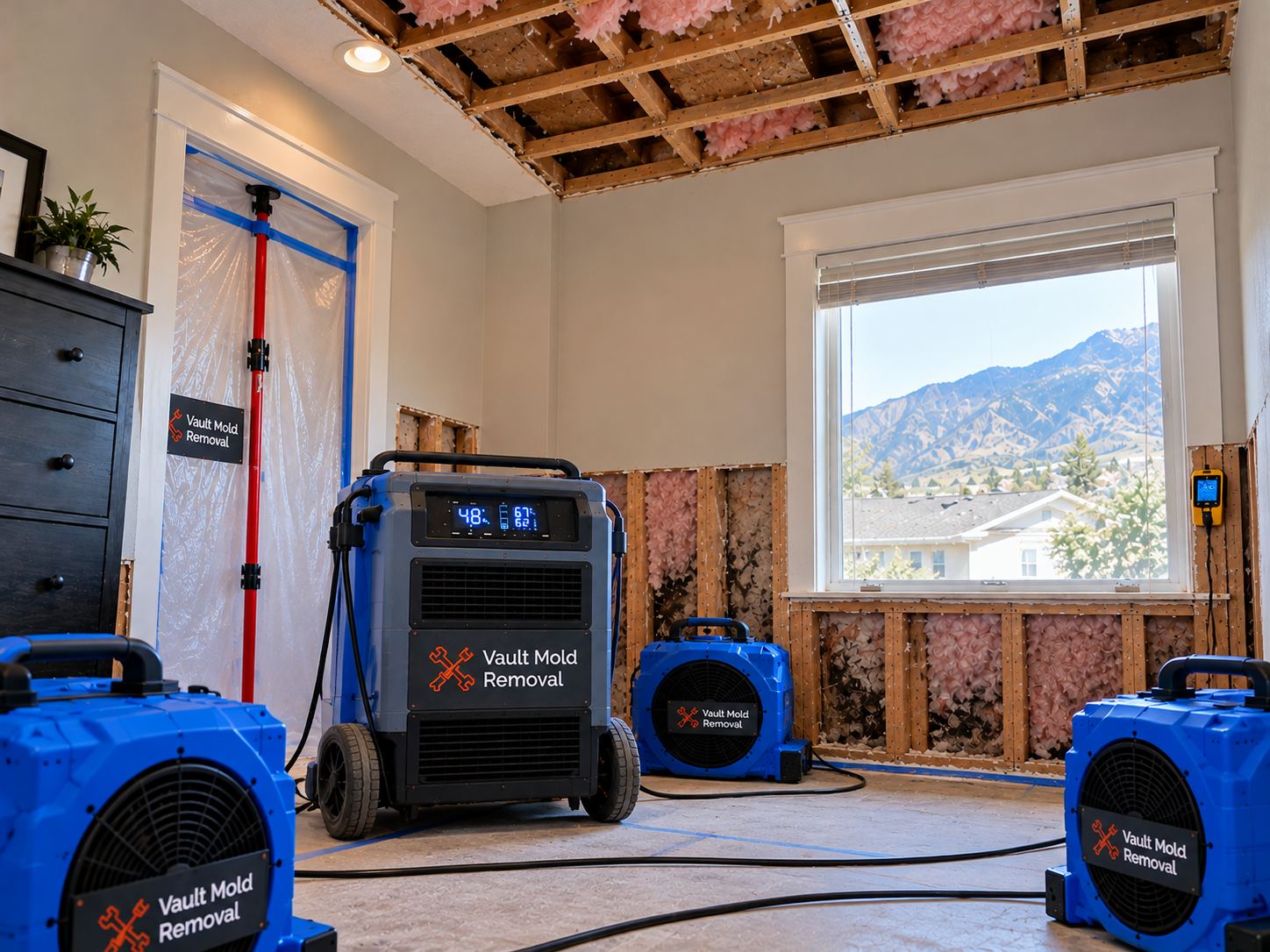
- Material removal and drying.
Water Damage Restoration in Joaquin, Provo
Joaquin is Provo’s oldest continuously residential neighborhood. Roughly bounded by University Avenue on the west, 900 East on the east, Center Street on the south, and the BYU campus edge on the north, it holds one of the densest concentrations of pre-1930 housing stock in Utah County. Craftsman bungalows on 400 North. Queen Anne Victorians on 500 East. Brick foursquares along 700 North. Most of it is on the Provo City Historic Register, some of it is on the National Register, and almost all of it has been through at least one round of student rental conversion in the last fifty years. Vault Mold Removal has worked Joaquin extensively — the failure patterns, the construction quirks, and the insurance realities are consistent enough that we know before we arrive what we’re going to find.
Response time from our Provo dispatch to a Joaquin address averages 15 minutes daytime and 39 minutes overnight, logged over three years of dispatch records. Joaquin is the tightest response on our map — the neighborhood is roughly two miles from our facility on flat roads.
What Joaquin Construction Actually Looks Like
Pre-1930 Joaquin homes almost all share five things: balloon-framed exterior walls (studs running full height from foundation sill to roof plate, no fire blocking between floors), lath-and-plaster interior finishes, plank or shiplap subfloor over dimensional joists, galvanized steel supply lines with some cast iron drain, and either a shallow crawlspace or an unfinished basement. Later additions and remodels have layered modern materials over these bones — drywall retrofits over plaster, PEX supply-line replacement in some homes, laminate flooring over the original plank — but the underlying structure is what determines how water behaves during a loss.
Balloon framing is the defining diagnostic issue. Water that enters an exterior wall cavity at the second floor has a clear path down to the basement or crawlspace without any fire blocking to stop it. A supply-line failure on the upper floor can produce visible water damage in the basement of a Joaquin home fifteen minutes after the leak starts. We map these losses with FLIR E75 thermal imaging on the vertical wall runs before cutting anything, because the surface symptom often doesn’t tell you where the source is.
Lath-and-plaster walls read differently than drywall on every diagnostic instrument. Thermal shows moisture as diffuse cold zones rather than sharp edges. Pin meters require extension probes to reach framing without false readings from the plaster itself. Non-invasive capacitance meters read inconsistently across plaster surface variation. In Joaquin homes we cross-verify every non-invasive reading with a pin reading in the same location.
Student Rental Conversion Realities
A significant portion of Joaquin housing operates as student rental — single-family homes carved into multi-unit rentals for BYU students. This changes the water damage response in specific ways. Plumbing has often been modified beyond the original single-family configuration, sometimes with unpermitted work. Multiple kitchens and bathrooms have been added, each with additional supply and drain runs, each a potential failure point. Occupancy is high, turnover is frequent, and maintenance history is often incomplete. When we arrive at a student-rental Joaquin home, we treat the plumbing configuration as unknown until we’ve mapped it and don’t assume standard single-family layouts.
Insurance coordination on these properties can involve the property owner’s landlord policy rather than a tenant’s renter policy for structural damage. Contents claims split — landlord policy covers building elements, renter policies (where in place) cover student personal property. We document both scope tracks and coordinate with whichever carriers are involved.
Typical Joaquin Failure Patterns
- Galvanized supply-line pinhole at threaded fittings
- Original galvanized still in service in many homes. Failure at threaded joints predictable at the 60-to-80-year mark. Water travels through balloon-framed wall cavities from source to point of visible symptom.
- Cast-iron drain line separation or corrosion
- Original cast-iron drains eventually corrode through at the horizontal runs. Category 3 sewage exposure until the drain is repaired. Often affects both original main-floor bathrooms and any added upper-floor bathrooms sharing the same drain stack.
- Water heater tank rupture in unfinished basements
- Common failure mode; volume typically 40 gallons hot water discharged into a poorly-drained basement. Rapid saturation of any stored contents and basement walls.
- Winter freeze failures at unheated exterior walls
- Balloon-framed exterior walls without modern insulation are vulnerable to interior supply lines running in the wall cavity. Freeze events (Provo January design temperature 7°F) produce cluster failures across the neighborhood.
- Upper-floor bathroom failures in retrofit conversions
- Second-floor bathrooms added during rental conversion often lack modern overflow protection. Toilet supply-line failures, tub overflows, and washing-machine drain backups affect main-floor and basement spaces below.
Historic District and EPA RRP Compliance
Homes on the Provo City Historic Register or the National Register of Historic Places require specific coordination during demolition and reconstruction. Vault Mold Removal holds Utah DOPL contractor licensing and coordinates with the Provo Landmarks Commission when scope affects registered features. Additionally, every pre-1978 home falls under EPA RRP (Renovation, Repair, and Painting) requirements at 40 CFR 745 — lead-safe work practices are mandatory for any demolition or reconstruction disturbing painted surfaces. We hold current EPA RRP firm certification and every tech on Joaquin work carries individual RRP renovator certification.
Insurance Documentation for Joaquin Losses
Utah Code 31A-26-301.5 requires acknowledgment within 15 days and coverage determination within 30 days of proof of loss. Joaquin properties often have insurance complications: historic-register status may affect coverage terms, rental conversions can shift claims to landlord vs. tenant carriers, and matching-cost issues for period-appropriate finishes often exceed like-kind-and-quality allowances. We document all of this from the initial visit and help you navigate scope adjustments.
Frequently Asked Questions
- My house is on the historic register — will restoration require Landmarks Commission approval?
- Depends on what’s being restored. Interior finishes typically don’t require commission approval. Exterior features (windows, siding, roofing, porches, exterior painted surfaces) usually do if replacement or significant alteration is involved. We identify the scope split during initial assessment and coordinate with the Provo Landmarks Commission where required — this is routine on Joaquin work.
- My rental has multiple bathrooms that weren’t in the original layout. Does that affect the claim?
- Not directly, though it affects diagnosis. Retrofitted plumbing configurations in student rentals often have multiple potential failure sources for a given symptom, and we map the actual plumbing during initial assessment rather than assuming original single-family layouts. Insurance coverage depends on the specific policy — landlord policies typically cover structural, tenant policies cover personal property. We document each scope track separately.
- What’s the lead paint concern in my old Joaquin house?
- Any pre-1978 home is presumed to have lead-based paint until testing proves otherwise. EPA RRP rules at 40 CFR 745 require specific work practices — plastic containment, dust suppression, HEPA cleanup, disposal of dust and debris as regulated waste — during any demolition or reconstruction that disturbs painted surfaces. We hold firm-level EPA RRP certification and every tech carries individual renovator certification. Practical impact on your restoration: scope is a little longer, containment is a little more elaborate, and dust is thoroughly cleaned up — no different from what you’d want anyway.
- Can you match my original plaster texture and moldings?
- Plaster texture: yes, generally, using traditional three-coat plaster technique with lime and gypsum finish coat rather than modern drywall veneer. Moldings: depends on profile. Common Craftsman and Victorian profiles are still available through specialty millwork suppliers; unique custom profiles may require having a shaper knife ground to match, which we’ve done many times on Joaquin work. Cost for period-appropriate matching often exceeds standard like-kind-and-quality insurance scope — we document the excess and help you present it to your adjuster.
- How does balloon framing affect the response — is it worse or just different?
- Different. Balloon framing means water travels vertically through wall cavities faster than in modern platform-framed construction, so the visible symptom often shows up far from the source. That’s a diagnostic challenge but not necessarily a bigger loss — with proper thermal imaging and cavity access we handle it as routine. The restoration is essentially the same; the diagnostic sequence is different.
Contact Vault Mold Removal
Phone: (385) 250-2825
Address: 1169 S 760 W, Provo, UT 84601
Hours: Monday–Saturday, 9:00 AM – 5:00 PM
Service Area: Joaquin, all Provo neighborhoods, and surrounding Utah County communities.
Water damage in Provo?
Call (385) 250-2825 — answered live 24/7 by the Vault crew, not a call center. Inside Provo city limits, Monday–Saturday, 8 AM–5 PM, we guarantee arrival in 45 minutes — see the terms.
Real Vault jobs in Provo
Each of these is a real job done by Vault’s own W-2 crew. Call (385) 250-2825, answered live 24/7.
- Downtown — February 2026
- East Bay — July 2026
- Edgemont — June 2026
- Foothills — May 2026
- Franklin — December 2025
- Franklin South — March 2026
- Grandview North — September 2026
- Grandview South — August 2026
- Indian Hills — April 2026
- Joaquin — November 2025
- North Park — January 2026
- Oak Hills — July 2026
- Provost — June 2026
- Riverbottoms — May 2026
- Rivergrove — March 2026
- Rock Canyon — February 2026
- Sherwood Hills — April 2026
- Sunset — August 2026
- Timp — December 2025
- Wasatch — January 2026
- 1908 Joaquin Bungalow Galvanized Failure
- Downtown Mid-Rise Sprinkler Discharge
- Edgemont Hidden Crawlspace Pinhole
- Foothills Walkout Washer Cascade
- Franklin Sewer Backup Root Intrusion
If a job like this is happening to you
Vault handles jobs like the one above every day across Utah County. Here’s what else is worth reading before you call:
- Why Vault — W-2 crew, 45-min Provo guarantee, in-house mold clearance, no franchise call center.
- Insurance claims — how we document the damage and bill State Farm, USAA, Allstate, Farmers, Bear River Mutual directly.
- 24-month warranty — what’s covered and how to open a claim.
- Wisetack financing — $500-$25,000 over 3-24 months, soft credit check.
- Service area — confirm your city is one of the 6 we cover.
- Water damage timeline — why every hour of head start cuts the final bill.
Call now: (385) 250-2825 — answered live 24/7 by the Vault crew.
Photos from this Joaquin job
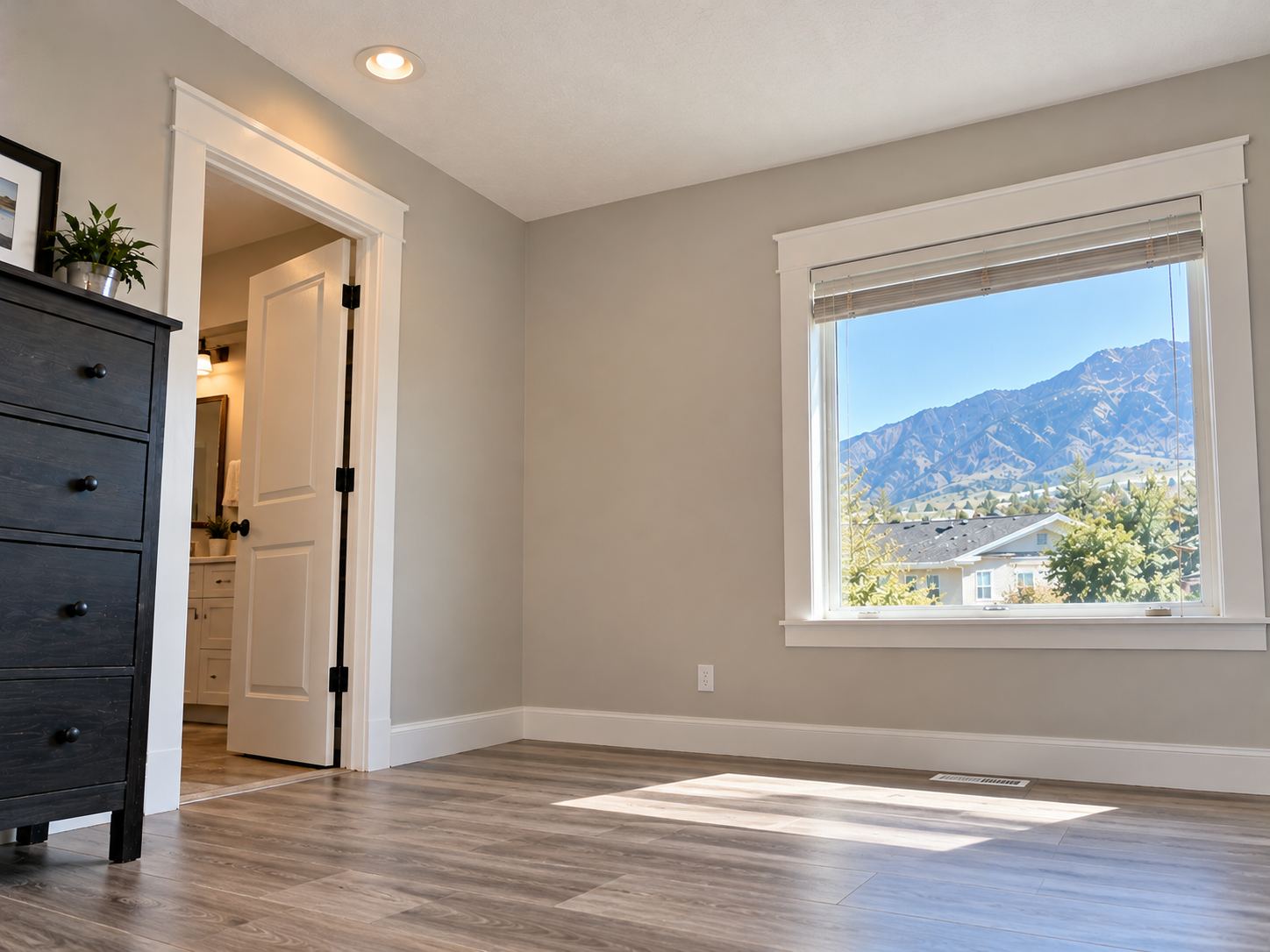
Real photos taken by the Vault crew during this Joaquin, Provo water damage job in November 2025 — upstairs bath drain leaked into rental unit below at 700 N / 500 E.
Dealing with something similar?
This job started with an upstairs bath drain leaking into the unit below. If that sounds like what you’re facing, these guides cover what to do first:
Water damage on your ceiling · Questions to ask your insurance adjuster
Or call (385) 250-2825 — answered live 24/7.
Helpful guides: What if water damage isn’t fixed? · Documenting damage for insurance
Need help with a job like this?
water damage restoration in Provo · emergency water damage restoration in Provo · sewage cleanup in Provo · mold remediation in Provo
Have a job like this in Provo? See water damage restoration in Provo, or call (385) 250-2825 for a free written estimate.